
I. Introduction
Farmhouse decor never seems to go out of style, and it is easy to see why. There is something instantly comforting about worn wood, soft textiles, and pieces that look like they have a story to tell.
At its heart, farmhouse style is a blend of vintage furniture, natural elements, and cozy interiors that feel relaxed instead of staged. Think weathered tables, woven baskets, neutral palettes, and simple details that make a room feel lived in and loved.
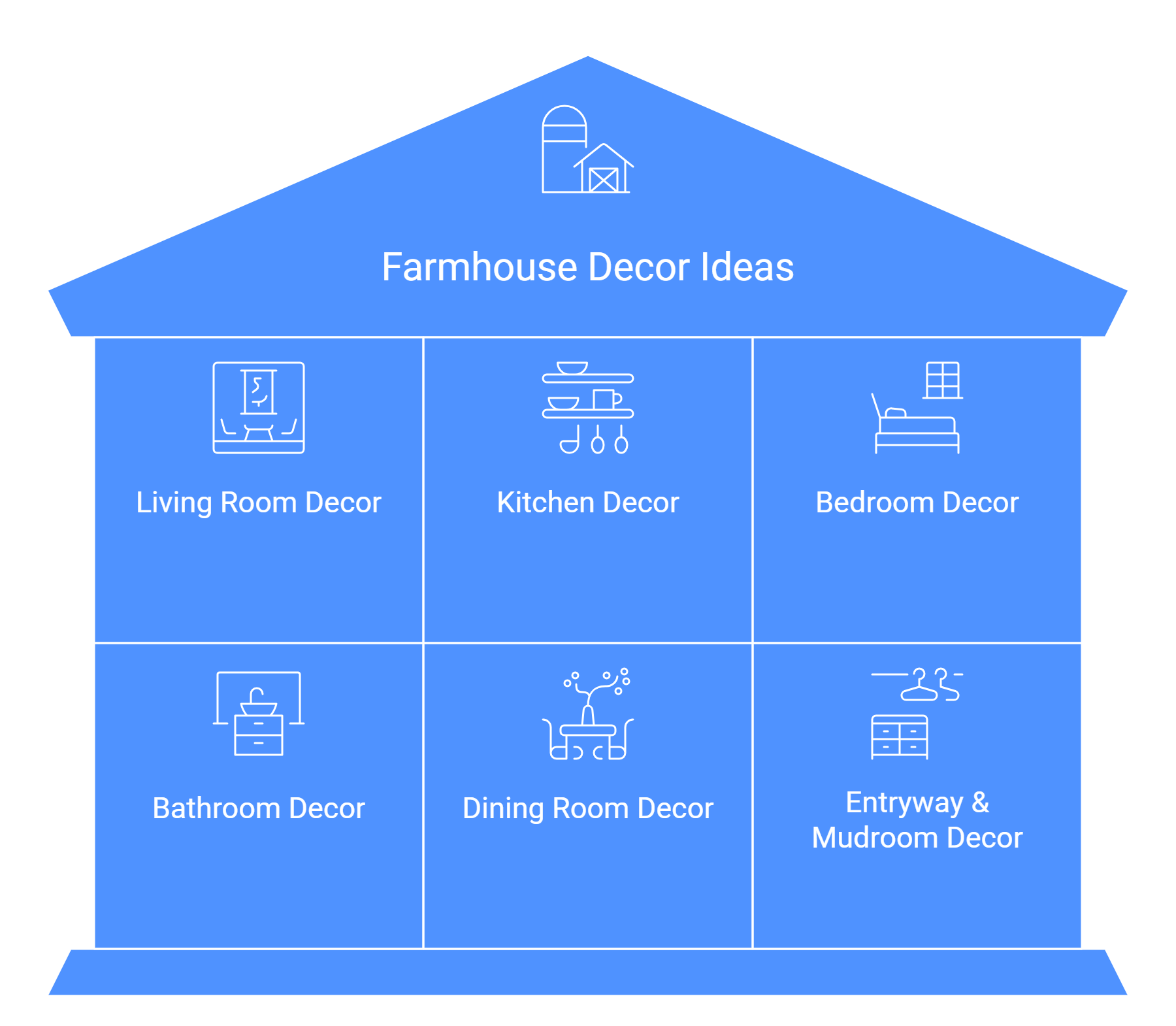
What makes farmhouse decor so popular is how timeless and adaptable it is. You can lean rustic or modern, go all-neutral or add color, and it still feels warm and welcoming. It works in small apartments, family homes, and everything in between.
In this guide, you will discover 25 practical farmhouse decor ideas that touch every room of your home, from the entryway to the bedroom. By the end, you will have simple, actionable ways to turn any space into a warm, inviting retreat with rustic charm.
II. Understanding Farmhouse Style Fundamentals
Farmhouse decor looks effortless, but there is a clear logic behind the look. Once you understand the core elements, it becomes much easier to pull a space together without it feeling cluttered or “theme-y.”
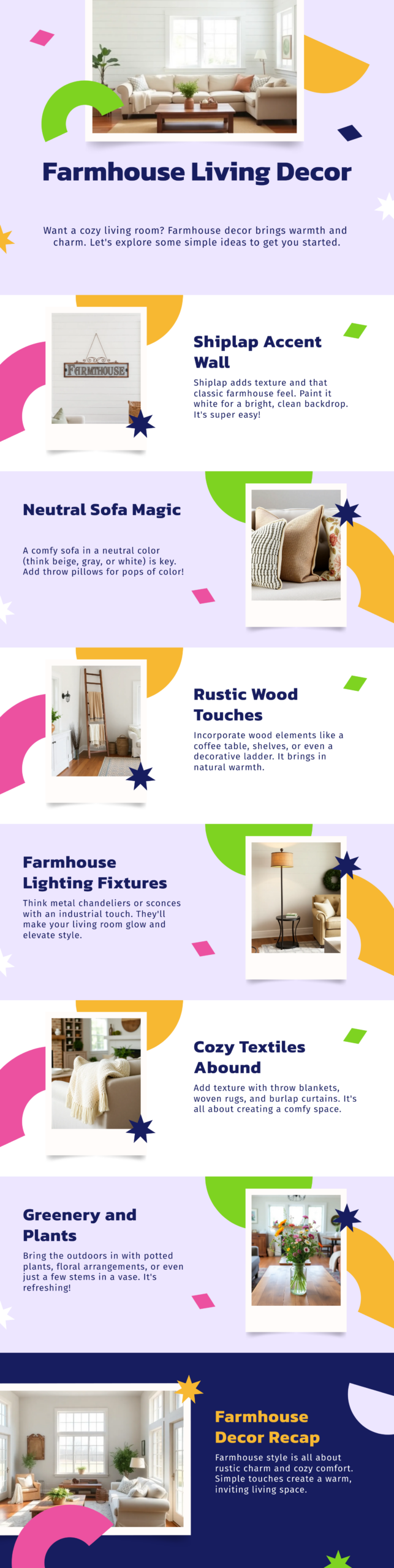
A. Core Elements of Farmhouse Decor
- Neutral palette as the foundation
Farmhouse style almost always starts with a calm, neutral base. Think:
- Soft whites and creams on walls
- Warm grays and greiges on furniture
- Light tans and beiges in rugs and textiles
This palette creates a soothing backdrop that lets textures, wood tones, and decor pieces really stand out.
- Natural elements and organic materials
Nature is at the heart of farmhouse decor. You will see:
- Wood furniture and beams
- Woven baskets and natural fiber rugs
- Greenery, fresh or faux, to bring life into the room
- A mix of old and new pieces
The charm comes from pairing items with history alongside fresh, modern finds. For example, a vintage trunk as a coffee table with a sleek new sofa, or an antique mirror over a simple console. - Functional meets beautiful
Farmhouse style is practical. Pieces are meant to be used, not just admired. Think:
- Open shelving that displays everyday dishes
- Hooks, ladders, and crates that organize and decorate at the same time
B. Key Style Influences
Farmhouse decor pulls inspiration from several overlapping styles:
- Country style roots and agricultural heritage
Simple, hardworking pieces, classic checks and stripes, and sturdy furniture inspired by rural homes. - Shabby chic romantic touches
Distressed finishes, soft florals, and delicate details add a gentle, feminine feel. - Industrial farmhouse fusion
Metal accents, factory lighting, and hardware balance the softness with a little edge. - Modern farmhouse evolution
Clean lines, less clutter, black accents, and streamlined furniture keep the look fresh and current.
C. Materials That Define the Look
Certain materials instantly signal “farmhouse” and help tie a room together:
- Reclaimed wood and wooden accents
Dining tables, mantels, open shelves, and picture frames made from aged or distressed wood. - Textured fabrics
Linen, cotton, burlap, chunky knits, and canvas add warmth and a cozy, touchable feel. - Metal fixtures
Wrought iron curtain rods, black or brass hardware, galvanized steel buckets, and pendant lights. - Natural stone and brick
Exposed brick walls, stone fireplaces, or even faux brick and stone accents bring depth and rustic character.
Mastering these fundamentals gives you the building blocks to create a farmhouse look that feels authentic, comfortable, and uniquely yours.
III. Living Room Farmhouse Decor Ideas (Ideas #1-6)
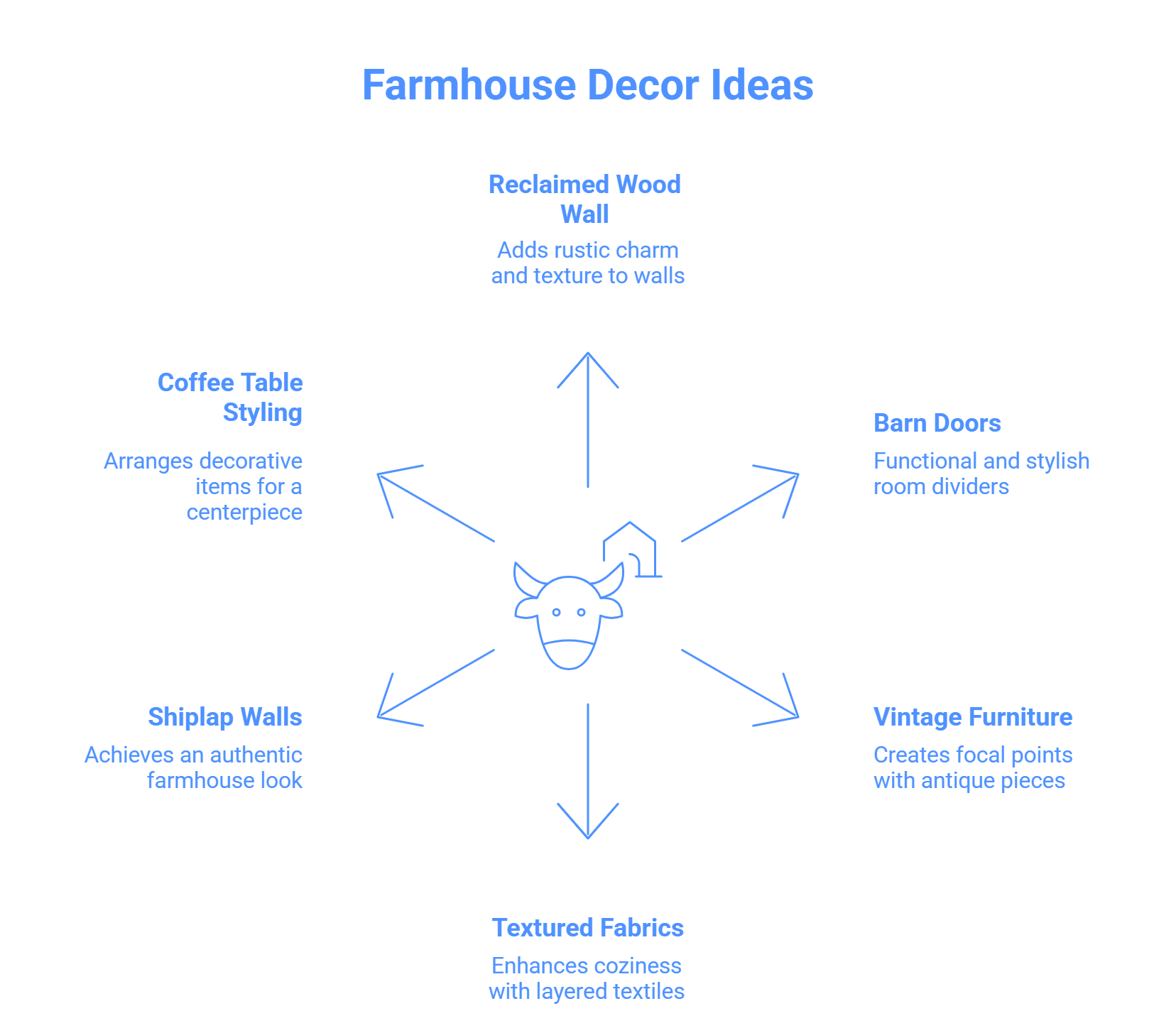
Idea #1: Reclaimed Wood Accent Wall
A reclaimed wood accent wall is an instant farmhouse statement.
- How to source or create panels: Look for reclaimed wood at salvage yards, online marketplaces, or specialty lumber shops. If true reclaimed wood is hard to find, create the look with new planks stained and distressed to mimic age.
- Installation tips: Always measure and plan your layout first. Install boards over furring strips or directly on the wall with a nail gun and construction adhesive. Stagger seams for a natural look and seal the wood if you want easier cleaning.
- Where to place it: Popular spots are behind the sofa, on the fireplace wall, or as a backdrop for a TV or gallery wall.
- Pairing with neutrals: Balance the visual weight of the wood with a neutral palette of whites, creams, and soft grays in your furniture and textiles.
Idea #2: Oversized Sliding Barn Doors
Sliding barn doors add both function and rustic drama to a living room.
- Functional charm: Use them as room dividers between the living room and dining area to keep the space open yet flexible.
- Hardware and installation: Choose sturdy barn door hardware in black, bronze, or brushed metal. Make sure you have enough wall space for the door to slide fully open and install a header board if studs are not perfectly aligned.
- Where to use them: They work beautifully for closets, pantries, or room entrances off the living area.
- Finish options: Go with natural wood for warmth, painted barn doors for a cleaner look, or a distressed finish if you love that worn, timeworn farmhouse feel.
Idea #3: Vintage Furniture as Focal Points
A single vintage furniture piece can anchor your entire farmhouse living room.
- Sourcing pieces: Hunt for antique trunks, farmhouse tables, wooden benches, and weathered cabinets at flea markets, thrift stores, estate sales, and online platforms.
- Refinish or keep the patina: If a piece is structurally sound, you can lightly sand and seal to preserve its original patina or give it a chalk paint and wax treatment for a softer, shabby chic look.
- Make it a statement: Use an antique trunk as a coffee table, a vintage sideboard as a TV console, or an old church pew or bench along a wall with pillows.
- Mix old with new: Pair your vintage piece with modern sofas, clean-lined chairs, and simple lighting so the room feels updated, not like a museum.
Idea #4: Layered Textured Fabrics
Farmhouse living rooms feel cozy because of layered textiles and touchable textures.
- Throws and pillows: Add chunky knit throws, cable-knit pillows, and cotton cushions in soft neutral tones. These create instant warmth and visual depth.
- Curtains: Use linen curtains or cotton blends that filter natural light softly and pool slightly at the floor for an effortless look.
- Mixing patterns: Combine ticking stripes, gingham, and floral prints in a tight color palette so everything feels coordinated rather than busy.
- Creating coziness: Layer rugs over rugs, drape throws over armchairs, and mix smooth fabrics with nubby textures to build a welcoming, lived-in farmhouse feel.
Idea #5: Shiplap Wall Treatment
Shiplap walls are a farmhouse classic that add subtle texture without overwhelming the room.
- DIY installation: Use pre-cut shiplap boards or cut plywood strips, then nail them horizontally with small gaps or nickels as spacers. Caulk and fill nail holes for a polished finish.
- Real vs faux shiplap: Real shiplap has rabbets that interlock, while faux versions use flat boards or even shiplap-look panels. Both can achieve the farmhouse vibe.
- Painting techniques: Classic white shiplap brightens a room, but you can also use soft grays, greige, or a subtle color wash for an authentic, slightly aged effect.
- Accent or full room: Try an accent wall behind the sofa or fireplace for a small upgrade, or go full room for a cottage-like, enveloping feel.
Idea #6: Farmhouse Coffee Table Styling
A farmhouse coffee table is the perfect stage for rustic vignettes.
- Centerpiece materials: Start with a wooden coffee table or trunk, then add a wooden bowl, ceramic vase, or wicker basket as the central anchor.
- Use decorative trays: Place a decorative tray to corral handcrafted items like pottery, small candles, and coasters. This keeps the look tidy and intentional.
- Seasonal rotation: Swap in seasonal decor such as mini pumpkins in fall, greenery and pine cones in winter, fresh flowers in spring, and coastal touches in summer.
- Books, candles, and nature: Stack a few coffee table books, layer in candles, and tuck in natural elements like branches, shells, or stones to complete a cozy, collected farmhouse arrangement.
IV. Farmhouse Kitchen Decor Ideas (Ideas #7-12)
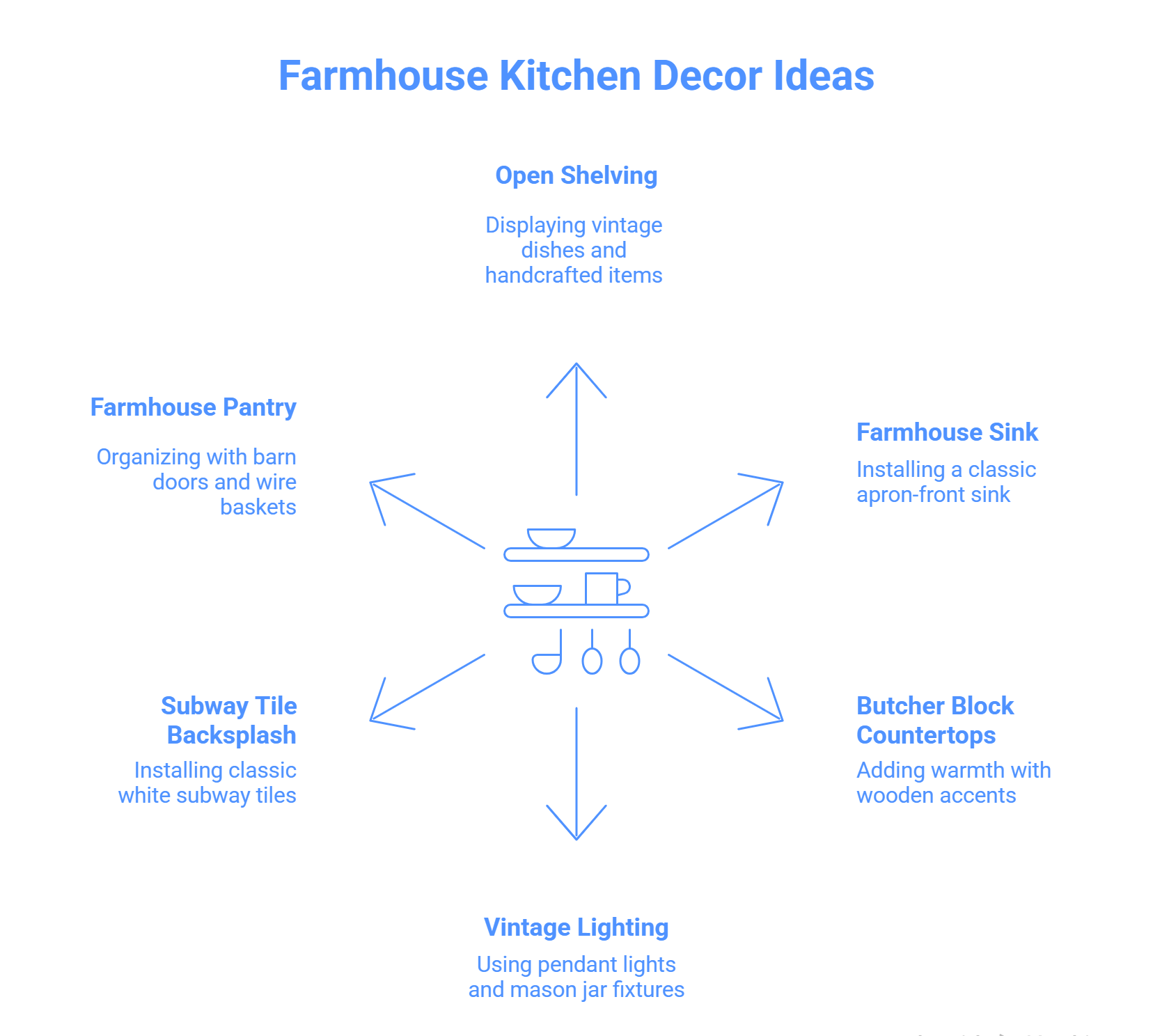
Idea #7: Open Shelving Display
Nothing says farmhouse kitchen like open shelving.
- Create the look: Remove a few upper cabinets and replace them with wooden open shelves mounted on simple brackets. Stained or painted wood both work, as long as it complements your existing cabinetry.
- What to display: Showcase ironstone, vintage dishes, mixing bowls, mugs, and handcrafted pieces like pottery or wooden cutting boards. Keep everyday items within easy reach and more decorative pieces higher up.
- Styling tips: Aim for visual balance by mixing stacks of plates with vertical items like pitchers and canisters. Leave some breathing room so shelves do not feel cluttered.
- Form plus function: Store what you actually use and let it double as decor. This keeps the space feeling authentic, practical, and pretty at the same time.
Idea #8: Farmhouse Sink Installation
A farmhouse sink instantly anchors the kitchen with classic charm.
- Apron-front appeal: The exposed front panel gives that unmistakable country style look and feels substantial and timeless.
- Material choices:
- Fireclay for a crisp, traditional white finish
- Cast iron for a glossy, durable surface
- Stainless steel for a more modern farmhouse twist
- Faucet pairing: Choose vintage-inspired faucets such as bridge faucets, cross handles, or gooseneck designs in finishes like brushed nickel, chrome, or oil-rubbed bronze.
- Design impact: Centering a farmhouse sink under a window or between open shelves creates a strong focal point that reinforces the cozy, hardworking feel of a country kitchen.
Idea #9: Butcher Block Countertops
Butcher block countertops bring warmth and natural texture into a farmhouse kitchen.
- Why they work: The wood grain softens the look of hard surfaces like tile and metal, making the kitchen feel inviting rather than sterile.
- Care and maintenance: Seal with a food-safe oil or finish, wipe up spills quickly, and lightly sand and re-oil as needed. Everyday wear only adds to the farmhouse charm.
- Color pairing: Butcher block looks beautiful with neutral cabinets in white, cream, gray, or soft greige, and pairs well with classic subway tile backsplashes.
- Where to use it: Try butcher block on the island for warmth and use stone on the perimeter, or commit to full butcher block for a cottage-style, cohesive look.
Idea #10: Vintage-Inspired Lighting
Lighting is one of the easiest ways to lean into farmhouse style in the kitchen.
- Pendant lights: Hang industrial farmhouse pendants over your island or sink. Think metal shades, schoolhouse globes, or glass pendants with vintage-style bulbs.
- Mason jar fixtures: Use Mason jar lighting for a playful nod to country life. These work well in breakfast nooks or over a smaller island.
- Wrought iron chandeliers: A wrought iron chandelier over a dining table or in an eat-in kitchen adds drama and rustic elegance.
- Blend old and new: Combine antique-inspired fixtures with modern features like LED bulbs and dimmers. You get nostalgic charm with everyday practicality.
Idea #11: Subway Tile Backsplash
A subway tile backsplash is a farmhouse staple that never dates.
- Classic white: Simple white subway tile sets a clean, bright backdrop that works with almost any cabinet color.
- Grout color matters:
- White or light grout for a subtle, seamless look
- Gray or dark grout to highlight the tile pattern and add a hint of industrial flair
- Patterns to try: Lay tiles in a standard brick pattern, go herringbone behind the range, or use a vertical stack for a modern farmhouse twist.
- Tie in natural elements: Pair subway tile with wooden accents, open shelves, cutting boards, and potted herbs to keep the kitchen feeling warm and grounded.
Idea #12: Farmhouse Pantry Organization
A well-organized pantry can be both functional and decorative in a farmhouse kitchen.
- Doors and furniture: Use sliding barn doors for a walk-in pantry or repurpose vintage furniture like an old cabinet or hutch as a standalone pantry.
- Storage containers: Organize dry goods in wire baskets, galvanized containers, glass jars, and woven bins. These add texture while keeping items easy to see.
- Labels and signage: Add chalkboard labels, hanging tags, or a small chalkboard sign on the door for that farm-inspired, playful touch.
- Make it beautiful: Group items by category, keep colors somewhat coordinated, and leave a little space so shelves look styled, not stuffed. Your pantry becomes a charming extension of your farmhouse kitchen rather than a hidden closet.
V. Bedroom Farmhouse Decor Ideas (Ideas #13-17)
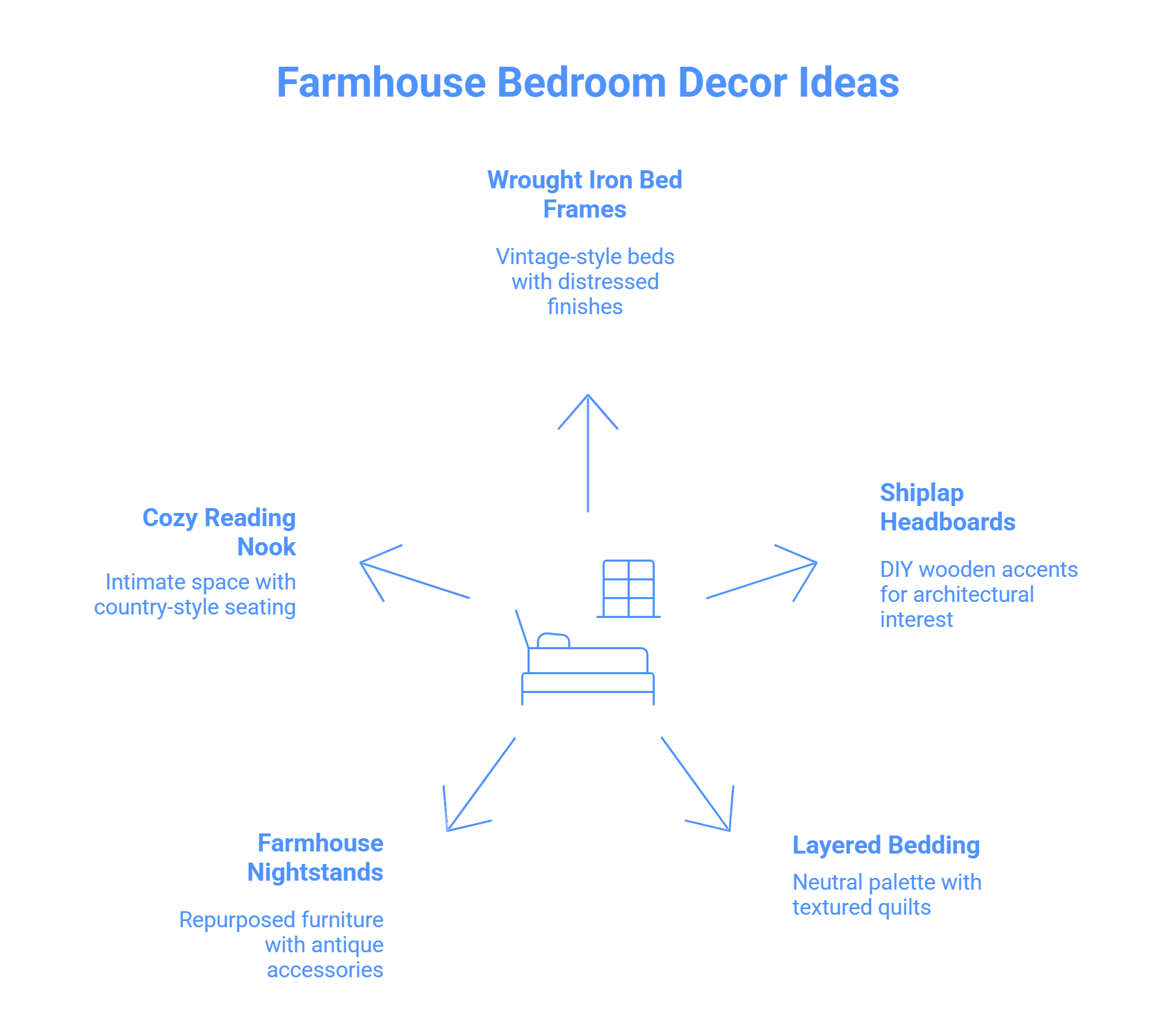
Idea #13: Wrought Iron or Wooden Bed Frames
A farmhouse bedroom often starts with a statement bed.
- Vintage-inspired frames: Choose a wrought iron bed with curved lines or a solid wooden bed frame with simple, clean details for that vintage furniture feel.
- Distressed finishes: Lightly distressed wood or a chipped-paint look brings shabby chic charm without feeling overdone.
- Pair with texture: Balance the sturdy frame with soft, textured fabrics like linen duvet covers, cotton sheets, and knit throws in a neutral palette of whites, creams, and soft grays.
- Scale matters: In smaller rooms, opt for a lower-profile frame or a simple metal bed to avoid overwhelming the space. Larger rooms can handle tall headboards and more substantial wooden designs.
Idea #14: Shiplap or Board-and-Batten Headboard
If you want a custom touch, create a wooden accent wall or headboard behind the bed.
- DIY-friendly projects: Use shiplap panels or board-and-batten trim to build a feature wall that instantly adds architectural interest.
- Reclaimed wood: Incorporate reclaimed planks for extra character, knots, and imperfections that feel authentically farmhouse.
- Paint vs stain:
- Painted white or soft gray for a bright, airy look
- Stained wood tones for warmth and a slightly rustic, cabin-like feel
- Height and proportion: The headboard or accent wall should be wider than the bed and tall enough to anchor it visually, usually reaching at least halfway up the wall or higher in rooms with tall ceilings.
Idea #15: Layered Bedding in a Neutral Palette
Farmhouse bedrooms are all about cozy, layered bedding.
- Base layers: Start with white or cream sheets, a simple duvet, and neutral pillowcases to create a calm foundation.
- Add texture: Layer on quilts, coverlets, and throws in different textures like waffle weave, matelassé, and knit. This adds depth without relying on bold color.
- Vintage-inspired patterns: Introduce subtle patterns such as faded florals, ticking stripes, or small-scale checks in muted tones to keep things interesting but restful.
- Seasonal transitions: Swap lighter quilts and linen throws in spring and summer for heavier knits and flannel in fall and winter. You can refresh the room’s mood just by changing textiles.
Idea #16: Farmhouse Nightstand Styling
Your nightstands are the perfect place to show off farmhouse character.
- Repurposed pieces: Use vintage dressers, old side tables, or weathered cabinets as nightstands for instant charm and extra storage.
- Creative alternatives: In tight spaces, try small wooden stools, stacked crates, or a wall-mounted shelf beside the bed.
- Styling details: Top nightstands with antique accessories like an old alarm clock, a ceramic pitcher as a vase, or a small framed black-and-white photo.
- Handcrafted and natural touches: Add a handmade pottery lamp, a woven basket for books, and a sprig of greenery or dried flowers to keep the look warm and organic.
Idea #17: Cozy Reading Nook
A cozy reading nook turns your bedroom into a true retreat.
- Create an intimate corner: Tuck a country-style chair or small loveseat into a corner near a window, or use an angled wall to carve out a quiet spot.
- Comfortable seating: Choose an oversized chair or armchair with textured upholstery—linen, cotton, or a soft slipcover—and pile on pillows and a throw blanket.
- Blanket storage: Lean a wooden ladder against the wall to hold folded blankets and quilts. It adds vertical interest and keeps layers within easy reach.
- Light it well: Combine natural light from a nearby window with vintage-inspired lighting such as a metal floor lamp, a wall sconce, or a small table lamp with a linen shade. The result is a warm, inviting nook perfect for slowing down.
VI. Bathroom Farmhouse Decor Ideas (Ideas #18-20)
Idea #18: Clawfoot Tub or Vintage-Style Fixtures
A farmhouse bathroom feels instantly elevated with a clawfoot tub or vintage-style fixtures.
- Freestanding tubs for rustic charm: A freestanding clawfoot or pedestal tub becomes the focal point of the room, especially when paired with a vintage-inspired floor caddy, wooden bath tray, and fluffy white towels.
- Antique accessories: Layer in vintage mirrors, old scales, apothecary jars, and framed botanical prints for subtle antique character that does not overwhelm the space.
- Wall-mounted faucets: Choose wall-mounted faucets with cross handles, a bridge design, or porcelain accents in finishes like chrome, brushed nickel, or oil-rubbed bronze to echo classic country style.
- Spa-like feel: Add soft lighting, candles, a small stool or wooden bench, and a cozy rug to create a spa-like retreat with clear farmhouse roots.
Idea #19: Wooden Vanity with Vessel Sink
A wooden vanity paired with a vessel sink brings both warmth and personality to a farmhouse bathroom.
- Repurposed furniture: Transform a vintage dresser, console table, or sideboard into a vanity by adding a countertop and cutting openings for plumbing. The imperfections and patina add to the charm.
- Reclaimed wood countertops: Use reclaimed wood or a butcher-block-style top, sealed properly to handle moisture. The wood grain softens all the tile and porcelain typically found in bathrooms.
- Modern vessel sinks: Balance the rustic base with a simple vessel sink in white porcelain, stone, or concrete for a fresh farmhouse-meets-modern look.
- Open shelving: Incorporate open shelves beneath or beside the vanity to store and display rolled towels, woven baskets, and extra toiletries in an attractive, accessible way.
Idea #20: Shiplap or Beadboard Wall Treatments
Shiplap and beadboard are perfect for adding texture and character in a bathroom without clutter.
- Moisture-ready installation: Use moisture-resistant materials and proper priming and sealing to help protect wood from humidity. Keep good ventilation in the room, especially around tubs and showers.
- Half-wall vs full-wall: A half-wall treatment with a simple cap rail is great behind sinks or toilets and pairs well with painted drywall above. For a cottage-like feel, go full-wall shiplap or beadboard around the room (avoiding direct shower spray zones).
- Neutral paint colors: Stick to whites, creams, light grays, or soft greige to keep the bathroom bright and airy. A neutral palette also highlights natural wood and metal finishes.
- Accessorize with nature: Layer in natural elements like woven baskets, wooden stools, greenery, or a jute rug. These touches keep the space feeling grounded, cozy, and unmistakably farmhouse.
VII. Dining Room Farmhouse Decor Ideas (Ideas #21-23)
Idea #21: Large Farmhouse Dining Table
The heart of a farmhouse dining room is a large wooden table that invites people to linger.
- Reclaimed wood centerpiece: Choose a reclaimed wood table with a plank-style top and sturdy legs or a trestle base. The knots, grain, and imperfections tell a story and instantly set the tone for the room.
- Mix of seating: Combine chairs and benches for a relaxed, collected look. Use benches on one or both sides for casual family style dining and keep classic wooden or slipcovered chairs at the ends.
- Farm-inspired styling: Dress the table with linen runners, a simple wooden tray, vintage-style mason jars, ceramic pitchers, or a row of candles. Keep it low and simple so conversation stays easy.
- Sized for gatherings: Choose a table that comfortably seats your typical group, with the option to add chairs for holidays and family celebrations.
Idea #22: Statement Lighting Fixture
Your lighting can become the signature piece in a farmhouse dining room.
- Oversized fixtures: Consider an oversized chandelier, a cluster of pendants, or a double linear fixture for a long table. The generous scale feels warm and welcoming.
- Wood and metal mix: Look for lighting that blends wooden accents with metal finishes like black, bronze, or brushed nickel to tie in both rustic and industrial farmhouse influences.
- Height matters: Hang the fixture so the bottom sits roughly 30–36 inches above the table. This keeps the light close enough for intimacy but high enough to avoid blocked views.
- Industrial farmhouse options: Schoolhouse-style lights, cage pendants, and lantern-style chandeliers all work beautifully in a farmhouse dining setting.
Idea #23: Built-In Corner Hutch or China Cabinet
A corner hutch or china cabinet feels right at home in a farmhouse dining room.
- Display your favorites: Use it to showcase antique accessories, vintage dishes, ironstone, glassware, and heirloom serving pieces. Group similar items together for a curated feel.
- Paint or natural wood: Leave the cabinet in its natural wood finish for warmth or paint it in white, cream, or a soft muted color for a classic farmhouse look. Lightly distress the edges if you like a more aged effect.
- Glass fronts vs open shelves: Glass doors keep dust down and highlight special pieces, while open shelving feels casual and accessible. Both styles work, so choose based on how you use the space.
- Handcrafted and seasonal decor: Tuck in handmade pottery, woven baskets, small wreaths, or seasonal touches like greenery, pumpkins, or simple holiday accents to keep the display fresh all year.
VIII. Entryway & Mudroom Farmhouse Decor Ideas (Ideas #24-25)
Idea #24: Mudroom with Built-In Storage
A farmhouse mudroom should be hardworking, organized, and still feel inviting.
- Custom benches with cubbies: Start with a wooden built-in bench along one wall. Add cubbies or lockers underneath and above for shoes, bags, and sports gear. A stained wood seat paired with painted cubbies gives a classic farmhouse look.
- Barn doors for hidden storage: Use sliding barn doors to conceal less-pretty storage areas, cleaning supplies, or utility closets. They save space and bring instant rustic charm.
- Hooks with purpose: Install sturdy hooks or pegs along the wall for coats, hats, and bags. Arrange them in rows or at different heights so kids can easily reach their own.
- Texture and baskets: Bring in woven baskets, textured pillows, and a durable rug or runner. These soften all the hard surfaces while keeping the space practical and easy to clean.
Idea #25: Welcoming Entryway Vignette
Your entryway sets the tone for the rest of your farmhouse home.
- Console table with character: Choose a console table that has vintage furniture appeal—think turned legs, a weathered finish, or a reclaimed wood top.
- Oversized rustic mirror: Hang an oversized mirror with a wooden or distressed frame above the table. It bounces light around, makes the space feel larger, and adds rustic charm.
- Seasonal styling: Create a simple vignette with a tray, a lamp, a stack of books, and a few seasonal pieces—pumpkins in fall, greenery and candles in winter, fresh flowers in spring and summer.
- Natural elements: Finish the look with fresh or dried stems in a vase, a small wreath, or a bowl of pinecones or shells, depending on the season. This keeps the entry feeling warm, organic, and welcoming from the moment guests walk in.
IX. Styling Tips for Cohesive Farmhouse Decor
Creating a beautiful farmhouse home is not just about individual pieces; it is about how everything works together. These styling tips will help you keep your spaces cohesive, comfortable, and full of character from room to room.
A. Color Palette Consistency
A unified color palette is the backbone of cohesive farmhouse decor.
- Stick to neutrals: Use whites, creams, soft grays, and light tans throughout your home as the main backdrop. This keeps each room connected, even if the layouts and furniture change.
- Warmth with wood tones: Layer in natural wood tones through flooring, beams, furniture, and picture frames. Mix light, medium, and a few deeper stains for interest while staying within a similar warm or cool family.
- Strategic black accents: A few black accents (hardware, curtain rods, lighting, frames) help ground the space and add modern farmhouse edge without overwhelming the soft palette.
- Seasonal color pops: Bring in color through textiles and decor—pillows, throws, wreaths, florals, and table settings. This lets you refresh your home across seasons without changing big pieces.
B. Mixing Old and New
The soul of farmhouse style comes from the blend of vintage and modern.
- Balance vintage and comfort: Pair older pieces (a salvaged table, antique mirror, or vintage chair) with comfortable modern sofas, mattresses, and lighting so your home feels charming but livable.
- Splurge vs. save: Splurge on items you use daily—sofas, beds, dining chairs, and quality rugs. Save on decorative vintage finds, thrifted accessories, and DIY projects.
- Authentic vs. reproduction: A mix of true antiques and well-made reproductions works beautifully. Aim for a few authentic pieces in each room to give the space real history.
- Collected-over-time feel: Avoid buying everything from one store at once. Layer items gradually so your home looks collected, not staged, as if it evolved naturally over the years.
C. Layering Textures
Farmhouse decor can fall flat if everything is too smooth or too similar. Texture fixes that.
- Mix smooth and rough: Combine smooth painted surfaces and metal with rougher finishes like reclaimed wood, woven baskets, and chunky ceramics.
- Textiles everywhere: Use textured fabrics—linen, cotton, knits, burlap, canvas—in pillows, throws, curtains, bedding, and upholstery to add softness and depth.
- Material contrast: Pair a sleek lamp with a rustic side table, a crisp white duvet with a nubby knit throw, or glass vases on a weathered shelf to create visual interest.
- Avoid one-dimensional rooms: If a space feels “flat,” add a new layer: a rug, a throw, a woven shade, or a textured wall treatment like shiplap or beadboard.
D. Incorporating Natural Elements
Nature is at the heart of farmhouse style, and it keeps rooms feeling alive.
- Greenery and botanicals: Add fresh or faux greenery—olive branches, eucalyptus, wildflowers, or simple potted plants. Even one vase of stems can transform a room.
- Wood in many forms: Use wood in furniture, trays, picture frames, cutting boards, stools, and ladders. Vary the finishes, but keep them cohesive with your overall palette.
- Stone, brick, and natural fibers: Exposed brick, stone fireplaces, jute or sisal rugs, and woven baskets ground spaces with earthy texture.
- Bring the outdoors in: Think farm-inspired touches like vintage crates, galvanized buckets, dried wreaths, and simple landscape art to echo the countryside indoors.
E. Personal Touches
The most memorable farmhouse homes feel personal, not copied from a catalog.
- Handcrafted pieces: Display handmade pottery, woven wall hangings, quilts, or woodworking projects. These add authenticity and tell a story.
- Family heirlooms: Use heirlooms as decor—grandma’s dishes, an old trunk, vintage photos, or embroidered linens. They are ready-made “antique accessories” with emotional value.
- DIY projects: Build simple shelves, paint thrifted furniture, or create your own signs and art. Imperfections actually enhance the rustic charm.
- Local and regional influence: Reflect your area with local artwork, regional textiles, or found objects (shells, driftwood, vintage farm tools). This makes your farmhouse style feel rooted in place and uniquely yours.
X. Shopping & Sourcing Guide
Bringing farmhouse style to life is much easier when you know where to look and how to shop smart. This guide will help you find the right pieces, stay on budget, and make choices that feel good for your home and the planet.
A. Where to Find Authentic Pieces
The charm of farmhouse decor often comes from items with a bit of history.
- Antique stores and flea markets: These are ideal for vintage mirrors, old trunks, farm tables, and quirky small decor. Take your time, look past the dust, and focus on shape and sturdiness.
- Architectural salvage yards: Great for reclaimed wood, old doors, mantels, corbels, and barn hardware. Perfect for accent walls, shelves, and custom furniture projects.
- Estate sales: Estate sales can be a goldmine for solid wood furniture, ironstone dishes, and vintage lighting at fair prices. Go early for the best pieces, later for the best deals.
- Online marketplaces and specialty retailers: Look for local listings, small makers, and shops that specialize in farmhouse or rustic decor. Pay attention to reviews, measurements, and material details before buying.
B. Budget-Friendly Farmhouse Decor
You do not need a huge budget to get an authentic farmhouse look.
- DIY with reclaimed materials: Turn old doors into headboards, crates into nightstands, or leftover wood into shelves and signs. A little paint and stain go a long way.
- Thrift store finds: Hunt for lamps, frames, side tables, and chairs that just need sanding, paint, or new hardware. Focus on good bones, not the current finish.
- Reproduction pieces: Mix in well-made reproductions that capture the style when antiques are too expensive or scarce. A blend of old and new still feels genuine.
- Prioritize investments: Spend more on key items like a sofa, dining table, or bed frame and save on accessories. These bigger pieces set the tone and are worth getting right.
C. Sustainable and Eco-Friendly Choices
Farmhouse style naturally leans toward sustainable living when you choose wisely.
- Reclaimed and vintage benefits: Reusing reclaimed wood and vintage furniture keeps materials out of landfills and reduces demand for new production. Plus, you get unique character built in.
- Support local artisans: Buy handcrafted items like pottery, textiles, and woodwork from local makers. You support small businesses and bring home pieces made with care.
- Quality over quantity: Choose fewer, better-made items that will last. Solid wood, natural fibers, and classic designs age gracefully instead of needing constant replacement.
- Long-lasting materials: Lean on wood, stone, metal, glass, and natural fabrics. These materials wear in rather than wear out, fitting perfectly with the lived-in charm of farmhouse decor.
XI. Common Farmhouse Decor Mistakes to Avoid
Even the coziest farmhouse style can go wrong if a few details are pushed too far. Keeping these common mistakes in mind will help your home feel warm and authentic instead of staged or costume-like.
A. Overdoing the Theme
It is easy to get carried away with anything labeled “farmhouse.”
- Skip the clichés: A few thoughtful signs or farm-inspired pieces are fine, but walls covered in “Farm Fresh Eggs,” “But First, Coffee,” and oversized “Gather” signs can quickly feel cheesy.
- Balance themed and tasteful: Focus on materials and textures (wood, metal, linen, greenery) more than literal farm motifs like cows and roosters. One or two playful pieces are enough.
- Edit for sophistication: Before calling a room “done,” remove one or two items and see if it feels calmer. A bit of white space and simplicity will give your rustic decor a more refined, timeless look.
B. Ignoring Comfort
Farmhouse style should feel lived in and welcoming, not stiff.
- Comfort first: Do not choose a pretty but uncomfortable sofa or stiff dining chairs just because they look “on theme.” Prioritize supportive cushions, soft upholstery, and cozy bedding.
- Thoughtful fabric choices: Use textured fabrics that feel good against the skin—cotton, linen, and knits—rather than scratchy or overly delicate materials that do not hold up to daily life.
- Family-friendly spaces: Opt for washable slipcovers, durable rugs, and sturdy tables so kids, pets, and guests can actually relax. A true farmhouse home is meant to be used and enjoyed, not tiptoed through.
C. Wrong Scale
Even beautiful pieces can look off if the scale is wrong for the room.
- Proportion matters: A massive vintage armoire in a tiny bedroom or a huge farmhouse table in a narrow dining space can make the room feel cramped and unbalanced.
- Oversized vs small spaces: In small rooms, choose slimmer profiles, lower backs, and fewer heavy pieces. Save big, chunky furniture for larger rooms where it has space to breathe.
- Visual balance with accents: Use wooden accents like slim benches, narrow console tables, and light-legged chairs to keep things grounded without overwhelming the room. Step back and check that furniture, lighting, and decor feel in harmony.
D. Too Matchy-Matchy
Farmhouse style shines when it feels collected, not purchased in one afternoon.
- Embrace imperfection: Shabby chic charm comes from a bit of wear, varied finishes, and pieces that do not match perfectly. A small chip in the paint or a worn edge can actually add character.
- Mix finishes and eras: Combine different wood tones, metal finishes, and time periods—an antique table with modern chairs, a vintage mirror over a new console, old pottery next to new books.
- Collected vs catalog: Avoid buying entire matching sets of furniture. Instead, build your rooms slowly with items you truly love. The result will be a unique, authentic farmhouse look instead of a cookie-cutter catalog scene.
XII. Conclusion
Farmhouse decor is all about creating a warm, inviting home with plenty of rustic charm. With its mix of vintage furniture, natural elements, and cozy interiors, this style feels both relaxed and timeless, whether you live in a city apartment or a country cottage.
You do not have to change everything at once. Start with one or two ideas that feel manageable—maybe a reclaimed wood accent, open shelving in the kitchen, or layered bedding in a neutral palette. As you grow more confident, you can add more farmhouse touches room by room.
Within the farmhouse framework, your personal style still comes first. You decide how rustic, how modern, how minimal or layered you want each space to be. That blend of old and new, wood and textiles, metal and greenery is what gives farmhouse decor its enduring appeal.
Begin your farmhouse transformation today, even if it is just a single corner or vignette. Over time, you will create a home that tells your story through country style details and thoughtful, farm-inspired decor.
XIII. FAQs
What defines farmhouse decor?
A blend of rustic elements, natural materials, vintage accents, and a cozy characterizes farmhouse decor.
- How can I incorporate farmhouse decor into my home?
Start with neutral colors, add wooden furniture, include vintage accessories, and mix textures like burlap and linen to create a warm farmhouse feel.
Are there budget-friendly farmhouse decor ideas?
Yes! You can repurpose thrifted items, DIY your decor, and use natural elements like branches and stones to keep costs low while achieving a farmhouse look.
What colors are popular in farmhouse decor?
Soft whites, muted grays, earthy tones, and pastels are commonly used to create a serene and inviting environment typical of farmhouse aesthetics.
Can farmhouse decor work in small spaces?
Absolutely! Choose multifunctional furniture, utilize vertical space with shelves, and stick to lighter colors to make small areas feel more open and inviting.
What materials should I focus on for a farmhouse look?
Emphasize wood (especially reclaimed), metal, stone, and natural fabrics like cotton and linen to capture the essence of farmhouse decor.
How can I add farmhouse styling to my kitchen?
Incorporate open shelving, use mason jars for storage, add a farmhouse sink, and opt for vintage kitchen accessories to enhance the rustic charm.
Is farmhouse decor interchangeable with other styles?
Yes! Farmhouse decor easily blends with styles like industrial, bohemian, and even modern design, allowing for a personalized touch in your space.