Introduction
Wall decor has the power to transform a room, setting the mood, enhancing the atmosphere, and adding personality to your home. From modern art pieces to traditional prints, your choice of wall decor speaks volumes about your style and how you want the space to feel. Choosing the right pieces is not just about aesthetics—it’s also about functionality and creating a space that feels both comfortable and cohesive.
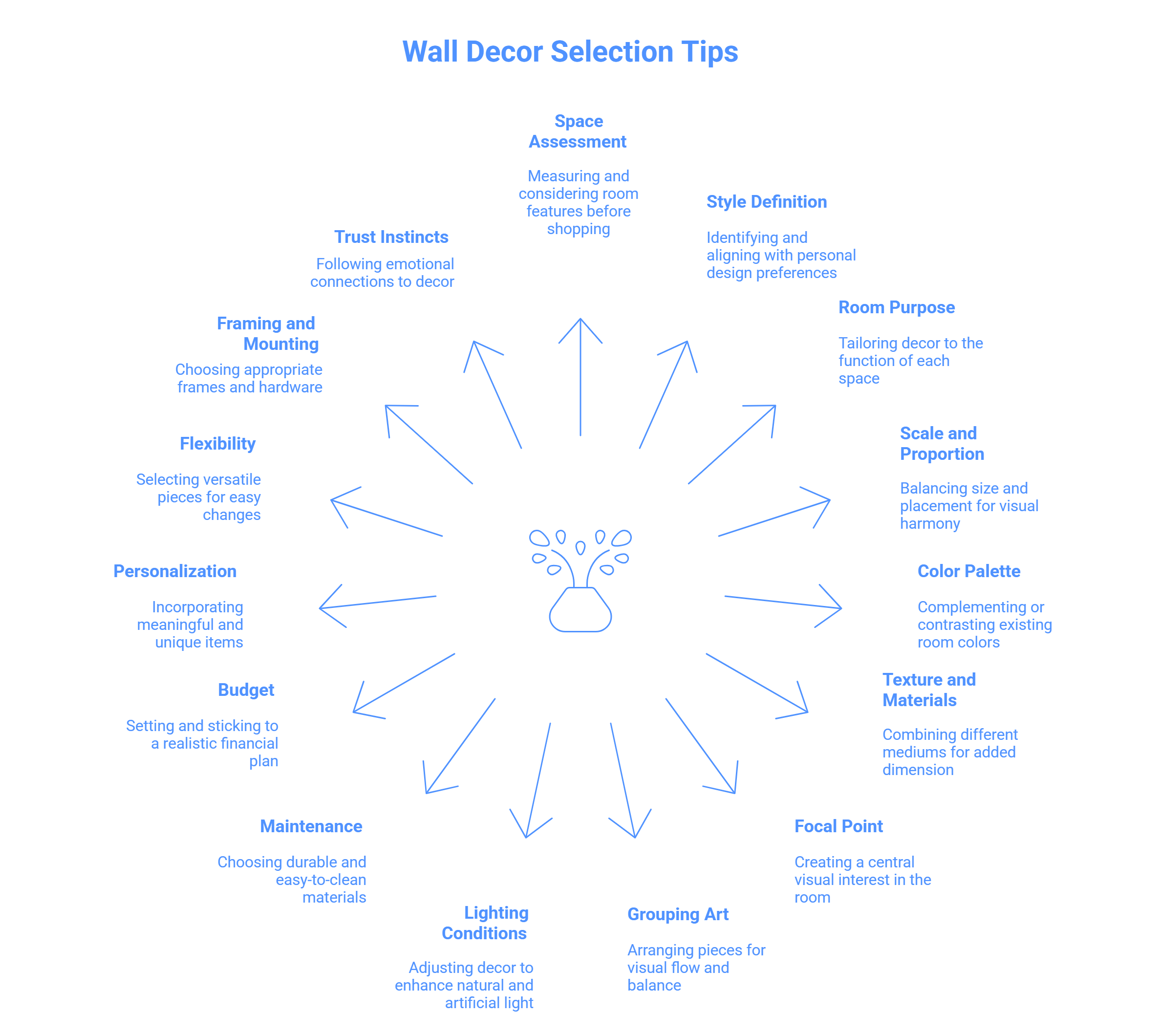
In this guide, we’ll explore:
- The impact of wall decor on a room’s atmosphere and personality
- Why choosing the right wall pieces matters for both aesthetics and functionality?
- Key steps to ensure your wall decor enhances your space
1. Assess Your Space First
Before rushing into a wall decor shopping spree, it’s essential to understand your space. This step is crucial in ensuring that your chosen pieces complement the size, shape, and overall feel of the room.
Measure Your Wall Dimensions
- Take precise measurements: Ensure you know the width and height of the walls you want to decorate. This prevents purchasing decor that is too large or too small for your space.
- Avoid overcrowding: Choose pieces that leave space to breathe and don’t overwhelm the room.
Consider Ceiling Height and Architectural Features
- Tall ceilings: For rooms with high ceilings, consider using larger or vertically oriented pieces that draw the eye upward, creating a sense of grandeur.
- Architectural features: Be mindful of windows, doors, and built-in shelves when choosing wall decor to maintain balance and avoid obstruction.
Account for Furniture Placement and Sight Lines
- Furniture layout: The position of your furniture should influence the size and placement of your wall decor. For example, artwork above a couch or shelves next to a window can define the room’s flow.
- Sight lines: Ensure that your decor aligns with sight lines, allowing people to appreciate it without distractions.
How Room Size Influences Decor Scale
- Small rooms: Opt for smaller, well-placed pieces that won’t overwhelm the space. Think framed prints or a couple of smaller canvases in a grouping.
- Large rooms: Use large or multiple pieces to fill the space appropriately. Oversized art or a gallery wall can help balance the proportion of the room.
2. Define Your Style and Vision
Understanding your style and vision is key to selecting the right wall decor. The pieces you choose should complement your overall design and reflect your personal taste.
Identify Your Interior Design Style
Start by identifying your interior design style. Your wall decor should align with the vibe you want to achieve in the room. Here are some common styles to consider:
- Modern: Sleek lines, minimalistic designs, and abstract art.
- Traditional: Classic art pieces, framed prints, and ornate frames.
- Eclectic: A mix of styles, such as vintage items paired with contemporary art or photographs.
Create a Mood Board or Collection of Inspiration Images
- Gather inspiration: Use platforms like Pinterest or Instagram to curate a collection of designs that resonate with you.
- Stay focused: Narrow down your choices based on the color palette, textures, and overall feel you want for the room.
Ensure Wall Decor Aligns with Existing Room Aesthetics
- Consistency is key: Ensure the wall decor doesn’t clash with the room’s existing elements, like furniture and flooring. Harmonize the color scheme, style, and materials for a cohesive look.
- Don’t forget the finishing touches: Pay attention to frame styles, materials, and the color of the decor to ensure everything blends together smoothly.
Balance Between Personal Taste and Cohesive Design
- Express yourself: While it’s essential to consider the room’s design, your personal style should shine through. Choose wall decor that resonates with you, whether it’s a favorite color, artwork, or quote.
- Create harmony: Ensure the decor feels like it belongs in the room without feeling out of place. Combining personal items with functional pieces helps strike this balance.
3. Consider the Room’s Purpose
The purpose of a room plays a significant role in determining what type of wall decor will work best. Each room has its own atmosphere and function, which should be reflected in the art and decor you choose.
How Function Influences Decor Choices
- Bedroom: Choose calming and soothing wall decor, like serene landscapes, abstract art, or soft tones, to create a relaxing environment. Avoid overly bold or stimulating pieces that could disrupt sleep.
- Kitchen: Opt for playful, vibrant art that complements the cooking space. Food-related prints, vintage posters, or bright colors work well in a kitchen, as they encourage energy and creativity.
- Office: Wall decor in an office should foster focus and productivity. Consider motivational quotes, modern art, or minimalistic pieces to create a space conducive to work.
Creating Appropriate Moods for Different Spaces
- Living room: The living room is often the heart of the home, so aim for decor that balances warmth and functionality. Artwork with soft colors, family portraits, or a large statement piece can enhance comfort.
- Bathroom: Light, fresh, and airy designs are great for bathrooms. Opt for pieces that evoke relaxation, such as beach scenes, nature-inspired prints, or abstract art in calming shades.
Practical Considerations for High-Traffic Areas
- Hallways and corridors: These spaces often have limited furniture, so wall decor can become the focal point. Opt for durable, easy-to-clean pieces, like framed prints or sturdy canvas art.
- Entryways: The first impression matters. Choose welcoming pieces such as mirrors, unique art, or inspirational quotes that set the tone for the rest of the home.
Special Considerations for Children’s Rooms or Multi-purpose Spaces
- Children’s rooms: Go for colorful, playful, and educational wall decor like animal prints, alphabet art, or favorite characters. The decor should be safe, sturdy, and visually stimulating for children.
- Multi-purpose spaces: For rooms that serve multiple functions, like a guest bedroom/office, choose versatile decor that suits both purposes. Neutral colors and flexible designs, such as a simple geometric print or abstract art, can complement the changing needs of the space.
4. Understand Scale and Proportion
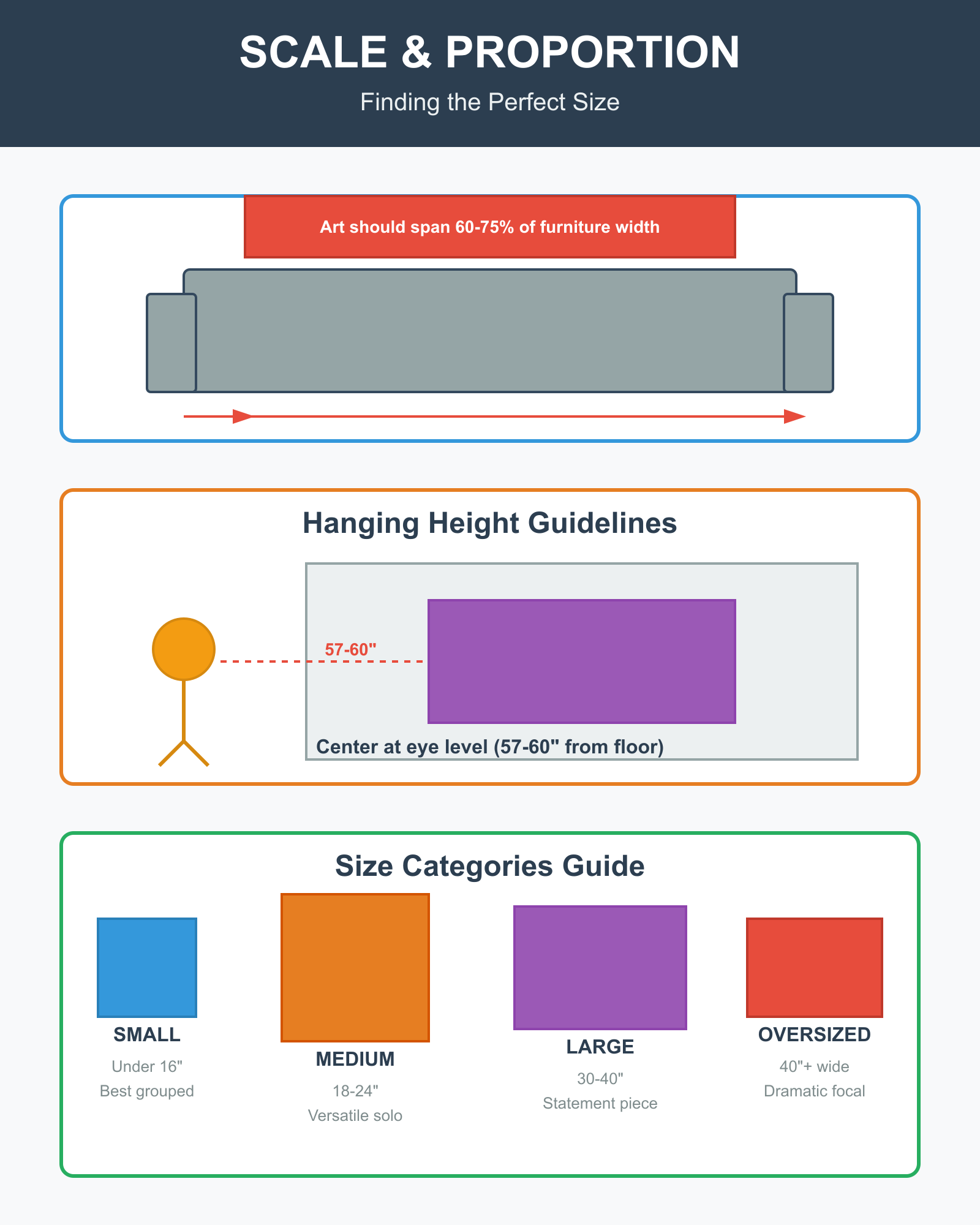
Achieving the right scale and proportion in wall decor ensures your pieces complement the room rather than overpower it. A well-balanced approach helps to enhance the space’s overall flow.
The Rule of Thumb: Art Should Cover 60-75% of Wall Space Above Furniture
- Guideline: The artwork should ideally cover around 60-75% of the wall space above furniture to create a proportional and harmonious look.
- Considerations: Ensure the artwork isn’t too large for the wall or too small for the area it’s placed above. Oversized pieces can overwhelm a small room, while small pieces can look lost in a large space.
Balancing Large Statement Pieces with Smaller Works
- Large statement pieces: Use bold, oversized art in larger spaces, such as living rooms or entryways, to create visual interest.
- Smaller works: Smaller pieces are perfect for intimate spaces, like bedrooms or bathrooms, where they can be grouped in a gallery wall arrangement.
Avoiding Pieces That Are Too Small or Overwhelming
- Too small: Avoid hanging small pieces in large rooms or on expansive walls, as they may seem insignificant and out of place.
- Too overwhelming: Be cautious of oversized artwork that may overpower the room. Aim for pieces that complement the overall design, leaving ample space for other elements.
Height Guidelines for Hanging Art
- Eye level: Generally, art should be hung at eye level. For most people, this is about 57-60 inches from the floor to the center of the artwork.
- Above furniture: When hanging art above furniture, ensure the bottom of the frame is about 6-8 inches above the furniture’s top edge. This creates a cohesive look while maintaining balance.
5. Choose the Right Color Palette
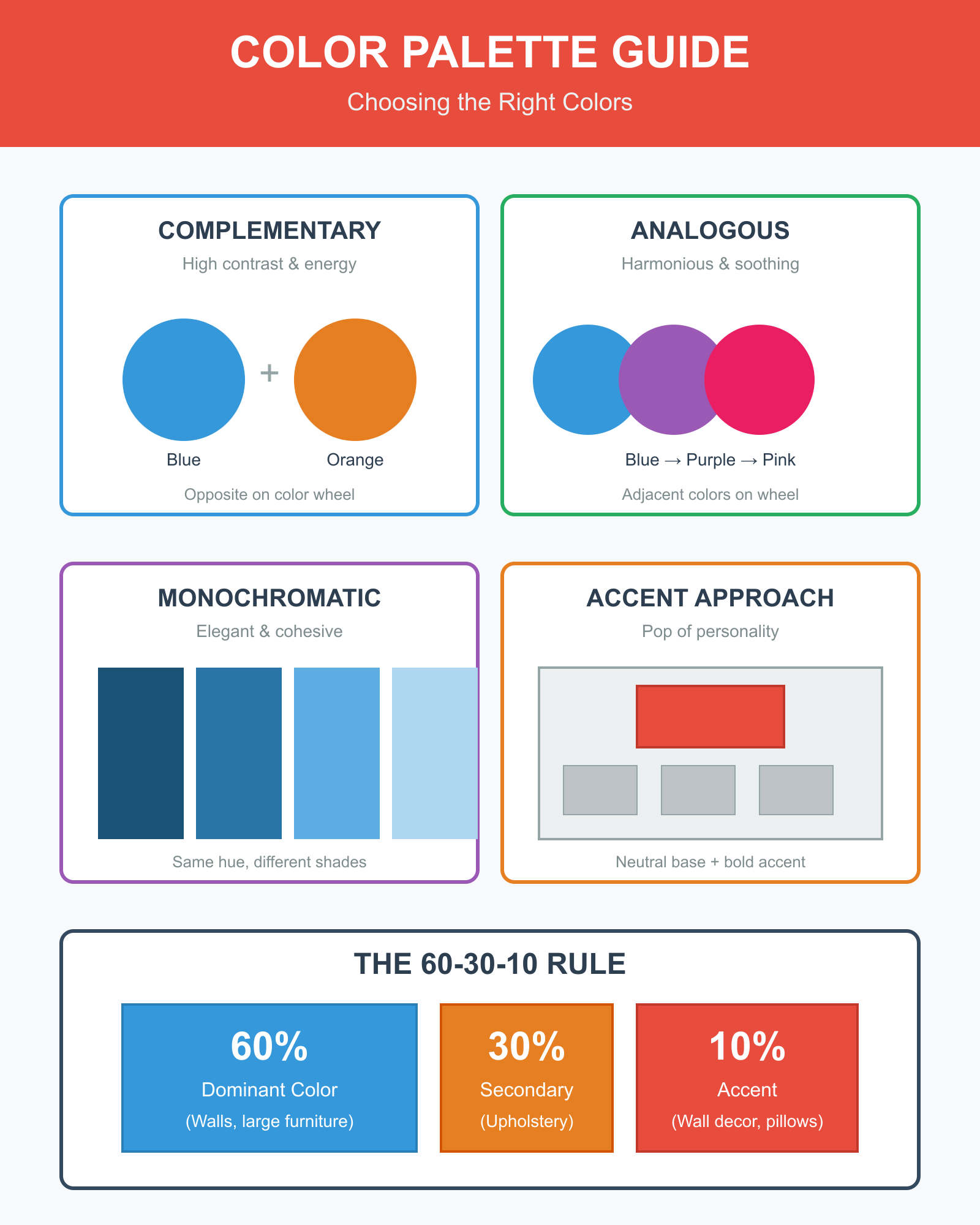
The color palette of your wall decor plays a critical role in how the room feels and functions. The right colors can harmonize the space, create contrast, and influence mood.
Complementing Existing Room Colors
- Match existing hues: Choose wall decor colors that complement the room’s existing color scheme. If your walls are neutral, vibrant or bold decor can add visual interest. If the room is already colorful, opt for art with more muted tones to avoid overwhelming the space.
Using Wall Decor to Introduce Accent Colors
- Pop of color: Wall decor is a great way to introduce accent colors into the room. For example, if your space has a neutral base of gray and white, colorful art can bring life to the room and create a focal point.
- Harmonizing: Use accent colors in the wall decor that tie into other parts of the room, such as throw pillows, rugs, or furniture, for a cohesive look.
Creating Contrast vs. Harmony
- Contrast: If you want to make a bold statement, choose wall decor with contrasting colors. For example, a deep navy blue painting on white walls can create a striking contrast that draws attention.
- Harmony: For a more soothing and harmonious look, choose wall decor with colors that flow naturally with the room. Soft pastels, neutrals, or shades that match the furniture can create a calm, unified atmosphere.
Considering How Colors Affect Mood and Perception
- Warm colors: Red, orange, and yellow evoke energy and warmth. These colors work well in high-energy spaces like kitchens or dining rooms.
- Cool colors: Blue, green, and purple create calm and relaxation, making them ideal for bedrooms or bathrooms where you want to unwind.
- Neutral colors: Beige, gray, and white are versatile and work well in any room, providing a timeless, understated backdrop for any decor style.
6. Mix Textures and Materials
One of the most effective ways to elevate your wall decor is by mixing textures and materials. A combination of different mediums can bring depth, warmth, and interest to your walls, creating a space that feels dynamic and engaging.
Combining Different Mediums (Canvas, Metal, Wood, Fabric)
- Canvas art: Traditional and versatile, canvas art adds a timeless quality to any space. Use canvas prints or paintings to establish a solid foundation for your decor.
- Metal: Incorporating metal elements—like sculptures or framed metal art—adds a sleek, industrial touch that contrasts beautifully with softer materials.
- Wood: Wood pieces bring warmth and texture to a room. Whether it’s a rustic wooden frame or a wood-based art piece, these items add an organic feel.
- Fabric: Tapestries, woven textiles, or fabric wall hangings introduce a tactile element to your decor, adding softness and a sense of coziness to the room.
Adding Dimension with 3D Elements
- Sculptural elements: Integrating three-dimensional pieces, such as wall sculptures or hanging objects, creates a multi-sensory experience. This can be particularly striking in spaces like living rooms or entryways.
- Layered textures: Mix flat artwork with 3D elements to add depth and dimension to your walls. For example, pair a traditional framed painting with a sculptural piece nearby to create a varied visual impact.
Balancing Smooth and Textured Surfaces
- Smooth surfaces: Incorporate sleek, smooth materials like glass, acrylic, or polished metal for a modern, clean look.
- Textured surfaces: Add texture with materials such as canvas, wood, or fabric to balance the smooth surfaces and create contrast.
- Harmonize the contrasts: The key to balancing smooth and textured materials is ensuring that they complement each other. For instance, a smooth, minimalist metal frame can be paired with a richly textured canvas print to create a well-rounded aesthetic.
How Texture Impacts Visual Interest
- Adds layers: Combining different textures creates layers of visual interest. It makes the decor feel more engaging and dynamic.
- Highlights focal points: Textured elements can help draw attention to key areas of your wall decor, directing the viewer’s eye to the most important pieces.
- Emotional impact: Textures also influence the atmosphere of a room—smooth surfaces often evoke a modern, clean feel, while textured elements can create warmth and a sense of comfort.
7. Create a Focal Point
Every room benefits from a clear focal point—something that immediately grabs attention and sets the tone for the rest of the space. By strategically choosing and placing focal pieces, you can elevate your room’s aesthetic.
Identifying the Natural Focal Wall in Your Room
- Room layout: Look for the wall that naturally draws the eye. This could be the wall that holds the largest piece of furniture, like a sofa or bed, or a wall with architectural features such as a fireplace or a large window.
- Consider lighting: Walls with good natural light can make a great focal point, as they draw attention naturally. You can highlight this feature with decor that complements the light.
Using Statement Pieces Strategically
- Statement artwork: A large, eye-catching painting or art piece can serve as the primary focal point. Use bold colors, dramatic subject matter, or intricate details to make the piece stand out.
- Furniture and decor: For a more subtle focal point, a piece of furniture or an interesting decor element (like a statement mirror or sculptural wall art) can guide attention without overpowering the room.
Avoiding Competition Between Multiple Focal Points
- Keep it balanced: Too many focal points can create visual clutter and confuse the room’s flow. Select one primary focal point, and allow secondary elements to complement it without drawing attention away.
- Create hierarchy: Ensure that each piece has a purpose and is placed thoughtfully. The most prominent item should always be your focal point, with other items placed strategically to enhance the overall composition.
Drawing the Eye to Key Areas
- Use color and contrast: Bright colors, bold designs, or high contrast can help draw attention to specific pieces of decor.
- Frame the focal point: Arrange other elements around the focal point to create a frame or path that leads the eye naturally to the center.
8. Master the Art of Grouping
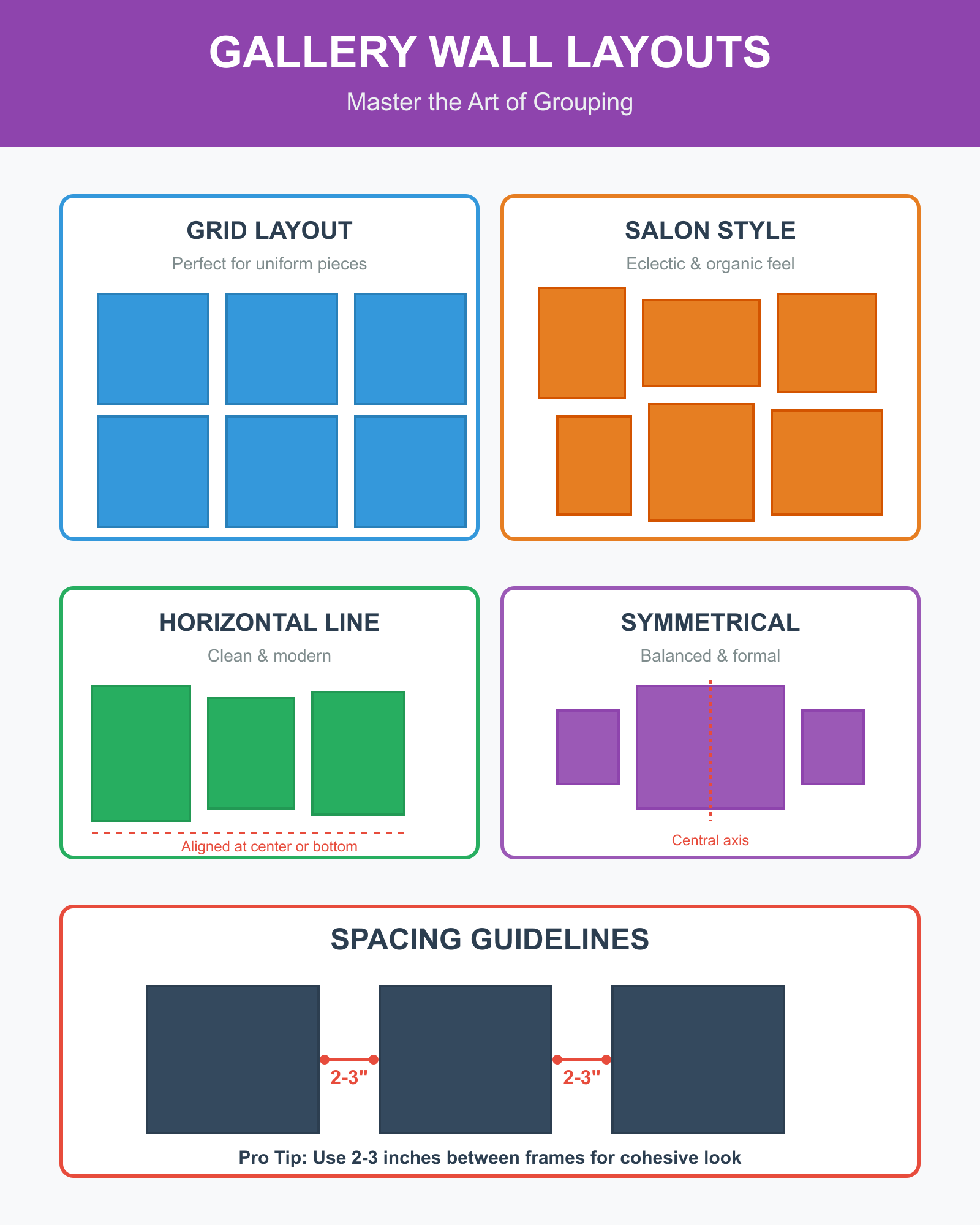
Grouping artwork and wall decor together in a thoughtful way creates cohesion and harmony within the space. Whether it’s a gallery wall or a small collection, the way you arrange your pieces can dramatically impact the look and feel of the room.
Gallery Wall Arrangements and Layouts
- Symmetrical layout: If you want a more formal or balanced feel, arrange your pieces symmetrically. This works well in spaces like dining rooms, offices, or living rooms.
- Asymmetrical layout: For a more relaxed, creative vibe, try an asymmetrical arrangement. Play with different sizes, frames, and orientations to create a lively, dynamic wall.
- Grid formation: A grid formation of equally spaced art pieces can create a modern, structured look, which works well for abstract or minimalist art.
The Power of Odd Numbers in Design
- Odd-numbered groupings: In design, odd numbers are often more visually appealing and create a natural rhythm. Try grouping your pieces in sets of 3, 5, or 7 for a pleasing aesthetic.
- Variation in sizes: Mix up the size of your pieces to create depth and interest while maintaining an odd-numbered grouping.
Spacing Guidelines Between Pieces
- Consistent spacing: The space between your artwork should be consistent to avoid overcrowding and to maintain a clean, organized look. A good rule of thumb is to leave about 2-3 inches of space between pieces.
- Vary the distance: If you’re working with a large collection, you can vary the space between pieces to create a more organic, gallery-style arrangement.
Creating Visual Flow in Collections
- Flowing composition: Arrange your pieces in a way that guides the eye across the wall. The arrangement should feel natural and allow viewers to flow from one piece to the next without abrupt stops.
- Balance the size: Mix larger, more prominent pieces with smaller ones to create visual flow and prevent any one area from feeling too heavy or distracting.
9. Consider Lighting Conditions
Lighting plays a crucial role in how your wall decor is perceived. It affects the color, visibility, and overall impact of the art, and can either enhance or detract from the decor’s beauty. Understanding the lighting conditions in your space will help you make smarter choices when selecting and displaying wall art.
How Natural Light Affects Color and Visibility
- Color changes: Natural light can bring out the true colors in art, especially vibrant hues. However, it can also alter colors depending on the time of day and the direction of sunlight. Consider the direction of the room’s windows and the amount of direct sunlight it receives when choosing colors for wall decor.
- Fading: Over time, exposure to direct sunlight can fade colors in your artwork. If your space gets a lot of sunlight, you may want to opt for UV-protected glass or consider using fade-resistant art pieces.
Adding Accent Lighting for Artwork
- Spotlighting: Proper lighting can elevate your wall art. Use accent lighting such as track lighting, picture lights, or wall-mounted fixtures to highlight key pieces, creating dramatic effects and drawing attention to your artwork.
- Soft lighting: For a more relaxed atmosphere, use soft, warm lighting to complement the colors in your art. This works well in living rooms, bedrooms, and galleries.
Avoiding Glare on Glass-Covered Pieces
- Positioning: When framing art behind glass, ensure that the artwork is positioned in a way that minimizes glare from overhead lights or windows. This can be done by adjusting the angle or using anti-glare glass.
- Consider matte frames: Matte finishes on glass can help reduce reflections, ensuring that your artwork remains visible from all angles.
Maximizing Impact in Dim Spaces
- Layered lighting: In spaces with limited natural light, use layered lighting techniques. Combine ambient, task, and accent lighting to create a well-lit environment that highlights your wall decor.
- Bright artwork: Consider using brighter, lighter artwork or pieces with reflective surfaces, such as metallic finishes or white tones, to make the room feel more open and vibrant.
10. Think About Maintenance and Durability
When selecting wall decor, it’s essential to consider how easy it is to maintain and how long it will last. The materials and the room’s function will determine what is best suited for your space.
Choosing Appropriate Materials for Each Room
- Bathrooms: Moisture-resistant materials are a must in bathrooms. Look for water-resistant frames, canvas art, or metal prints that won’t warp or degrade from humidity. Avoid paper-based artwork in high-moisture areas.
- Kitchens: Choose easy-to-clean pieces, such as framed prints or metal art, that can withstand splashes and heat. Avoid delicate materials that may be harder to maintain in cooking environments.
- Living and Bedrooms: For general living areas, you can choose a broader variety of materials, but always consider ease of cleaning. Fabric pieces may need regular dusting or cleaning, while canvas prints or metal frames are low-maintenance.
Ease of Cleaning Different Types of Decor
- Canvas prints: Dust regularly with a soft cloth, and use a vacuum with a brush attachment to remove dust without damaging the material.
- Framed art: Clean glass with a glass cleaner, and gently wipe down frames with a soft cloth to avoid scratches.
- Textile wall hangings: Wash fabric pieces according to the manufacturer’s instructions, or spot clean when needed. Be cautious with delicate fabrics to avoid damage.
Durability Considerations for High-Traffic Areas
- Durability: In high-traffic areas, choose sturdy materials that can handle wear and tear. Metal prints, acrylic, and canvas are typically more durable than paper-based art.
- Impact-resistant frames: For spaces like hallways, use frames designed to withstand accidental bumps or falls, especially in homes with children or pets.
UV Protection for Valuable Pieces
- UV-protected glass: For valuable artwork or photography, invest in frames with UV-protected glass to prevent fading and preserve the integrity of the colors over time.
- Avoid direct sunlight: Even with UV protection, it’s a good idea to avoid placing valuable pieces in direct sunlight for prolonged periods.
11. Set a Realistic Budget
Setting a budget is key to ensuring that you’re investing wisely in wall decor. It’s important to determine how much you want to spend and how you can find quality pieces within your price range.
Determining How Much to Invest in Wall Decor
- Budget planning: Decide how much you’re willing to invest in wall decor based on the room’s size, the importance of the space, and the quality of the decor you’re looking for. A statement piece for the living room may warrant a larger budget, while smaller decorative accents in a hallway might be more affordable.
- Prioritize key pieces: Focus your budget on important spaces, such as the living room or master bedroom, where the wall decor will have a more significant impact.
Finding Quality Pieces at Various Price Points
- Affordable options: Look for affordable yet high-quality prints, such as canvas or framed art, that fit within your budget. Websites like Etsy or local art fairs often feature unique pieces at a range of prices.
- Mid-range pieces: Invest in a few quality pieces, such as hand-painted art or limited-edition prints, for spaces where you want to make a stronger statement.
- Luxury investment: For valuable or high-end pieces, such as original paintings or fine art photography, be prepared to invest more. Ensure the piece complements your space and enhances the overall design.
When to Splurge vs. Save
- Splurge: Invest in key statement pieces that will define the room, such as large-scale artwork or rare sculptures. These should be items that enhance the overall atmosphere of the space.
- Save: Opt for more affordable decor for smaller spaces, like bathrooms, hallways, or offices. Functional decor like mirrors, small framed prints, or shelves can be cost-effective ways to decorate without overspending.
Long-Term Value Considerations
- Timeless pieces: Consider investing in art and decor that will withstand trends and last for years. Choose pieces that reflect your personal style and will remain appealing over time.
- Resale value: If purchasing high-value art, consider its potential for resale value in the future. Limited-edition pieces or works by renowned artists may appreciate over time.
12. Personalize with Meaningful Pieces
Personalizing your wall decor with meaningful items can transform a space from a generic room into one that tells a unique and personal story. Whether it’s a cherished family photo or a one-of-a-kind piece from a local artist, meaningful decor adds depth and warmth to your space.
Incorporating Family Photos and Memories
- Create a gallery of memories: Family photos, vacation snapshots, or personal mementos can make your walls feel more intimate and welcoming. Consider grouping family photos in a cohesive layout to tell a story of your family’s journey.
- Highlight special moments: Choose meaningful moments—like weddings, holidays, or the birth of a child—and display them prominently in your living room or hallway, where they can bring joy and connection to the space.
Supporting Local Artists and Unique Finds
- Art with a story: Invest in pieces from local artists or handcrafted items that have unique stories behind them. These pieces not only support the local community but also add originality to your decor.
- Shop locally: Explore local galleries, craft fairs, or online marketplaces for original artwork, pottery, or textiles. These pieces are often one-of-a-kind and will set your space apart from others.
Balancing Trendy Items with Timeless Pieces
- Trend vs. timeless: It’s easy to be tempted by current trends in wall decor, but balancing these with timeless pieces ensures that your decor remains relevant for years to come. Opt for a classic piece, such as a vintage painting or timeless black-and-white photography, alongside trendier elements like minimalist prints or bold graphic art.
- Timelessness: Stick to classic art styles and colors that complement your personal taste, and introduce trendy items in smaller doses—like decorative mirrors, seasonal prints, or abstract art.
Creating Conversation Starters
- Unique pieces: Choose artwork or decor that sparks conversation. A quirky painting, an antique map, or a vintage poster can be interesting and fun talking points for guests.
- Personal touches: Personalize spaces with items that tell a story about you, such as a framed family heirloom, a favorite quote, or travel souvenirs, making your space a reflection of your personality.
13. Consider Flexibility and Versatility
Choosing versatile wall decor ensures that your space remains adaptable to future changes in your style, furniture, or even seasonal preferences. With the right approach, you can move and refresh your decor without a major investment.
Choosing Pieces That Can Move Between Rooms
- Transitional decor: Opt for pieces that can seamlessly fit into different rooms or functions. For example, a large abstract canvas could work in the living room, bedroom, or even hallway, allowing you to move it between spaces.
- Neutral decor: Artwork or decor in neutral tones or simple designs is more likely to blend into various room styles, giving you flexibility as your needs evolve.
Seasonal Rotation Possibilities
- Rotate decor: For a fresh feel every few months, consider rotating your wall decor based on the season or mood you want to create. For example, swap out light, airy prints in the summer with warm, rich pieces in the winter.
- Create variety: This approach not only helps keep your decor feeling new but also lets you express your creativity by experimenting with different combinations of pieces.
Frames and Mounting Systems That Allow Easy Changes
- Modular systems: Use frames or wall-mounted systems that allow you to easily change artwork or photos. Magnetic frames, multi-photo hanging systems, or a picture rail are excellent options for swapping pieces out with minimal effort.
- Flexible layouts: Choose a flexible hanging layout, such as a grid of smaller frames, that allows you to move or replace pieces as your decor preferences change.
Future-Proofing Your Choices
- Neutral colors: When selecting art, frames, or decor, opt for neutral colors or timeless themes that won’t clash with future room redesigns.
- Adjustable styles: Choose art and decor that can evolve with changing trends or seasons, ensuring your space remains relevant and fresh over time without requiring constant updates.
14. Pay Attention to Framing and Mounting
The way you frame and mount your wall decor is just as important as the artwork itself. Proper framing and mounting ensure that your pieces stay secure, look polished, and complement the overall design of the room.
Selecting Appropriate Frame Styles and Colors
- Frame styles: Choose frames that complement both the artwork and the room’s decor style. For a modern look, opt for sleek, thin frames. For a more traditional style, go for ornate, wooden frames with a vintage feel.
- Frame colors: The color of your frame should either match or contrast with your wall decor. Black and white frames are timeless and work well with most art, while gold or silver frames can add a touch of luxury or elegance.
Mat Selection and Its Impact
- Choosing a mat: A mat around artwork adds depth and creates separation between the art and the frame. The color of the mat should complement the colors in the artwork, typically in neutral tones like white, off-white, or beige.
- Impact of the mat: A well-chosen mat can elevate the art, making it appear more refined and drawing attention to key details. For bold or colorful art, a simple mat works best to allow the artwork to take center stage.
Proper Hanging Hardware for Different Wall Types
- Lightweight art: For small or lightweight pieces, standard picture hooks or adhesive strips work well. Make sure the hooks are securely attached to avoid the art falling.
- Heavy artwork: For large, heavy pieces, use more robust mounting hardware like wall anchors or a hanging system that can support the weight. For plaster or brick walls, use anchors specifically designed for those materials.
- Wall type considerations: Consider the type of wall you’re hanging on. Drywall requires different anchors than concrete or brick walls, so it’s important to use the correct hardware to prevent damage.
Professional vs. DIY Installation Considerations
- DIY installation: Hanging wall decor can be a fun and fulfilling DIY project. With the right tools, you can install frames and art yourself, but always make sure to measure and level the pieces before hanging them to ensure symmetry.
- Professional installation: If you’re unsure about placement or if the art is particularly valuable, it’s worth hiring a professional to ensure everything is hung correctly and securely. Professionals can also help with gallery wall arrangements or special hanging techniques.
15. Trust Your Instincts
When it comes to choosing wall decor, trusting your instincts is one of the most powerful tools you can use. Your space is an extension of you, and the pieces you select should resonate emotionally and align with your personal style. Don’t be afraid to follow what feels right for you—after all, your home should reflect who you are.
The Importance of Emotional Connection to Your Decor
- Personal connection: Wall decor should evoke positive emotions and tell a story about who you are. Whether it’s a painting that reminds you of a special trip or a photograph that brings back fond memories, your pieces should hold personal significance.
- Creating a vibe: Trust your instincts when selecting pieces that create the mood you want in a room. If a particular color palette, texture, or style resonates with you, it’s likely that it will bring the atmosphere you’re aiming for.
When to Break Design “Rules”
- Breaking the mold: While design principles are helpful, there’s no one-size-fits-all approach to home decor. Don’t be afraid to break design “rules” when it feels right. If you love an unconventional piece or an unexpected color combination, embrace it—sometimes, the most unique designs come from stepping outside the norm.
- Innovative combinations: Experiment with mixing styles that seem unexpected, like combining industrial and rustic elements or juxtaposing modern artwork with antique frames. These risks can make your space feel more dynamic and personal.
Living with Pieces Before Committing
- Test and reflect: Sometimes, it’s best to live with a piece of decor before fully committing. Place artwork or prints in different locations and see how it feels in the space over time. This gives you a chance to see how it interacts with the rest of the room and whether it truly enhances the atmosphere.
- Move things around: If you’re unsure about a piece, try moving it around the room or even to another room. This can help you determine if the decor belongs in that spot or if it would work better elsewhere.
Allowing Your Space to Evolve Naturally
- Organic evolution: Over time, your space will naturally evolve with your tastes and needs. Don’t feel pressured to have everything perfectly planned from the beginning. As you collect new decor pieces or make changes in other areas of your home, let your wall art grow and change with you.
- Embrace change: Allow your space to adapt to different seasons, phases of life, or even new pieces that inspire you. This creates a living, breathing environment that feels personal and constantly evolving.
Conclusion
Decorating your walls is an ongoing journey, and it’s important to remember that your choices don’t have to be set in stone. The key considerations—understanding your space, defining your style, and trusting your instincts—are just the beginning. With time, your walls will become a reflection of your unique personality and the memories you create within your home.
Recap of Key Considerations
- Space assessment: Measure and consider the size, layout, and lighting of your room before selecting decor.
- Personal style: Choose pieces that resonate with you and balance trends with timeless elements.
- Emotional connection: Don’t underestimate the power of emotional connection to your decor. Your space should feel like you.
- Experimentation: Trust your instincts, and don’t be afraid to break design rules. Allow your space to evolve over time.
Encouragement to Take Time with Decisions
Decorating your walls is not a race. Take your time to explore different pieces, experiment with placement, and allow the space to develop at its own pace. Wall decor is a way to express your personal style, and it’s worth taking the time to find the right elements that make you feel at home.
Reminder That Wall Decor is an Ongoing Journey
Remember, your wall decor doesn’t need to be perfect from the start. As your life and style change, so can your decor. Over time, your walls will reflect your evolving tastes, memories, and personality.
Final Thoughts on Creating a Space That Reflects Personal Style
Your home is a canvas, and the walls are where you can make your mark. By thoughtfully choosing wall decor that resonates with you and allows the space to evolve naturally, you create a living space that feels uniquely yours.
Additional Resources
Where to Shop for Various Styles and Budgets
- Affordable decor: Stores like IKEA, Target, and Wayfair offer a wide range of affordable decor that fits many styles and budgets.
- Unique finds: Etsy, local art galleries, and flea markets provide opportunities to find one-of-a-kind pieces that add personality and originality to your space.
- High-end options: For luxury decor, look into galleries, design boutiques, and premium home decor brands for investment pieces.
Apps and Tools for Visualizing Wall Arrangements
- Roomstyler 3D Home Planner: A free app that allows you to visualize wall art and furniture in a 3D rendering of your room.
- Canva: A design tool where you can create mockups of your room and try out different art pieces.
- Artrooms: An app that helps you visualize different artwork styles on your walls, making it easier to decide on what to display.
Professional Services to Consider
- Interior designers: If you need help fine-tuning your wall decor or creating a cohesive design, working with a professional can provide valuable insight.
- Art consultants: For high-end art collections, art consultants can guide you in choosing pieces that suit your space and style, while also offering advice on investment potential.
Further Reading on Interior Design Principles
- “The Interior Design Handbook” by Frida Ramstedt: A comprehensive guide to creating harmonious and functional interiors.
- “The Elements of Style” by Erin Gates: A guide to creating stylish and inviting spaces with tips on everything from furniture to wall decor.
- Online resources: Websites like Apartment Therapy, Houzz, and Design*Sponge offer endless inspiration and practical advice on decorating your home.
By leveraging these resources and trusting your instincts, you can create a space that feels comfortable, reflects your personality, and evolves with you over time.