I. Introduction: The Evolution of Home Office Design
The rise of remote work reshapes home office design. Previously, makeshift offices now serve productivity and creativity. The hybrid model demands adaptable spaces that support long hours, video calls, and brainstorming while feeling inviting.
In 2026, trends favor ergonomic, sustainable, and stylish designs. Modular furniture, biophilic elements, and smart technology enhance functionality. The goal is a productive yet aesthetically pleasing environment.
Home offices now include thoughtful features like intelligent storage and comfortable layouts. The focus shifts towards permanent setups that meet both professional and personal needs.
Human-centered design emphasizes individual experience. Comfort and flexibility drive 2026 office evolution, fostering creativity and well-being.
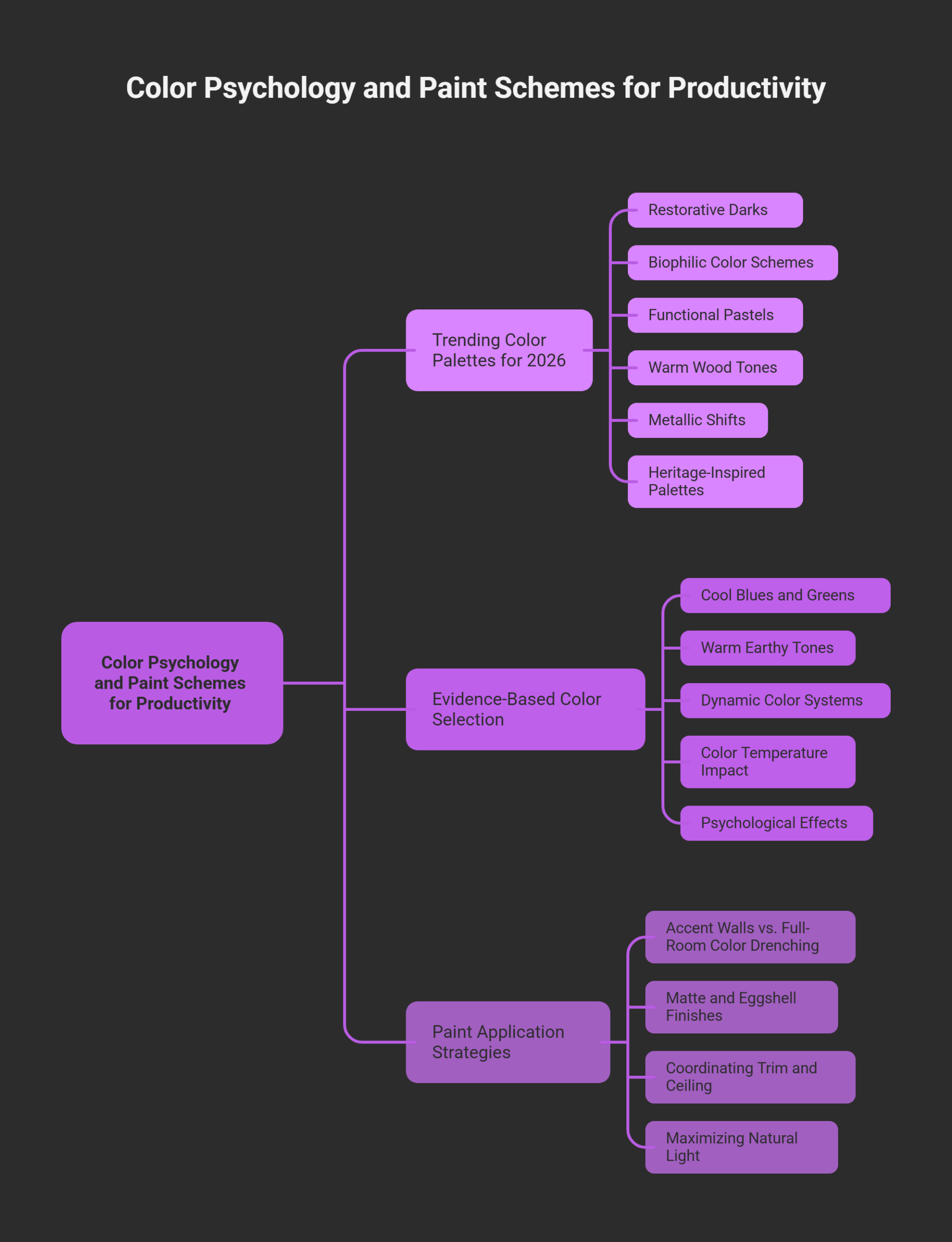
II. Color Psychology and Paint Schemes for Productivity
In 2026, the emphasis is on creating a balanced, calming, and motivating environment through color.
A. Trending Color Palettes for 2026
The color trends for 2026 reflect a desire for balance and comfort. From deep, restorative hues to bright, biophilic greens, the year’s color schemes are designed to optimize productivity and well-being.
Restorative Darks: Rojo Marrón, Plum Brown, and Deep Moody Hues
These rich, earthy tones create a sophisticated and cozy atmosphere. Deep browns, like Rojo Marrón and Plum Brown, provide a grounding effect that can enhance focus and promote relaxation in creative workspaces.
Biophilic Color Schemes: Forest Greens, Sunrise Oranges, Earthy Tones
Bringing nature indoors continues to be a top trend in 2026. Forest greens and earthy tones evoke a sense of calm, while sunrise oranges add warmth and energy to the space. These colors are perfect for analytical work and brainstorming areas where you want to maintain a fresh, energized mindset.
Functional Pastels: Sage Green, Powder Blue, Dusty Rose
Soft and gentle, pastels are ideal for creating multi-functional spaces. Sage green and dusty rose are calming and easy to pair with other design elements, making them perfect for offices that require both focus and creativity.
Warm Wood Tones: Cherrywood Red, Walnut Brown, Aged Bronze
Wood tones are making a strong comeback in 2026, with deeper shades like cherrywood red and walnut brown adding warmth and elegance to your home office. These tones are versatile and pair well with both traditional and modern designs.
Metallic Shifts: Silver Birch, Steel Blue, Brushed Finishes
For a contemporary touch, metallics like silver birch and steel blue add a sleek and futuristic edge to home office spaces. Brushed finishes on furniture and fixtures complement these tones, creating a polished, professional look.
Heritage-Inspired Palettes: Olive Stone, Peach Quartz, Burnt Sienna
Inspired by vintage aesthetics, heritage palettes include olive stone, peach quartz, and burnt sienna, offering a nostalgic yet modern feel. These colors are perfect for offices where style and sophistication are paramount.
| Color Type | Best For | Mood Effect | Pairing Suggestions |
| Restorative Darks | Creative professionals | Calm, focused | White trim, brass accents |
| Biophilic Greens | Analytical work | Refreshed, balanced | Natural wood, plants |
| Functional Pastels | Multi-use spaces | Gentle, adaptable | Warm metals, soft textiles |
| Warm Wood Tones | Cozy, welcoming offices | Grounding, warm | Bright accents, neutral tones |
| Metallic Shifts | Modern, tech-savvy spaces | Sleek, contemporary | Black, white, silver accents |
| Heritage-Inspired | Vintage-inspired workspaces | Nostalgic, stylish | Brass, warm metals |
💡 Pro Tip: Test paint colors in your actual office space at different times of day before committing to a full room.
B. Evidence-Based Color Selection
Research consistently shows that the colors in your workspace can influence mood, productivity, and focus. Here’s a breakdown of how color can affect your work performance.
Cool Blues and Greens for Sustained Concentration
Cool tones like blues and greens are ideal for areas that require sustained focus and concentration. These colors have been shown to lower stress levels and enhance cognitive function, making them perfect for tasks that demand attention to detail.
Warm Earthy Tones for Client-Facing Spaces
If your home office is also used for meetings or client calls, consider incorporating warm earthy tones like walnut brown or plum brown. These colors evoke trust and professionalism while creating a calm, welcoming environment for guests.
Dynamic Color Systems and Programmable LED Lighting
LED lighting systems that allow you to adjust color temperatures can create an ideal work environment throughout the day. Cooler lights are best for focus and clarity, while warmer lights help create a relaxed atmosphere for brainstorming or evening work.
| Color Type | Mood Effect | Best For | Suggested Use |
| Cool Blues | Focused, calm | Creative workspaces, offices | Morning work hours, detailed tasks |
| Warm Earthy Tones | Grounding, trust | Client meetings, reception areas | Client-facing spaces |
| Dynamic LED Lighting | Adjustable | All workspaces | Personalized lighting for various tasks |
⚠️ Important Warning: Too much blue can cause anxiety in certain individuals. Balance it with warmer tones to prevent overstimulation.
C. Paint Application Strategies
Once you’ve selected your colors, the next step is deciding how to apply them. In 2026, the trend is shifting from simple accent walls to full-room color drenching for a more immersive and cohesive workspace experience.
Accent Walls vs. Full-Room Color Drenching
An accent wall can add personality and color contrast without overwhelming the space, while full-room color drenching creates a cohesive and immersive environment. Consider your room size, natural light availability, and the type of work you do when choosing between the two.
Matte and Eggshell Finishes for Walls
Matte and eggshell finishes are ideal for home offices because they reduce glare and make the space feel comfortable and inviting. These finishes are also practical for those who spend long hours in front of their screens.
Coordinating Trim, Ceiling, and Architectural Details
When selecting your colors, remember to coordinate your trim, ceiling, and other architectural details. Opt for lighter tones for trim and ceilings to make the room feel more expansive and airy.
Maximizing Natural Light with Paint Choices
Light tones like soft whites or pale pastels can maximize natural light, making the space feel brighter and more open. If you have limited natural light, avoid dark colors, as they can make the room feel small and cramped.
| Application Style | Best For | Effect on Space |
| Accent Wall | Bold, statement pieces | Adds depth, focus to one area |
| Full-Room Drenching | Cohesive, immersive environments | Creates harmony and spaciousness |
| Matte Finish | Quiet, non-glare work areas | Reduces glare, promotes focus |
| Eggshell Finish | Casual, approachable spaces | Soft and inviting |
💡 Quick Tip: Use a light, neutral color for ceilings to make your room feel more open.
Quick Takeaways:
- Cool colors enhance concentration, while warm tones foster trust and creativity.
- Consider the role of the room and adjust color choices to match the space’s purpose.
- Matte and eggshell finishes help reduce glare and create a calming atmosphere.
III. Furniture Selection and Ergonomic Design
In 2026, furniture choices are becoming more sophisticated, with a strong emphasis on ergonomics, flexibility, and technology integration. Whether you’re working long hours or setting up a multi-functional space, the right furniture can support your well-being and help you stay organized.
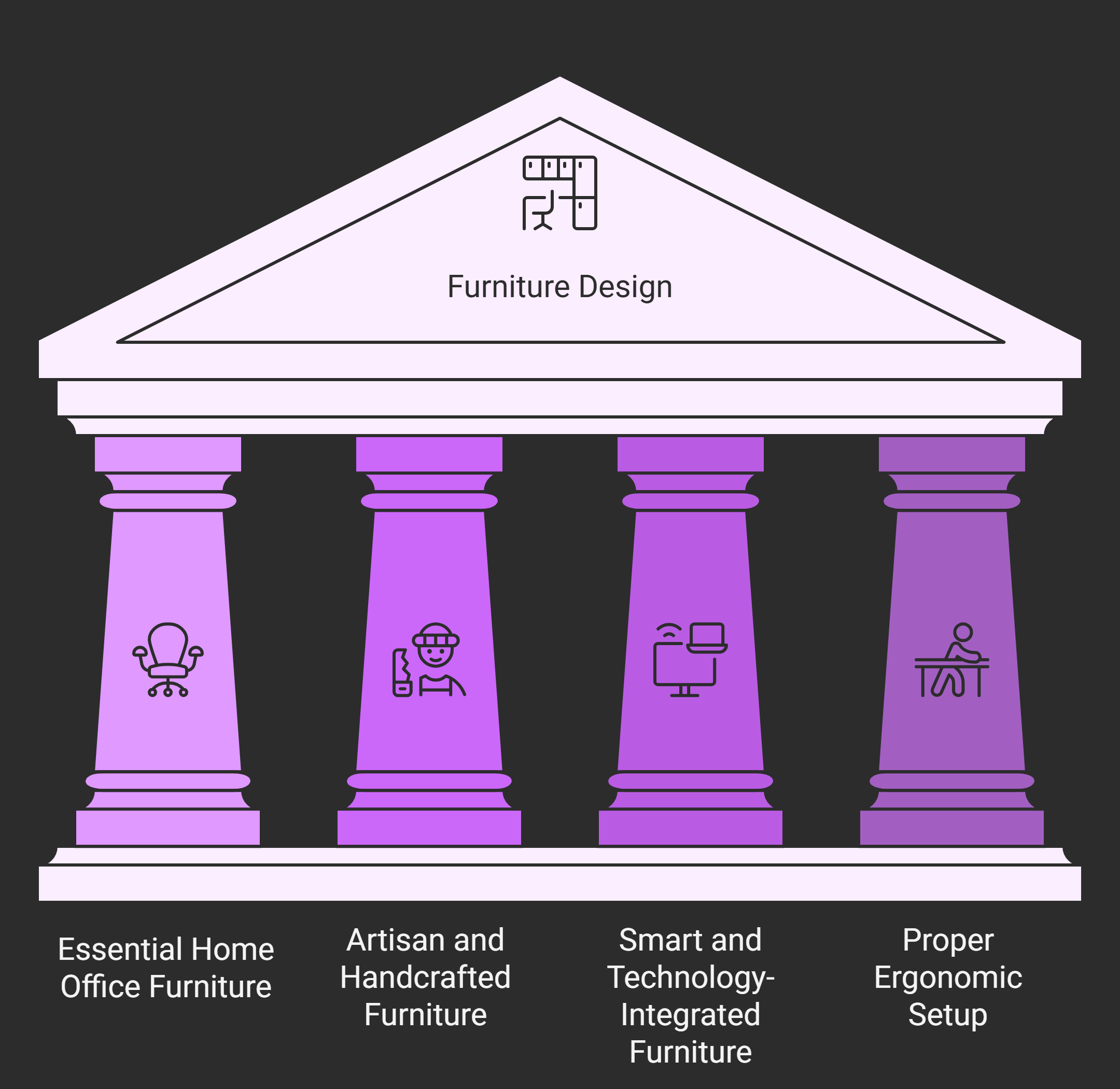
A. Essential Home Office Furniture
Ergonomic Office Chairs: Lumbar Support, Adjustable Features, Posture Optimization
An ergonomic chair is one of the most important investments for your home office. With features like lumbar support, adjustable seat heights, and reclining functions, these chairs support your posture and reduce strain on your body.
Key Features to Look For:
- Lumbar Support: Supports the lower back to maintain a natural spine curve.
- Adjustable Armrests: Helps reduce strain on the shoulders and wrists.
- Seat Height and Depth Adjustment: Ensures the chair fits your body, promoting proper posture.
- Breathable Material: Keeps you comfortable during long hours.
| Feature | Option A: Ergonomic Chair | Option B: Task Chair | Option C: Executive Chair |
| Lumbar Support | Adjustable | Fixed | Adjustable |
| Armrests | Adjustable | Non-adjustable | Adjustable |
| Material | Breathable mesh fabric | Vinyl | Leather |
| Price Range | $150-$350 | $50-$150 | $300-$600 |
💡 Pro Tip: Invest in a chair that provides lumbar support and is adjustable to your specific needs, reducing the risk of back pain.
Standing Desks and Height-Adjustable Workstations
Standing desks are a game-changer for home offices in 2026. These desks allow you to alternate between sitting and standing, reducing the negative health effects of prolonged sitting.
Key Benefits:
- Improved posture: Reduces the risk of back and neck pain.
- Increased energy levels: Standing encourages better circulation and alertness.
- Versatility: Height-adjustable workstations allow for easy transitions between sitting and standing positions.
| Desk Type | Features | Best For | Price Range |
| Standing Desk | Adjustable height, ergonomic design | Active work styles, flexibility | $200-$700 |
| Executive Desk | Spacious, built-in storage | Large workspaces, meetings | $500-$2,000 |
| Adjustable Desk | Memory presets, adjustable height | Dynamic work environments | $250-$800 |
L-Shaped Desks for Maximum Workspace Efficiency
For those with larger spaces or multiple tasks, L-shaped desks offer a smart solution. They maximize corner spaces and provide plenty of room for computer monitors, paperwork, and other office supplies.
Why Choose L-Shaped Desks?
- Increased workspace: Ample surface area for multiple tasks.
- Organization: Can separate workspaces for different activities.
- Compact layout: Utilizes corner spaces without crowding the room.
Modular Furniture Systems for Flexible Configurations
Modular furniture is ideal for creating a flexible workspace that can be easily reconfigured. Whether you’re expanding your workspace or adapting it to different tasks, modular units offer customizable options.
Benefits of Modular Furniture:
- Adaptability: Easily reconfigure your office layout.
- Space-saving: Can be compact or expanded based on your needs.
- Customizable: Choose the size, configuration, and storage options that fit your workflow.
Multi-functional Pieces: Convertible Desks, Sofa Beds, Dual-Purpose Storage
Multi-functional furniture is a must-have for home offices that serve dual purposes. Convertible desks, sofa beds, and dual-purpose storage units allow for efficient use of space without compromising on comfort or style.
Examples of Multi-functional Furniture:
- Convertible Desks: Easily transform from a desk to a dining table or workspace for multiple users.
- Sofa Beds: A comfortable seating area that doubles as a bed for guest accommodation.
- Dual-purpose Storage: Pieces like storage ottomans or bookshelves that provide seating and organizational space.
B. Artisan and Handcrafted Furniture Trends
Locally Sourced Woodworker-Commissioned Pieces
Buying locally sourced furniture means supporting small businesses and sustainable practices. Woodworker-commissioned pieces are often made with high-quality, durable materials and can be customized to suit your office’s aesthetic.
Sustainable Furniture with Visible Craftsmanship
Sustainability isn’t just about using eco-friendly materials; it’s also about supporting visible craftsmanship. Furniture made from sustainable woods or repurposed materials can add character and texture to your office while reducing your environmental footprint.
Solid Ash vs. Veneer Construction
When choosing furniture, understanding the difference between solid ash and veneer construction is important. Solid ash is durable, environmentally friendly, and adds warmth to a space. Veneer offers a similar look but is more affordable and lightweight.
| Feature | Solid Ash | Veneer |
| Durability | High | Moderate |
| Aesthetic | Rich, natural texture | Smooth, uniform appearance |
| Price Range | $300-$1,500 | $100-$600 |
| Environmental Impact | Sustainable, long-lasting | Often made from renewable materials |
Reclaimed Wood and Natural Material Palettes
Reclaimed wood furniture is a sustainable option that adds character and uniqueness to any home office. These pieces are made from old wood that has been repurposed, giving it a rustic yet elegant look.
Why Choose Reclaimed Wood?
- Sustainability: Reduces the need for new lumber and prevents waste.
- Unique look: Each piece has its own story and character.
- Durability: Reclaimed wood is often stronger than new wood due to its age.
Generational Investment Furniture Philosophy
In 2026, there’s a growing trend toward generational investment furniture, which focuses on high-quality pieces built to last for decades. These items are often made from solid materials like wood and metal, offering timeless designs that will last through future generations.
C. Smart and Technology-Integrated Furniture
Built-in Wireless Charging Surfaces
For those who rely heavily on electronics, desks and tables with built-in wireless charging surfaces provide convenience and organization. Simply place your device on the desk to start charging—no cables required.
Integrated Cable Management Systems
With the rise of electronic devices, managing cables has become a key concern. Furniture with integrated cable management systems helps keep cords organized and out of sight, creating a clean and tidy workspace.
Posture-Sensing Furniture with Micro-Adjustments
Some modern desks and chairs come with posture-sensing technology, which automatically adjusts based on your movements and posture, ensuring optimal comfort throughout the day.
| Feature | Option A: Smart Desk | Option B: Tech-Integrated Chair | Option C: Wireless Charging Table |
| Wireless Charging | Yes | No | Yes |
| Posture-Sensing | Yes | Yes | No |
| Cable Management | Integrated | None | Integrated |
| Price Range | $500-$1,000 | $150-$300 | $250-$700 |
D. Proper Ergonomic Setup
The design of your home office is only effective if it supports good posture and comfort. An ergonomic setup is crucial for preventing strain and promoting long-term health.
Neutral Posture Maintenance Techniques
To maintain a neutral posture, ensure that your back is straight, your feet are flat on the floor, and your thighs are parallel to the ground. Your desk should be at a height where your arms are comfortably bent at a 90-degree angle.
Chair Height and Depth Adjustment Guidelines
Adjust your chair so that your feet rest flat on the floor, and the seat’s depth allows for 2-4 inches of space between the back of your knees and the chair.
Monitor Placement and Eye-Level Optimization
Your monitor should be placed at eye level, about 20-30 inches from your eyes. This prevents neck strain and ensures comfortable viewing without constant adjustments.
Keyboard and Mouse Positioning Standards
Ensure that your keyboard and mouse are at elbow height and within easy reach. This reduces strain on your wrists and promotes smooth, natural movements.
Footrest Usage and Thigh Support Requirements
A footrest should be used if your feet don’t reach the floor comfortably. This ensures proper thigh support and minimizes pressure on the lower back.
Quick Takeaways:
- Invest in ergonomic furniture to optimize comfort and productivity
- Modular and multi-functional furniture offers flexibility for evolving needs
- Smart, tech-integrated furniture enhances convenience and efficiency
IV. Layout and Space Planning Strategies
Creating a well-organized, functional home office goes beyond furniture selection. It’s about designing a space that promotes productivity, comfort, and well-being. Proper layout and space planning can have a significant impact on how efficiently you work. Let’s explore various strategies to maximize your home office space in 2026.
A. Home Office Layout Configurations
Command Position Layout: Desk Facing Door with Solid Wall Behind
The command position layout is often considered the best arrangement for maintaining focus and feeling empowered in your workspace. In this setup, your desk is positioned facing the door with a solid wall behind you. This provides a sense of control over your environment and enhances your ability to concentrate.
Benefits:
- Psychological Control: Being able to see the door allows you to feel more in control.
- Privacy: The solid wall offers a sense of security and minimizes distractions.
| Feature | Command Position Layout |
| Desk Position | Desk faces door with wall behind |
| Privacy | High |
| Focus Level | High |
| Distractions | Low |
Window-Facing Arrangements: Maximizing Natural Light Exposure
A window-facing arrangement ensures that you benefit from natural light throughout the day. Positioning your desk near a window helps reduce eye strain, boosts mood, and keeps you energized. This setup is particularly beneficial for tasks that require creativity or brainstorming.
Benefits:
- Natural Light: Increases alertness and reduces eye strain.
- Inspiration: Views of nature can stimulate creativity and mental clarity.
| Feature | Window-Facing Arrangement |
| Desk Position | Desk faces window |
| Light Exposure | Maximum |
| Focus Level | Moderate to High |
| Distractions | Variable (depends on view) |
L-Shaped Workstation Setups
For those with larger spaces or multiple tasks, an L-shaped workstation is an excellent choice. This layout offers plenty of room for multiple monitors, a printer, and any other devices you need, all while maximizing corner space.
Benefits:
- Increased workspace: Ample surface area for multiple tasks.
- Separation of tasks: Can be used to segment different work functions.
| Feature | L-Shaped Workstation Setup |
| Desk Position | Corner-based |
| Workspace Efficiency | High |
| Task Separation | Effective |
| Distractions | Low to Moderate |
Floating Desk Configurations for Open Floor Plans
For open-plan spaces, a floating desk configuration allows you to create a workspace that doesn’t rely on walls or corners. It can be placed in the middle of the room or as part of a larger open layout.
Benefits:
- Open, airy feel: Ideal for small or open spaces.
- Multiple viewing angles: Keeps the space dynamic.
| Feature | Floating Desk Configuration |
| Desk Position | Central in the room |
| Space Feel | Open, airy |
| Workflow Efficiency | Moderate |
| Distractions | High (depending on environment) |
Dual-Desk Partner Arrangements for Shared Workspaces
In homes with multiple people working from the same space, dual-desk arrangements are ideal. These setups allow two individuals to share a space without feeling cramped. Each desk has enough room for personal work, yet they maintain a collaborative atmosphere.
Benefits:
- Collaboration: Encourages teamwork without sacrificing privacy.
- Shared resources: Convenient if you’re using similar tools or systems.
| Feature | Dual-Desk Partner Setup |
| Desk Position | Side-by-side or opposite |
| Space Efficiency | Moderate |
| Collaboration | High |
| Privacy | Moderate
|
Multi-Zone Home Office Layouts
In more spacious rooms, multi-zone layouts allow you to create separate zones for different activities. These zones can include a focused work area, a relaxation zone, and even a space for meetings.
Benefits:
- Separation of tasks: Helps prevent burnout by creating distinct areas for different activities.
- Flexibility: Can be adapted as work needs change.
| Feature | Multi-Zone Layout |
| Task Separation | High |
| Space Utilization | High |
| Flexibility | High |
| Distractions | Low
|
B. Creating Functional Work Zones
Focused Work Areas for Deep Concentration
Creating a focused work zone is crucial for tackling tasks that require deep concentration. This area should be free of distractions and equipped with everything you need to stay on task.
Key Elements:
- Ergonomic desk and chair for comfort during long hours
- Minimal clutter to maintain mental clarity
- Adequate lighting to reduce eye strain
Collaborative Zones for Video Conferencing and Zoom Calls
Designating a collaborative zone for video calls and virtual meetings can ensure that your video presence is professional and that you have a space free from interruptions.
Key Elements:
- Good lighting to ensure a well-lit video presence
- Background: Consider a simple, clean background or a bookshelf
- Acoustic considerations to reduce noise during meetings
Relaxation Corners for Mental Breaks
A relaxation corner is an essential part of any home office. Taking regular breaks is key to maintaining mental and physical health, so having a space to step away and recharge can significantly boost productivity.
Key Elements:
- Comfortable seating like a lounge chair or bean bag
- Natural elements like plants or artwork that inspire calmness
- Quiet space to disconnect from work
Movement and Wellness Zones
Movement is an essential part of maintaining focus and energy throughout the day. A movement and wellness zone could include a treadmill desk, yoga mats, or even a simple space for stretching.
Key Elements:
- Space for movement: A designated area for light exercise or stretching
- Ergonomic accessories: Anti-fatigue mats, balance boards, etc.
Storage and Organization Areas
A well-organized home office is crucial for maintaining focus. Storage and organization zones help keep your office tidy, allowing you to focus on your work.
Key Elements:
- Filing cabinets for important documents
- Floating shelves to store books, office supplies, and decor
- Labeling systems for easy access
C. Small Home Office Solutions
For those working with limited space, optimizing every inch is crucial. Small home office solutions focus on maximizing functionality while maintaining a streamlined, organized appearance.
Corner Desk Optimization
Corner desks are ideal for smaller spaces as they make efficient use of often-unused corners. A corner desk can create a cozy, productive workspace that doesn’t take up too much room.
Wall-Mounted Storage and Floating Shelves
Maximize vertical space with wall-mounted storage and floating shelves. These storage solutions are perfect for keeping your desk area clear of clutter while still having everything within reach.
Vertical Space Utilization
In a small office, vertical space utilization is key. Consider tall bookshelves, wall-mounted organizers, and even hanging plants to make use of unused wall space.
Multi-Room Integration Strategies
If you’re working within a shared space, consider integrating your office into another room. For example, a home office within a bedroom or living room can be done effectively with minimal visual disruption, especially with multi-functional furniture.
D. Distributed Workspace Design
Distributed workspaces are gaining popularity, as they integrate movement and flexibility into the design. Here are some creative ways to arrange a distributed workspace.
Integrated Circulation Path Workstations
Creating circulation path workstations allows you to integrate your workspace into the natural flow of the room. These workstations often incorporate standing desks or rolling carts to allow flexibility.
Standing-Height Console Hallway Offices
For small spaces or areas that don’t have room for a full desk, consider a standing-height console or hallway office. This minimalist solution offers a compact workspace for brief tasks or mobile work.
Window Bay Conversion Ideas
Window bays can easily be converted into an office nook by installing a desk under the window. This not only makes efficient use of space but also provides natural light and a great view.
Transitional Threshold Work Zones
Consider using a transitional threshold work zone to bridge the gap between two rooms. This could be a desk or a collaborative area positioned between a kitchen and living room, for example, that allows you to stay productive without isolating yourself from the household.
Dissolving Single-Purpose Room Concepts
In modern home design, the idea of single-purpose rooms is fading. Instead, try to create multi-use spaces that allow you to shift seamlessly between different activities—work, rest, and leisure—without needing to move to another room.
Quick Takeaways:
- Choose a layout that suits your work habits and space constraints.
- Create functional zones for different activities to boost productivity.
- Optimize small spaces with clever furniture arrangements and vertical storage solutions.
V. Lighting Design for Productivity and Wellness
As we move into 2026, lighting designs are becoming more sophisticated, integrating technology and sustainable solutions to enhance the work experience. Let’s explore how to optimize lighting for both productivity and wellness.
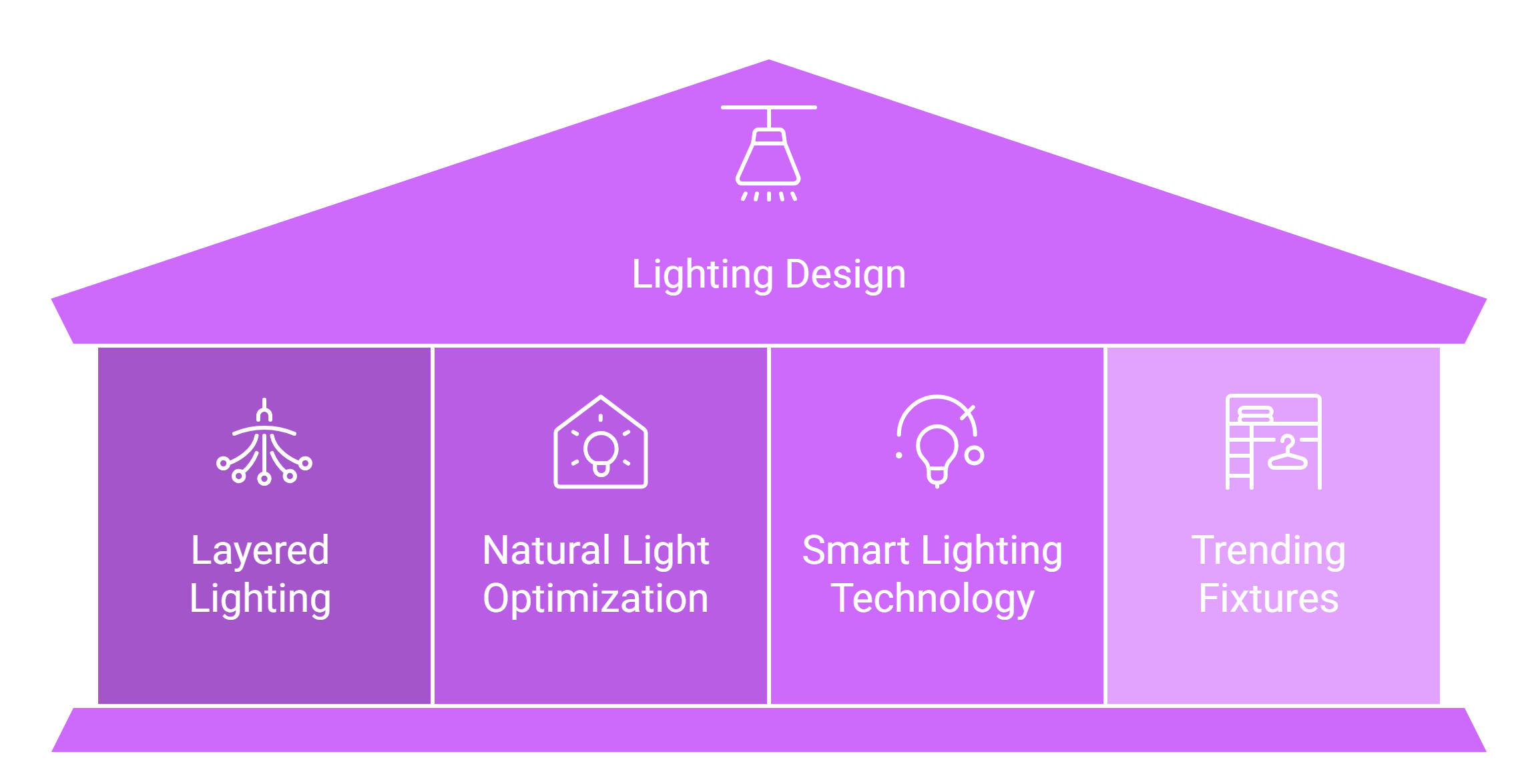
A. Layered Lighting Strategies
Ambient Lighting: Overall Room Illumination
Ambient lighting provides general illumination for the entire room, ensuring that the space is neither too bright nor too dim. It creates a comfortable environment for working, reading, or relaxing.
Best Choices for Ambient Lighting:
- Ceiling lights: Recessed or flush-mounted fixtures.
- LED panel lights: Even, consistent lighting across the room.
- Natural light: Maximizing daylight with smart window treatments.
| Light Type | Best For |
| Ceiling Lights | General room lighting |
| LED Panels | Entire room lighting |
| Smart Windows | Natural light optimization
|
💡 Pro Tip: Use dimmable ambient lights to adjust the brightness based on the time of day and activity.
Task Lighting: Focused Desk and Reading Lamps
Task lighting directs light onto specific areas where focused work is done. This includes desk lamps or reading lights that eliminate shadows and illuminate your workspace without straining your eyes.
Best Features for Task Lighting:
- Adjustable brightness: Customize light intensity based on needs.
- Direct focus: Focuses on documents, keyboards, or digital screens.
- Color temperature options: Choose cool tones for clarity or warm tones for relaxation.
| Light Type | Best For | Effect on Productivity | Price Range |
| Desk Lamps | Writing, reading, detailed tasks | Reduces eye strain | $25-$150 |
| Floor Lamps | Reading areas, larger desks | Focuses light on task | $40-$250 |
| Adjustable Lamps | Focused task lighting | Customizable focus | $50-$200
|
Accent Lighting: Decorative and Mood-Setting Fixtures
Accent lighting adds a decorative element to your office, highlighting artwork, architectural details, or even plants. It’s not just about aesthetic appeal—well-placed accent lighting can help create a relaxed or inspiring environment.
Best Features of Accent Lighting:
- Soft, warm light: Creates a calming atmosphere.
- Decorative fixtures: Adds personality and style to your space.
- Adjustable placement: Can be moved to highlight different focal points.
| Light Type | Best For | Lighting Effect | Price Range |
| Wall Sconces | Accent walls, artwork | Creates mood, enhances decor | $30-$200 |
| LED Strip Lights | Under shelves, bookshelves | Subtle, ambient glow | $10-$80 |
| Decorative Lamps | Plant or feature lighting | Adds warmth and style | $50-$400
|
Balanced Lighting Schemes for Visual Comfort
A balanced lighting scheme involves combining ambient, task, and accent lighting in a way that supports both your functional and aesthetic needs. The goal is to avoid harsh shadows, glare, and uneven lighting.
Key Strategies for Balance:
- Layering: Use multiple light sources at different levels (e.g., overhead lights, task lamps, floor lamps).
- Dimming: Ensure you have the ability to adjust brightness depending on the time of day or activity.
- Color temperature balance: Ensure that the color temperatures of different light sources match to create a harmonious environment.
💡 Pro Tip: Install smart lighting systems that allow you to adjust the lighting scene based on the time of day or specific work tasks.
B. Natural Light Optimization
Window Placement and Desk Orientation
The placement of windows and the orientation of your desk in relation to them is essential for maximizing daylight exposure. Ideally, your desk should face a window or be positioned at a 90-degree angle to it, depending on the light exposure.
Best Practices for Window Placement:
- North-facing windows provide consistent, indirect light, reducing glare.
- South-facing windows offer bright, direct light but may need shading to prevent glare.
- East-facing windows are ideal for morning light, while west-facing windows provide afternoon sunlight.
| Window Orientation | Best For | Light Exposure | Distractions |
| North-facing | Balanced, indirect light | Constant, soft light | Low distractions |
| South-facing | Bright, direct sunlight | Bright, warm light | Potential glare |
| East-facing | Morning light | Soft, uplifting light | Short duration
|
Glare Reduction Techniques
While natural light is beneficial, it can sometimes create glare that strains your eyes and reduces productivity. To reduce glare, use window treatments like blinds, drapes, or shades.
Glare Reduction Solutions:
- Anti-glare window film: Prevents harsh light without blocking natural light.
- Adjustable blinds: Allow you to control the amount of light entering the space.
- Shades with UV protection: Protects against sun damage while keeping the room bright.
Daylight Harvesting Strategies
Daylight harvesting is the practice of using natural light to reduce the need for artificial lighting during the day. This can be achieved by strategically placing your desk near windows and using light sensors to automatically adjust artificial lighting based on available sunlight.
Best Practices for Daylight Harvesting:
- Automated lighting systems that adjust based on available daylight.
- Skylights and light tubes to bring in additional natural light.
Circadian Rhythm Support Through Natural Exposure
Your body’s circadian rhythm is closely tied to natural light exposure. By aligning your workspace with your natural sleep-wake cycles, you can improve focus and energy levels.
Best Practices:
- Morning sunlight: Helps boost alertness and energy.
- Afternoon light: Prevents mid-day fatigue.
- Evening dimming: Helps prepare your body for rest.
C. Smart Lighting Technology
Smart lighting is transforming home office design, offering increased convenience, flexibility, and energy efficiency. Here are the top smart lighting technologies to enhance your workspace.
Circadian Lighting Systems: Color Temperature Shifts Throughout the Day
Circadian lighting systems automatically adjust the color temperature of your lighting based on the time of day. In the morning, they emit cool blue light to stimulate focus, while in the evening, they shift to warmer tones to promote relaxation.
Benefits:
- Supports natural circadian rhythms.
- Improves sleep quality by reducing blue light exposure in the evening.
Programmable LED Systems
Programmable LED systems allow you to customize your lighting needs throughout the day. Set up specific lighting profiles for different tasks, like reading, video calls, or focused work.
Features:
- Customizable color temperatures and brightness levels.
- Energy-efficient and long-lasting.
| Light System | Customization Level | Energy Efficiency | Cost Range |
| Circadian LEDs | Color temperature shift | High | $150-$500 |
| Programmable LEDs | Adjustable settings | Very High | $100-$400
|
Motion-Sensor Integrated Lighting
Motion-sensor lighting automatically turns on when you enter the room and off when you leave. This technology is perfect for energy efficiency and convenience.
Benefits:
- Hands-free operation: Perfect for when your hands are full or busy.
- Energy-saving: Automatically turns off lights when not in use.
Wireless Control Systems
Smart wireless control systems allow you to adjust your lighting from your smartphone, voice assistant, or smart hub. This is ideal for those who want to easily manage lighting without getting up.
D. Trending Lighting Fixtures for 2026
As home office lighting evolves, so do the design trends. Here are some of the most popular lighting fixtures in 2026 that blend functionality with style.
Tinted Glass and Colored Resin Pendants
Tinted glass and colored resin pendants are gaining popularity as they add a unique and artistic touch to the home office. These fixtures are ideal for accent lighting or setting the mood.
Handcrafted Artisan Light Fixtures
For those who value craftsmanship, handcrafted artisan light fixtures are a must-have. These bespoke pieces are not only functional but also serve as a statement of style.
Sconces and Wall-Mounted Task Lighting
Wall-mounted sconces are perfect for small spaces or when you need additional task lighting without taking up desk space.
Adjustable Monitor Arms with Integrated Lighting
Monitor arms with integrated lighting offer a space-saving solution for those who want to reduce desk clutter. These are ideal for maintaining an ergonomic setup while illuminating your work.
Under-Shelf LED Strips
Under-shelf LED strips provide soft ambient lighting for bookshelves or workspaces, helping to create a cozy, well-lit environment without overpowering the space.
Quick Takeaways:
- Layering different types of lighting creates balance and comfort in your workspace.
- Maximizing natural light exposure improves mood and productivity.
- Smart lighting systems adjust to your work schedule, promoting well-being and efficiency.
VI. Biophilic Design and Natural Elements
In 2026, the trend of biophilic design continues to grow, focusing on the integration of plants, natural materials, and outdoor-inspired elements to enhance productivity, reduce stress, and increase well-being. Let’s explore the core elements of biophilic design and how you can bring nature into your home office.
A. Indoor Plant Integration
Low-Maintenance Desk Plants
If you’re new to indoor plants or have a busy schedule, start with low-maintenance desk plants that require minimal attention. These plants thrive in a variety of conditions and don’t need frequent watering or special care.
Best Low-Maintenance Plants:
- Snake Plant (Sansevieria): Tolerates low light and infrequent watering.
- ZZ Plant (Zamioculcas zamiifolia): Needs little water and can grow in low light conditions.
- Spider Plant (Chlorophytum comosum): Hardy and adaptable to various lighting conditions.
| Plant Type | Light Requirement | Watering Frequency | Benefits |
| Snake Plant | Low to bright indirect | Once every 2 weeks | Air purifier, low maintenance |
| ZZ Plant | Low to bright indirect | Once every 2-3 weeks | Hardy, purifies air |
| Spider Plant | Indirect light | Once a week | Easy to care for, oxygenator
|
💡 Pro Tip: Place plants on your desk or nearby shelves to add greenery and improve the overall ambiance of your home office.
Living Walls and Vertical Gardens
For larger home office spaces, consider installing a living wall or vertical garden. These installations not only provide visual interest but also improve air quality and reduce noise levels.
Benefits of Living Walls:
- Improved air quality: Plants absorb toxins and release oxygen, making the space healthier.
- Enhanced creativity: The sight of greenery can stimulate creativity and reduce stress.
- Noise reduction: Plants naturally absorb sound, helping to create a quieter environment.
Air-Purifying Plant Species
Certain plants are particularly effective at purifying the air, which can be especially beneficial in home offices that lack ventilation. These plants help filter out toxins and provide cleaner, fresher air for you to breathe.
Top Air-Purifying Plants:
- Peace Lily: Removes formaldehyde and benzene from the air.
- Aloe Vera: Known for its healing properties, it also absorbs carbon dioxide and formaldehyde.
- English Ivy: Effective at removing mold spores from the air.
| Plant Type | Air Purification Capability | Care Level | Best Location |
| Peace Lily | Removes formaldehyde, benzene | Moderate | Desk or windowsill |
| Aloe Vera | Absorbs carbon dioxide, formaldehyde | Easy | Bright, indirect light |
| English Ivy | Removes mold spores | Moderate | Shelves, hanging baskets
|
Organic Shapes and Natural Forms
Incorporating plants with organic shapes and natural forms is a key component of biophilic design. Consider plants with curved, flowing lines or those that mimic natural patterns, like vines or cascading leaves, to enhance the sense of tranquility and connection with nature.
B. Natural Material Palettes
Reclaimed Wood Elements and Surfaces
Using reclaimed wood for furniture, flooring, or decorative accents is an excellent way to bring nature into your office while contributing to sustainability. Reclaimed wood has a unique character and history, offering a sense of warmth and individuality.
Benefits of Reclaimed Wood:
- Sustainable: Helps reduce deforestation and repurposes existing materials.
- Unique texture: Offers distinctive grain patterns and natural imperfections.
- Durability: Reclaimed wood is often more durable than new wood.
| Material | Best Use | Aesthetic Effect | Environmental Impact |
| Reclaimed Wood | Furniture, flooring, accents | Warm, rustic, unique | Low, sustainable |
| Natural Stone | Desk surfaces, accents | Luxurious, timeless | Moderate |
| Organic Fabrics | Upholstery, curtains, cushions | Soft, natural look | High, eco-friendly
|
Natural Stone Accents
Adding natural stone accents, such as marble, granite, or slate, can elevate the aesthetic of your home office while maintaining a connection with nature. These materials are not only beautiful but also long-lasting and easy to clean.
Best Places to Use Natural Stone:
- Desks or tabletops: A luxurious, durable surface.
- Flooring or backsplashes: Adds texture and warmth.
- Decorative accents: Stone sculptures or planters.
Textured Wall Treatments
Textured wall treatments like raw wood panels, stone veneers, or plaster finishes bring an organic feel to your home office. These elements can add depth and dimension to your walls while providing a natural focal point.
Benefits of Textured Walls:
- Visual interest: Adds depth and a tactile element to the room.
- Natural feel: Mimics outdoor elements like rocks, trees, or soil.
- Sound absorption: Textured surfaces help reduce noise and echo.
Organic Fabric Choices
Opt for organic fabrics like linen, cotton, wool, and hemp for upholstery, curtains, or cushions. These fabrics are not only sustainable but also create a soft, inviting feel in your workspace.
Benefits of Organic Fabrics:
- Breathable: Keeps your space comfortable without harsh chemicals.
- Sustainable: Made from renewable, eco-friendly materials.
- Durable: Built to last longer than synthetic alternatives.
C. Bringing the Outdoors Inside
Water Features: Fountains, Aquariums, Subtle Water Walls
Water features like small fountains, aquariums, or subtle water walls can introduce a sense of calm and tranquility to your office. The sound of running water has been shown to reduce stress and increase focus.
Types of Water Features:
- Tabletop fountains: Small and easy to maintain.
- Aquariums: Add color and life while improving air quality.
- Water walls: A larger, dramatic feature for bigger spaces.
Acoustic Benefits of Natural Elements
Natural elements like plants, stone, and wood are excellent at improving acoustic quality in a room. They absorb sound and reduce reverberations, making your workspace quieter and more conducive to focus.
Benefits:
- Noise reduction: Natural elements reduce sound reflections and echoes.
- Better acoustics: Improve the overall auditory environment for video calls and deep concentration.
Blurring Indoor-Outdoor Boundaries
Blurring the line between indoor and outdoor spaces helps create a seamless connection to nature. Consider bi-fold doors, large windows, or sliding glass doors to bring natural light and outdoor views into your workspace.
Benefits:
- Natural light: Increases energy levels and productivity.
- Outdoor views: Offers a sense of connection to nature and open space.
Nature-Inspired Color Schemes
Incorporate nature-inspired colors like forest greens, sky blues, and earthy browns into your home office design. These colors evoke a sense of calm, balance, and harmony with nature.
Best Nature-Inspired Colors:
- Forest Green: Calm and grounding.
- Sky Blue: Refreshing and invigorating.
- Earthy Browns: Warmth and stability.
Tactile Sensory Experiences
The tactile experience of natural materials like stone, wood, and woven fabrics can stimulate your senses and help you feel more connected to the natural world. Whether it’s the smoothness of a stone desk or the softness of a wool rug, these materials provide a sensory experience that’s calming and grounding.
Quick Takeaways:
- Integrating indoor plants boosts productivity and purifies the air.
- Natural materials like reclaimed wood and stone create a warm, organic feel in your office.
- Water features and acoustic elements add tranquility and reduce stress.
VII. Technology Integration and Hidden Infrastructure
In 2026, the integration of technology into home office design is no longer just about adding gadgets; it’s about creating a seamless, efficient environment that supports modern workflows without compromising aesthetics.
From hidden infrastructure to smart office features, technology should enhance your workspace without overwhelming it. This section covers how to seamlessly integrate tech into your home office, optimize for productivity, and maintain a clean, clutter-free space.
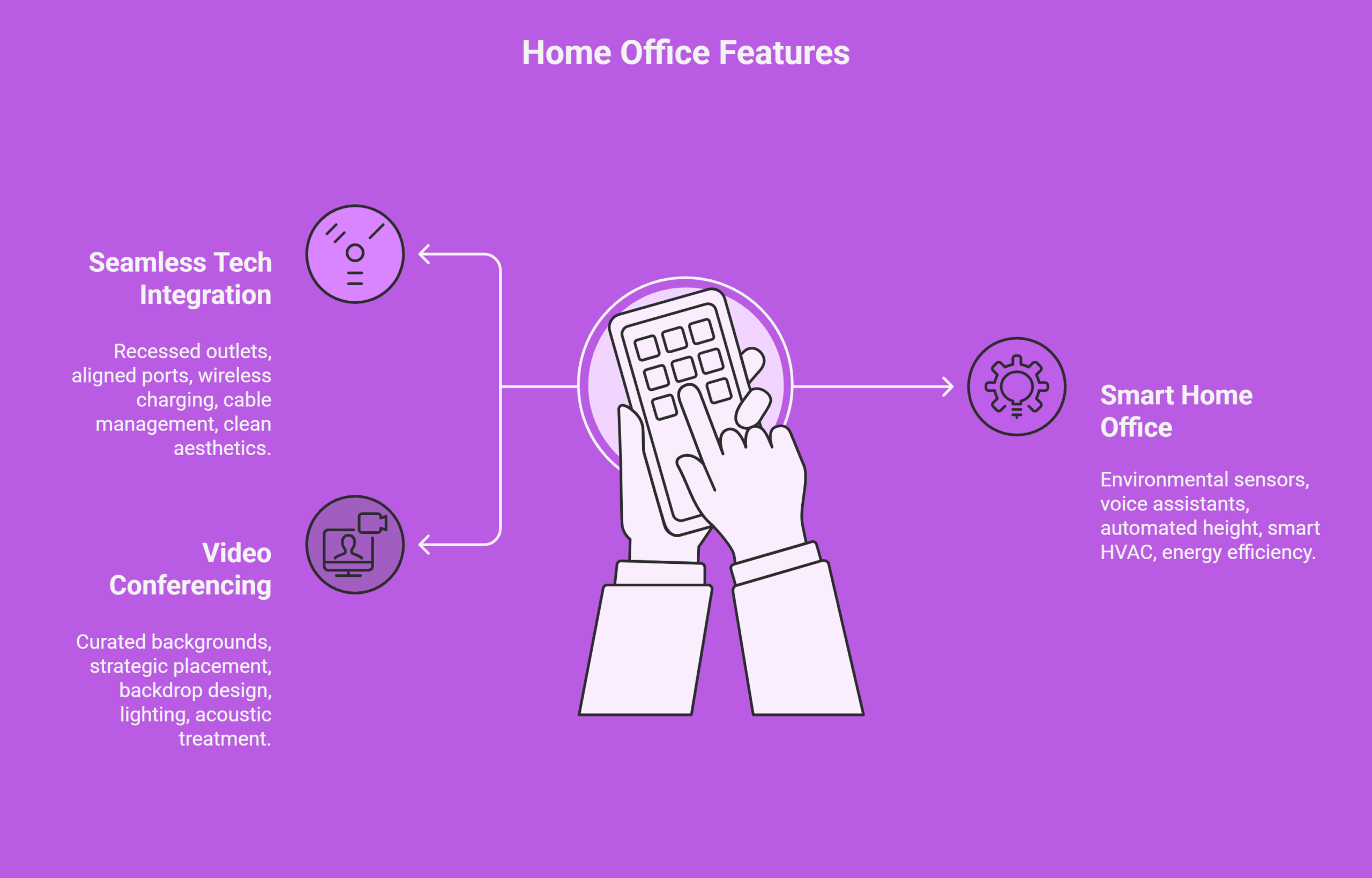
A. Seamless Tech Integration
Recessed Outlets Matched to Materials
Recessed outlets are an excellent solution for keeping cables and devices out of sight while maintaining accessibility. These outlets are installed flush with the surface of the wall, desk, or floor, blending seamlessly into the material, whether it’s wood, stone, or metal.
Benefits:
- Hidden infrastructure: Keeps cables organized and out of view.
- Material integration: Outlets blend with the materials of your desk or workspace, adding to the design’s cohesion.
| Feature | Recessed Outlets | Visible Outlets |
| Aesthetic | Seamlessly integrated | Noticeable, may disrupt design |
| Cable Visibility | Minimal, hidden | Exposed cables, cluttered |
| Installation Ease | Requires professional installation | Easy to install
|
💡 Pro Tip: For a polished look, match outlet covers to the surface material of your desk or wall to ensure they blend in.
Ports Aligned with Grain and Finish
Another key element of seamless integration is aligning ports (USB, HDMI, Ethernet) with the natural grain or finish of your furniture. This ensures that technology doesn’t disrupt the aesthetic of your office, even in places where cables are necessary.
Best Practices:
- Align ports with wood grain for a natural look.
- Use hidden ports that can be revealed when needed to maintain a clean desktop.
- Concealed cable systems keep visible cables to a minimum.
Wireless Charging Built into Surfaces
Wireless charging is becoming an increasingly popular feature in home offices. By integrating charging pads into your desk surfaces or furniture, you eliminate the need for messy cords, maintaining a tidy and functional workspace.
Key Benefits:
- Convenience: Simply place your device on the surface to charge.
- Minimalism: No cords or cables cluttering the workspace.
- Clean design: Charging surfaces are integrated seamlessly into desks or tables.
Cable Management Solutions
Cable management is essential for creating a clean, organized home office. Whether you use cable trays, clips, or built-in management systems, keeping cables organized prevents distractions and enhances the overall design.
Best Solutions for Cable Management:
- Cable trays under desks to hide cables
- Cable clips to keep cords in place
- Built-in cable management systems in desks for a seamless setup
| Cable Management Tool | Function | Ideal For | Price Range |
| Cable Tray | Hides cables beneath desk | Large desks, multiple devices | $15-$50 |
| Cable Clips | Keeps cords organized | Smaller workstations, single cables | $5-$20 |
| Built-in Systems | Hidden integration | Professional setups | $50-$200
|
B. Smart Home Office Features
Environmental Sensors: Air Quality, Temperature, Humidity Monitoring
Environmental sensors play a crucial role in creating a healthy, comfortable working environment. These sensors monitor air quality, temperature, and humidity to ensure your workspace is always at optimal conditions for productivity.
Key Benefits:
- Air quality sensors can alert you when it’s time to open a window or adjust the air purifier.
- Temperature and humidity sensors help maintain a comfortable atmosphere year-round.
| Feature | Air Quality Sensors | Temperature Sensors | Humidity Sensors |
| Function | Monitors air pollutants | Controls workspace climate | Tracks moisture levels |
| Ideal Use | Office with windows | Rooms with varying temperatures | Prevents excess dryness or dampness |
| Price Range | $30-$200 | $20-$150 | $25-$100
|
Voice-Controlled Assistants
Voice-controlled assistants like Amazon Alexa, Google Assistant, or Siri are increasingly integrated into home offices. These smart assistants allow you to control your office’s technology hands-free, whether it’s adjusting the lighting, setting reminders, or playing music.
Benefits:
- Hands-free operation: Control devices while working on other tasks.
- Task automation: Set reminders, alarms, and control devices with voice commands.
Automated Height-Adjustment Systems
An automated height-adjustment system can adjust the height of your desk or chair at the push of a button, promoting better ergonomics and comfort throughout the day.
Key Benefits:
- Improved posture: Alternate between sitting and standing easily.
- Customizable: Adjust settings based on your personal preferences.
Smart HVAC Controls
Smart HVAC controls allow you to set the ideal temperature in your home office without manually adjusting the thermostat. With features like programmable schedules and remote control via app, you can create a comfortable, consistent climate.
Benefits:
- Energy efficiency: Only use energy when needed.
- Convenience: Adjust your office temperature from anywhere using an app.
Energy-Efficient Systems
As part of the broader trend of sustainability, integrating energy-efficient systems into your home office reduces your carbon footprint and lowers your energy bills. Smart thermostats, LED lighting, and energy-efficient appliances all contribute to a greener workspace.
C. Video Conferencing Optimization
Curated Zoom Backgrounds and Layered Fields
A curated Zoom background can make your workspace appear more professional and eliminate distractions. Layered backgrounds, where your office features appear behind a subtle blur or soft gradient, allow for a more polished appearance.
Best Practices:
- Neutral backgrounds like bookshelves or artwork.
- Soft gradients or subtle patterns that won’t distract from the conversation.
Strategic Object Placement for Camera View
Object placement is key when setting up your camera for video conferencing. Ensure that you are positioned centrally, with key objects (e.g., a plant, a piece of artwork) placed in the background to create a balanced frame.
Best Tips:
- Avoid clutter or distracting items in the background.
- Position your camera at eye level for a flattering angle.
Professional Backdrop Design
A professional backdrop helps make a strong first impression during video calls. Opt for a clean, well-lit backdrop that reflects your personality while remaining neutral and professional.
Key Elements for a Professional Backdrop:
- Neutral-colored wall or simple bookshelf.
- Good lighting: Ensure your face is well-lit without harsh shadows.
Lighting for Video Calls
Proper lighting is critical for clear, professional video calls. Use a soft, diffused light placed directly in front of you to eliminate shadows and reduce glare.
Best Lighting Solutions:
- Ring lights: Provide even, flattering light.
- Desk lamps with adjustable brightness.
Acoustic Treatment for Clear Audio
Poor audio quality can detract from a professional video call. Acoustic treatment, such as foam panels or fabric wall hangings, can improve sound quality and reduce background noise.
Best Acoustic Treatment Tips:
- Sound-absorbing materials help minimize echo.
- Place foam panels or soft textiles around the room to absorb noise.
Quick Takeaways:
- Integrate hidden tech solutions like recessed outlets and wireless charging for a seamless, clean workspace.
- Smart home office features, such as environmental sensors and automated systems, enhance comfort and efficiency.
- Optimize your home office for video conferencing with strategic lighting, backdrops, and acoustic treatments.
VIII. Storage Solutions and Organization Systems
An organized home office is not only aesthetically pleasing but also crucial for maintaining productivity. The right storage solutions can help you keep your workspace clean and efficient while providing easy access to everything you need. Whether you’re designing a space with built-in storage, considering an organizational workflow, or deciding between visible and hidden storage, this section will guide you through the best strategies to keep your office functional and tidy.
A. Built-In Storage Design
Floor-to-Ceiling Shelving Units
Floor-to-ceiling shelving units maximize vertical space, offering plenty of room for books, supplies, and decorative items. These units can be custom-built to fit your office’s specific dimensions and add a sophisticated, modern touch to the room.
Key Benefits:
- Space efficiency: Utilizes unused vertical space.
- Ample storage: Provides a large amount of storage without taking up floor space.
- Customization: Can be built to suit your needs, from books to office supplies.
| Feature | Floor-to-Ceiling Shelves | Open Shelving |
| Space Utilization | High | Moderate |
| Aesthetic | Sleek, professional | Casual, curated |
| Clutter Visibility | Hidden behind doors (if desired) | Visible items
|
💡 Pro Tip: If you prefer a less cluttered look, add doors or curtains to close off shelves.
Custom Cabinetry with Unique Profiles
Custom cabinetry allows you to incorporate unique profiles, such as fluted accents, cane detailing, and curved cabinet doors, which not only offer practical storage but also add a touch of luxury and personality to your office.
Benefits:
- Personalized design: Tailored to your style and needs.
- Elegant aesthetics: Unique finishes and profiles elevate your office’s design.
- Maximized functionality: Custom storage solutions keep items organized and easily accessible.
Cane Detailing and Fluting Accents
Cane detailing and fluting accents are trending in 2026 for their ability to add texture and warmth to storage furniture. These elements make even functional pieces of furniture feel like part of your decor, combining style with practicality.
Best Uses:
- Cabinet doors: Adds elegance while maintaining a minimalist vibe.
- Drawer fronts: Provides texture and visual interest.
Curved Cabinet Door Profiles
For a more organic, softer look, consider curved cabinet door profiles. These provide a subtle, sophisticated touch and are especially suited for modern and contemporary home offices.
Benefits:
- Softens the space: Curved lines contrast with straight edges for a dynamic look.
- Elegant appearance: Adds timeless appeal to your office decor.
Concealed Storage Behind Flush Panels
For a clean, minimalist aesthetic, incorporate concealed storage behind flush panels. This design hides away office supplies and paperwork without disrupting the sleekness of the space.
Benefits:
- Clutter-free look: Keeps items out of sight, making the office feel clean and organized.
- Modern appeal: Flush panels provide a streamlined, contemporary appearance.
B. Organizational Workflow Planning
Inbox Placement Strategies
The inbox is the first place where new tasks, paperwork, and incoming communications should land. It’s essential to place your inbox in a convenient location where you can quickly sort through documents and prioritize tasks.
Best Practices:
- Near your desk: Ensure your inbox is easily accessible without cluttering your work area.
- Categorized trays: Use multiple trays for different categories (e.g., urgent, reference, completed).
| Placement | Best For | Space Consideration |
| Desk-side Inbox | Quick sorting of tasks | Small space |
| Drawer Inbox | Hidden, organized system | Larger workspaces |
| Wall-mounted Inbox | Easy access, decluttered desk | Small or compact spaces
|
Active Work Zone Storage
Active work zone storage refers to storing tools and materials that you use regularly within reach of your workspace. Items like pens, notebooks, or files should be placed in accessible spots, so you don’t waste time searching for them.
Best Features:
- Drawer organizers for pens, highlighters, and other essentials.
- Desktop organizers for frequently used items like notebooks and calculators.
Filing System Proximity
Your filing system should be positioned near your desk to make accessing important documents quick and easy. Place files and folders in an organized manner for easy retrieval during work tasks.
Key Tips:
- Label folders clearly for quick identification.
- Vertical file storage saves space and keeps documents accessible.
| Filing System | Type of Storage | Ideal Location |
| Vertical Files | Folders stacked upright | Near desk, within arm’s reach |
| Horizontal Files | Folders in horizontal drawers | Under the desk or in a cabinet
|
Reference Material Accessibility
For any reference materials (books, binders, manuals), ensure they are organized and easily accessible. These materials should be within easy reach but not clutter your desk.
Best Practices:
- Bookshelves or storage bins for books or reference guides.
- Drawer inserts for office manuals, planners, or calendars.
Clutter-Free Desk Maintenance
Keeping a clutter-free desk is essential for maintaining focus and productivity. Only leave essential items on your desk, and store everything else out of sight.
Quick Tips:
- Daily clean-up: Spend 5 minutes at the end of each day organizing your desk.
- Minimalist design: Keep only the essentials within arm’s reach.
C. Visible vs. Hidden Storage
Deciding between visible and hidden storage can dramatically affect the look and functionality of your home office. Let’s break down the pros and cons of each approach.
Open Shelving for Curated Displays
Open shelving is perfect for showcasing curated items like books, decorative pieces, or plants. It creates a more relaxed, personalized look while making everything easy to access.
Best Uses:
- Bookshelves for decorative books or artwork.
- Wall-mounted open shelves for small plants or personal items.
Benefits:
- Aesthetic appeal: Adds personality and warmth to your workspace.
- Easy access: Items are readily available.
Closed Cabinets for Office Supplies
For a more streamlined, organized look, closed cabinets are ideal for storing office supplies, documents, and equipment. This approach hides clutter and maintains a clean, tidy aesthetic.
Best Practices:
- Cabinets with adjustable shelves for flexible storage options.
- Drawer organizers to prevent contents from becoming chaotic.
Drawer Organization Systems
Drawer organization systems help to separate and categorize small items, such as pens, paper clips, and other office tools. This keeps your workspace organized while preventing small items from getting lost.
Best Features:
- Dividers to separate items by function.
- Trays for easy access to frequently used tools.
Wall-Mounted Bookcases
Wall-mounted bookcases are a space-saving solution that adds both storage and style. Use these for books, binders, or even decorative pieces, keeping your office clean and organized.
Benefits:
- Saves floor space: Ideal for small offices.
- Easy access: Keeps books and materials accessible but out of the way.
Lateral File Cabinets
Lateral file cabinets provide a horizontal storage option for files and documents. These cabinets allow you to organize paperwork in an easy-to-access, visually appealing manner.
Best Use:
- For large files: Store files in long, flat drawers, making them easy to flip through.
Quick Takeaways:
- Built-in storage helps integrate design with functionality, keeping clutter hidden and space maximized.
- Proper workflow planning ensures that storage is accessible and practical for your daily tasks.
- Visible storage showcases personal style, while hidden storage maintains a clean, professional workspace.
IX. Wellness and Ergonomic Features
In 2026, the integration of wellness features into your workspace is not only about comfort but also about supporting a holistic approach to well-being. From ergonomic furniture to dedicated mental wellness zones, incorporating these elements ensures that your home office promotes productivity without compromising your health. Let’s explore the essential wellness and ergonomic features for your office design.
A. Physical Wellness Integration
Standing Desk Protocols: Sitting-Standing Intervals
Standing desks have become a must-have for those looking to improve their posture and reduce the negative effects of prolonged sitting. In 2026, the focus is on adopting a sitting-standing protocol, where you alternate between sitting and standing throughout the day.
Best Practices:
- Sit-stand intervals: Alternate every 30 to 60 minutes.
- Desk height adjustment: Ensure your desk is easily adjustable to both sitting and standing positions.
- Foot positioning: When standing, use a footrest to support your posture.
| Feature | Standing Desk Setup | Sitting Desk Setup |
| Posture | Promotes neutral spine | Can lead to poor posture if sitting too long |
| Flexibility | Height adjustable | Static setup |
| Health Benefits | Reduces back pain, improves circulation | Increases back strain if sitting for extended periods |
| Price Range | $200-$800 | $50-$300
|
💡 Pro Tip: Use a timer or an app to remind you to stand up every 30 minutes. Set a goal to stand for at least 15-30 minutes at a time.
Balance Boards and Active Sitting Options
For added movement, consider using a balance board or an active sitting chair. These accessories engage your muscles, improving circulation and encouraging better posture while you work.
Key Benefits:
- Engaged core: Helps strengthen your core and improve posture.
- Increased focus: The subtle movement can help improve concentration by preventing stiffness.
Treadmill Workstations
Treadmill workstations are gaining popularity in home offices. These allow you to work while walking, which can improve circulation and overall fitness. Though best suited for lighter tasks like reading or browsing, they offer a great way to incorporate more physical activity into your workday.
Benefits:
- Enhanced cardiovascular health: Walking while working can improve heart health.
- Increased energy: Regular movement combats fatigue.
| Feature | Treadmill Desk | Standing Desk |
| Health Benefits | Improves circulation, energy | Reduces back pain |
| Focus and Comfort | Can be challenging for intense work | More stable for tasks requiring focus |
| Price Range | $500-$2,000 | $200-$800
|
Stretch Break Reminders
Sitting for long periods without stretching can lead to tight muscles and poor circulation. Incorporating stretch break reminders into your daily routine ensures that you’re regularly moving and preventing discomfort.
Best Practices:
- Set an hourly reminder to stand up and stretch.
- Include stretches for your back, shoulders, wrists, and legs to relieve tension.
Movement Equipment in Cabinet Runs
For those with limited space, consider integrating movement equipment into cabinet runs or drawers. Equipment like resistance bands, small dumbbells, or exercise balls can easily be stored and accessed during quick movement breaks.
B. Mental Wellness Zones
Meditation Corners
A meditation corner offers a quiet, peaceful spot where you can take a few minutes to recharge. Whether it’s a cushion, a yoga mat, or simply a comfy chair, having a space dedicated to mental relaxation can help alleviate stress.
Best Features:
- Comfortable seating: A cushion or soft chair allows for relaxation.
- Soothing elements: Add candles, plants, or calming sounds to enhance the space.
Yoga Mat Storage and Practice Areas
Integrating a yoga mat storage area in your office allows you to quickly access it for a few minutes of stretching or yoga practice. Yoga can help release tension from your muscles and rejuvenate your mind, making it a great way to reset during long work sessions.
Best Practices:
- Dedicated storage: Use a wall-mounted hook or drawer for easy access to your mat.
- Practice space: Ensure you have enough space to perform basic stretches or poses.
Tea and Coffee Preparation Stations
Tea and coffee stations not only provide a mental break but also offer an opportunity to step away from your desk and refresh your mind. Designating a small area for preparing your favorite beverages can serve as a soothing ritual throughout the day.
Key Elements:
- Tea station: Include a kettle, selection of teas, and a mug.
- Coffee corner: Invest in a small coffee maker or French press for quick, energizing breaks.
Mindfulness Practice Spaces
A mindfulness practice space is designed to help you take short breaks from work and engage in grounding practices. This could include simple activities like breathing exercises, journaling, or guided meditation.
Best Features:
- Soft, natural lighting: Keep the space dimly lit for a calming effect.
- Comfortable seating: A soft chair or cushion for relaxing practices.
Stress-Reduction Elements
Incorporating stress-reduction elements like essential oils, calming music, or soft lighting can help alleviate the tension that naturally builds up during long work hours.
Best Features:
- Aromatherapy diffusers: Use essential oils like lavender or eucalyptus to calm your mind.
- Soothing sounds: A speaker or sound machine that plays nature sounds or soft instrumental music.
C. Air Quality and Environmental Health
Advanced Air Purification Systems
Air purifiers help eliminate allergens, dust, and other airborne particles, providing a cleaner, healthier environment for long hours of work. Many modern air purifiers now come with HEPA filters, which capture small particles, and some even have smart features that adjust based on the room’s air quality.
Best Features:
- HEPA filters for capturing fine particles.
- Smart monitoring to track air quality levels.
Plant-Based Air Quality Solutions
Certain houseplants have natural air-purifying abilities. Incorporating plants like the peace lily, snake plant, and spider plant can help reduce indoor air pollution and improve the overall environment.
| Plant Type | Air Purification Capability | Ideal Placement |
| Peace Lily | Removes formaldehyde and benzene | Desk or window sill |
| Snake Plant | Absorbs carbon dioxide | Near windows |
| Spider Plant | Removes toxins from the air | Shelves or corners
|
Proper Ventilation Strategies
Proper ventilation is essential for ensuring fresh air circulation in your home office. Open windows, ceiling fans, or ventilation fans can help regulate airflow and maintain a comfortable environment.
Best Practices:
- Cross-ventilation: Open windows on opposite sides of the room for natural airflow.
- Ceiling fans: Circulate air and maintain a consistent temperature.
Humidity Control
Humidity control helps prevent mold growth and ensures your workspace is comfortable. Dehumidifiers can be used to maintain optimal humidity levels (40-60%) and improve air quality.
Best Practices:
- Use a humidifier in dry climates to add moisture to the air.
- Use a dehumidifier in damp areas to remove excess moisture.
Temperature Regulation Systems
Maintaining the right temperature in your home office is crucial for productivity. Smart thermostats allow you to control the room’s temperature remotely and keep the environment comfortable.
Best Features:
- Programmable settings: Adjust the temperature according to your work schedule.
- Remote control: Control the temperature from your phone or device.
D. Break and Recovery Areas
Comfortable Seating for Mental Resets
A comfortable chair or lounge area can serve as a perfect spot for taking a break and resetting your mind. Whether it’s a recliner, armchair, or bean bag, this seating should encourage relaxation and comfort.
Best Features:
- Reclining chairs for deep relaxation.
- Soft cushions for added comfort.
Reading Nooks with Plush Furniture
A reading nook provides a perfect space for escaping the screen and engaging in some offline activities. Adding plush furniture, soft lighting, and calming decor will create a retreat for a mental reset.
Pomodoro Technique Support Zones
Pomodoro technique zones are perfect for short, focused work sessions followed by quick breaks. Use a timer to track sessions, and set up your office to easily transition from work to break mode.
Hydration Stations
Keep a hydration station within reach to encourage regular water intake. A simple water cooler or reusable water bottle station can help you stay hydrated throughout the day.
Natural Light Exposure Areas
Ensure your break areas are exposed to natural light to recharge your body’s circadian rhythm. Whether it’s through windows, skylights, or a sunroom, access to natural light will help boost your energy and focus when you return to work.
Quick Takeaways:
- Integrating physical wellness tools like standing desks and balance boards encourages a healthier workday.
- Designating spaces for mental wellness, such as meditation corners and tea stations, supports relaxation and focus.
- Air quality and temperature control are essential for maintaining a comfortable and productive environment.
- Break areas that focus on mental resets and recovery help prevent burnout and enhance overall well-being.
X. Sustainable and Eco-Friendly Design Choices
Sustainability is at the heart of modern home office design in 2026, with eco-friendly choices becoming a top priority for homeowners and office workers alike. From sustainable materials to energy-efficient systems, incorporating green design elements not only helps protect the environment but also creates a healthier, more responsible workspace. This section covers sustainable material selection, the principles of the circular economy, and how to integrate eco-friendly design choices into your home office.
A. Sustainable Material Selection
Reclaimed Wood Desks and Furniture
Reclaimed wood furniture is one of the most sustainable options available. By using wood that has already been harvested and repurposed, you are reducing the need for new materials, cutting down on deforestation, and contributing to a circular economy.
Benefits:
- Unique character: Each piece of reclaimed wood has a distinctive look and feel.
- Low environmental impact: Reclaimed wood requires less energy to process compared to new wood.
- Durability: Old wood is often more durable and long-lasting than newer options.
| Material | Source | Environmental Impact | Durability |
| Reclaimed Wood | Repurposed wood | Low, sustainable | High, long-lasting |
| New Hardwood | Harvested wood | Higher carbon footprint | Variable |
| MDF (Medium Density Fiberboard) | Manufactured from recycled wood | Moderate impact | Moderate
|
Organic Fabric Upholstery
Opt for organic fabrics like cotton, linen, and wool for your office furniture upholstery. These fabrics are grown without the use of synthetic pesticides or fertilizers, making them a more eco-friendly choice than conventional fabrics.
Benefits:
- Eco-friendly farming: Supports organic farming practices.
- Chemical-free: Free from harmful chemicals often used in conventional fabric production.
- Durable and breathable: Comfortable for long hours of use.
| Fabric Type | Sustainability | Comfort Level | Price Range |
| Organic Cotton | High, biodegradable | Soft, breathable | $50-$300 |
| Organic Linen | Moderate, durable | Cool, crisp | $100-$400 |
| Wool | High, renewable | Warm, soft | $150-$600
|
Low-VOC Paint Options
When it comes to wall paint, choosing low-VOC (volatile organic compound) paints is an easy way to reduce the environmental impact of your home office. Low-VOC paints emit fewer chemicals into the air, improving indoor air quality and minimizing health risks.
Benefits:
- Healthier air quality: Reduces exposure to harmful chemicals.
- Eco-friendly: Fewer toxic emissions.
- Long-lasting: Often more durable and resistant to wear and tear.
Renewable Resource Materials
Using renewable resource materials like bamboo, cork, and hemp helps reduce environmental degradation. These materials are fast-growing, replenishable, and highly sustainable.
Benefits:
- Fast growth: Materials like bamboo grow rapidly, making them a renewable resource.
- Low impact: Requires less energy to produce compared to other materials.
- Versatile: Can be used for flooring, furniture, and accessories.
B. Circular Economy Principles
Furniture Designed for Disassembly
Opt for furniture that is designed for easy disassembly. This approach allows components to be recycled or repurposed at the end of the furniture’s life, reducing waste and encouraging a circular economy.
Best Practices:
- Choose furniture with removable parts like legs or shelves that can be recycled separately.
- Avoid glue or adhesives that make furniture difficult to disassemble.
Exposed Reversible Fasteners
Using reversible fasteners (such as screws or bolts) allows you to easily take apart furniture when needed, promoting reuse and recycling. This design choice also reduces the amount of material waste generated during the disassembly process.
Benefits:
- Easy repairs: Parts can be replaced or reused without damaging the entire piece.
- Sustainability: Reduces waste and supports a more eco-friendly life cycle.
Single-Substrate Material Choices
Choosing single-substrate materials for furniture design minimizes waste and ensures that the material can be recycled at the end of its life. For example, opting for solid wood over wood composites or plastics ensures that the material can be repurposed or recycled more easily.
Benefits:
- Easy recycling: Single-substrate materials are more straightforward to recycle.
- Long-lasting: These materials tend to be more durable and versatile.
End-of-Life Recycling Planning
Planning for the end-of-life phase of your furniture or office equipment is crucial. Consider how the materials can be reused, recycled, or repurposed once they are no longer needed. This helps keep items out of landfills and reduces the environmental impact.
Best Practices:
- Choose recyclable or biodegradable materials.
- Research how to properly dispose of or repurpose office equipment.
Reduced Composite Materials
Avoiding composite materials—which are difficult to separate for recycling—can significantly reduce the environmental footprint of your office design. Instead, opt for solid materials that are easier to recycle or repurpose.
C. Energy Efficiency Features
LED Lighting Throughout
LED lighting is one of the most energy-efficient lighting options available. These lights use less energy, last longer, and are better for the environment compared to traditional incandescent bulbs.
Benefits:
- Energy savings: Uses up to 75% less energy than incandescent lighting.
- Longevity: LED lights last up to 25 times longer than traditional bulbs.
- Environmentally friendly: No toxic materials like mercury, which are found in CFL bulbs.
| Feature | LED Lighting | Incandescent Lighting |
| Energy Usage | 75% less | High |
| Lifespan | 25,000 hours | 1,000 hours |
| Environmental Impact | Low | High (mercury and waste) |
| Price Range | $5-$50 per bulb | $1-$5 per bulb
|
Solar Integration Possibilities
Consider solar integration for your home office, especially if you’re working from a home that receives ample sunlight. Solar panels can provide power for lights, computers, and other devices, reducing reliance on grid electricity.
Benefits:
- Lower energy costs: Solar energy reduces monthly utility bills.
- Eco-friendly: Decreases carbon footprint by utilizing renewable energy.
- Government incentives: Many regions offer tax breaks for solar installation.
Battery Backup Systems
Battery backup systems are essential for ensuring that your work is not interrupted by power outages. These systems provide power to your devices during outages, helping maintain continuity and productivity.
Benefits:
- Uninterrupted work: Keep your devices running during power interruptions.
- Protection for devices: Prevents data loss and equipment damage due to power surges.
Smart Power Management
Smart power management systems allow you to control energy usage in your office through smart plugs or a centralized app. These systems help you monitor and manage energy consumption, making your office more efficient.
Best Features:
- Remote control: Turn off devices when not in use to save energy.
- Energy monitoring: Track energy consumption patterns and identify opportunities to reduce waste.
D. Local and Regional Sourcing
Indigenous Maker Partnerships
Partnering with indigenous makers or local artisans helps preserve traditional craftsmanship while supporting small businesses and reducing the carbon footprint associated with mass production.
Benefits:
- Cultural preservation: Supports indigenous craftsmanship and heritage.
- Reduced environmental impact: Shorter supply chains result in lower transportation emissions.
Transparent Supply Chains
Look for brands and manufacturers that prioritize transparent supply chains. Knowing where and how materials are sourced and how workers are treated ensures that your products align with your ethical and environmental standards.
Benefits:
- Ethical production: Ensures fair wages and labor conditions.
- Environmental impact: Reduces the carbon footprint associated with production and transportation.
Regional Studio Collaborations
Regional studio collaborations promote the use of local materials and craftsmanship, helping to reduce transportation emissions and supporting small businesses in your community.
Benefits:
- Shorter transportation distances: Reduced emissions from production and delivery.
- Community support: Strengthens the local economy and promotes sustainable practices.
Cultural Authorship Recognition
Give credit to the cultural authorship behind handmade or locally sourced products. This recognition ensures that indigenous craftspeople and local artists are celebrated for their work and contribution to your home office design.
Labor Transparency
Labor transparency is essential in ensuring that the workers who produce your office furniture and decor are treated fairly. Brands that are open about their labor practices provide a higher level of trust and ensure ethical working conditions.
Quick Takeaways:
- Choose sustainable materials like reclaimed wood, organic fabrics, and low-VOC paints to reduce your environmental impact.
- Incorporate circular economy principles by selecting furniture designed for disassembly and end-of-life recycling.
- Optimize your home office with energy-efficient features like LED lighting, solar integration, and smart power management.
- Support local and regional sourcing to reduce your carbon footprint and promote transparency in your supply chain.
XI. Personalization and Decorative Touches
In 2026, home office design is about blending style with utility, allowing you to express your personality while maintaining a professional environment. This section covers how to personalize your office with wall decor, desk accessories, textiles, and architectural details.
A. Wall Decor and Art
Inspirational Artwork Placement
Artwork plays a significant role in creating an inspiring environment. Choose pieces that align with your personal tastes while encouraging focus and creativity. Inspirational quotes, abstract art, or nature-inspired prints can motivate you throughout the day.
Best Practices for Artwork Placement:
- Eye level: Hang artwork at eye level for easy viewing and to create a balanced look.
- Focal point: Choose one statement piece to be the focal point of your office.
- Spacing: Leave ample space between pieces to avoid visual clutter.
Gallery Wall Configurations
A gallery wall can showcase a variety of art styles, photos, and prints, creating an eclectic, personalized look. This configuration is ideal if you want to create a dynamic space that reflects multiple aspects of your life, such as travel, hobbies, or family.
Tips for Creating a Gallery Wall:
- Mix media: Combine photographs, paintings, prints, and quotes.
- Frame coordination: Use frames of different sizes but ensure they have a cohesive style.
- Symmetry: Arrange the artwork in a grid or organic flow for balance.
Framed Family Photographs
Adding framed family photographs to your workspace can create a warm and personal atmosphere. These photographs offer a connection to your personal life and can serve as reminders of what matters most.
Best Uses:
- Place family photos on your desk or on shelves for easy access.
- Consider black-and-white or sepia-toned photographs for a more classic, timeless look.
Travel Souvenirs Display
Travel souvenirs are a great way to personalize your office while also reminding you of your adventures. Displaying small items such as postcards, trinkets, or souvenirs from different places adds character to your workspace.
Best Features:
- Shadow boxes for displaying travel memorabilia.
- Glass shelves to showcase delicate or meaningful items.
William Morris Patterns and Arts & Crafts Influences
Incorporating William Morris patterns or Arts & Crafts influences into your decor adds a timeless, vintage touch. This style emphasizes natural beauty and craftsmanship, with rich patterns and earthy tones.
Best Uses:
- Textiles: Use Morris-inspired fabrics for curtains, upholstery, or throw pillows.
- Wall art: Frame prints of Morris’s floral designs or iconic patterns for a vintage-inspired office.
| Art Type | Best For | Effect on Workspace | Price Range |
| Inspirational Quotes | Motivational, inspiring | Positive, focused mood | $20-$100 |
| Travel Photos | Personal touch, memories | Nostalgic, calming | $10-$300 |
| Morris Patterns | Vintage, organic feel | Timeless, earthy charm | $50-$300
|
B. Desk Accessories and Organization
Aesthetic Pen Holders and Desk Trays
Pen holders and desk trays are essential for keeping small items organized, but they can also serve as decorative pieces. Choose items with unique shapes or bold colors that reflect your personality while maintaining a functional workspace.
Best Features:
- Minimalist designs for a sleek, modern look.
- Organized trays for documents, paper clips, and other essentials.
Magazine Holders with Vibrant Patterns
Magazine holders can keep papers, notebooks, and magazines organized while adding a burst of color or texture to your desk. Opt for vibrant patterns or bold colors to infuse energy into your workspace.
Best Practices:
- Store frequently used items in magazine holders for easy access.
- Mix and match patterns to create a playful, creative vibe.
Novelty Pieces for Personality
Add a bit of fun with novelty desk pieces such as quirky figurines, desk toys, or fun objects that bring joy to your workspace. These pieces can reflect your sense of humor, hobbies, or interests.
Examples:
- Miniature plants in fun planters.
- Action figures or creative sculptures.
Color-Coordinated Accessories
Color-coordinated desk accessories can create a cohesive, calming environment. Choose a color palette that complements the overall decor of your office, whether it’s soft pastels for a calming vibe or bold hues for an energetic atmosphere.
Best Colors for Desk Accessories:
- Neutrals for a sleek, professional look.
- Bold hues like mustard yellow, deep blue, or emerald green for a creative and stimulating space.
Personalized Stationery Items
Having personalized stationery adds a professional yet personal touch to your home office. Custom notebooks, pens, and note pads can make everyday tasks more enjoyable and bring an additional level of customization to your workspace.
Benefits:
- Professional look: Makes your office feel more polished.
- Personal touch: Reflects your style and interests.
C. Textile Selections
Area Rugs for Warmth and Comfort
An area rug adds warmth and comfort to your office, especially if you have hardwood or tile flooring. Rugs can also help define the space and add color or texture to the room.
Best Practices:
- Soft, thick rugs for comfort underfoot.
- Bold patterns for adding visual interest.
Window Treatments: Linen Shades, Floor-Length Drapery
Linen shades and floor-length drapery are both functional and stylish, providing privacy, light control, and aesthetic appeal. Choose light fabrics like linen for a breezy, calming atmosphere or heavier fabrics for a more refined look.
Benefits:
- Linen shades for a soft, natural light flow.
- Floor-length drapery for a more formal, sophisticated vibe.
Upholstered Furniture Accents
Consider upholstered furniture accents like a cozy chair or ottoman to add comfort and personality to your home office. Upholstered pieces with rich fabrics like velvet or wool can add warmth and luxury to the space.
Best Uses:
- Comfortable chairs for reading or taking breaks.
- Ottomans or footrests for relaxation.
Throw Pillows for Reading Nooks
If you have a reading nook or relaxation area, adding throw pillows provides comfort and a pop of color. Choose pillows that match the overall design of your office but add texture and softness to the seating area.
Best Practices:
- Mix textures like velvet, linen, and knit for a cozy, inviting space.
- Keep a few pillows on your office chair for extra comfort during breaks.
Curtain Alternatives to Café Styles
Curtain alternatives, such as Roman shades or roller blinds, are becoming more popular for a cleaner, sleeker look. These options are easier to maintain than traditional curtains and provide a modern aesthetic.
Best Options:
- Roman shades for a tailored look.
- Roller blinds for a minimalist, practical design.
D. Architectural Details
Crown Molding and Ceiling Treatments
Crown molding and ceiling treatments can transform the look of a room, adding height and character. These architectural features are ideal for a traditional or elegant office space.
Benefits:
- Adds visual interest to your walls and ceiling.
- Increases perceived room height, making small spaces feel larger.
Wainscoting and Chair Rails
Wainscoting and chair rails provide texture and depth to your office. These details work well in spaces where you want to add dimension without overwhelming the design.
Best Use:
- Wainscoting for lower half-wall treatments.
- Chair rails for a subtle border effect.
Picture Frame Molding
Picture frame molding adds a sophisticated touch to walls, giving the appearance of framed artwork or photos. This can help elevate the design of your home office, making it feel more formal and curated.
Decorative Baseboards
Decorative baseboards are an easy way to enhance the bottom of your walls and tie together the overall design of the room. Choose baseboards with a decorative edge for a more elegant look.
Arched Doorways and Openings
Arched doorways or openings can soften the transition between rooms and add an elegant architectural touch. This feature is especially beneficial in spaces with open floor plans or where you want to add a more grandiose feel.
Quick Takeaways:
- Personalize your office with artwork and novelty desk accessories that reflect your personality.
- Use textiles like area rugs, drapery, and upholstered furniture to add comfort and style.
- Architectural details like molding, baseboards, and arched doorways enhance the sophistication of your home office.
XII. Acoustic Solutions for Focus
In 2026, there are multiple strategies to improve sound control in your home office, from soundproofing to the use of noise-canceling technology and sound-absorbing materials. Let’s explore the best ways to optimize your office’s acoustics for maximum focus.
A. Soundproofing Strategies
Acoustic Wall Panels
Acoustic wall panels are one of the most effective ways to soundproof a room. These panels absorb sound waves, preventing them from bouncing off walls and creating echo. They come in various materials, styles, and designs, so you can choose the ones that best fit your office’s aesthetic while improving sound quality.
Benefits:
- Noise reduction: Greatly reduces echo and noise reverberation.
- Design flexibility: Available in multiple colors and patterns to match your decor.
- Easy installation: Can be mounted directly onto walls for a quick solution.
Sound-Absorbing Curtains
Sound-absorbing curtains are made from thicker, denser materials that help reduce outside noise. These curtains also serve as an excellent alternative to traditional window coverings, improving both privacy and sound insulation.
Best Features:
- Heavy fabric: Thick materials like velvet or polyester help absorb sound.
- Dual purpose: Offers light control and insulation while reducing noise.
- Aesthetic appeal: Adds a decorative touch to your office while enhancing acoustics.
| Feature | Sound-Absorbing Curtains | Regular Curtains |
| Material | Thick, dense fabric | Light, airy fabric |
| Sound Reduction | High | Low |
| Insulation Properties | Good for temperature control | None |
| Price Range | $50-$250 | $10-$50
|
💡 Pro Tip: Consider layering sound-absorbing curtains with regular curtains for added insulation and style.
Insulation Improvements
Upgrading your insulation is a more extensive but highly effective soundproofing solution. Adding extra insulation to walls or replacing drywall with soundproof materials can drastically reduce noise transmission from outside or adjacent rooms.
Key Benefits:
- Long-term solution: Once installed, it provides lasting noise reduction.
- Energy-efficient: Proper insulation also helps regulate temperature, reducing energy costs.
Door Sealing Techniques
Door sealing is an often-overlooked part of soundproofing. Gaps around doors allow sound to travel easily between rooms. Adding weatherstripping or door seals will block noise from entering or leaving your workspace.
Best Options:
- Weatherstripping: Seals gaps around the edges of the door.
- Door sweeps: Installed at the bottom of the door to prevent sound leakage from the floor.
Floor Underlayment Options
If you have hardwood, tile, or laminate floors, adding an underlayment beneath the flooring can reduce sound transmission between floors. These underlays are designed to absorb impact noise and vibrations.
Best Materials for Underlayment:
- Cork: Provides excellent sound absorption and is eco-friendly.
- Rubber: Offers superior noise isolation and durability.
B. Noise-Canceling Technology
Active Noise-Canceling Headphones
Active noise-canceling headphones use built-in microphones to detect ambient sound and generate sound waves that cancel it out. These headphones are perfect for individuals who work in noisy environments or need to block out background noise during focused work or meetings.
Benefits:
- Immersive experience: Blocks out external noise, allowing for full concentration.
- Sound quality: Delivers clear audio for virtual meetings or music.
- Comfort: Many models are designed for long-term wear.
White Noise Machines
A white noise machine generates a constant sound that masks disruptive noises, such as traffic or household sounds. These devices are especially useful for offices located in noisy areas, providing a more consistent and calming auditory environment.
Best Features:
- Variety of sounds: Many machines offer various white noise or nature sounds like rainfall, wind, or ocean waves.
- Portable: Can be moved around the room for optimal placement.
- Affordable: White noise machines are relatively inexpensive compared to other solutions.
Natural Soundscapes
Natural soundscapes mimic the sounds of nature, such as birds chirping, water flowing, or wind rustling through trees. These sounds can help create a calm, relaxing environment that promotes focus and reduces stress.
Best Practices:
- Nature soundtracks: Play recordings of nature sounds during work hours to maintain a peaceful atmosphere.
- Sound apps: Use mobile apps or online services that provide customizable soundscapes.
Water Feature Ambient Sounds
Integrating water features into your office design is not just a visual enhancement; the sound of running water can create a serene, calming background noise. Consider adding a small tabletop fountain or aquarium to your office for ambient sound and aesthetic appeal.
Benefits:
- Soothing sound: The sound of water promotes relaxation and reduces stress.
- Air purification: Fountains and aquariums also contribute to air quality by adding moisture to the air.
Strategic Room Placement
Strategic room placement plays a role in reducing unwanted noise. Positioning your desk away from windows, doors, and high-traffic areas reduces the amount of external noise entering your workspace. For example, place your desk against a solid wall instead of near a window that faces a busy street.
Best Tips:
- Desk location: Place your desk in the quietest part of the room.
- Soft furnishings: Add plush rugs, curtains, and cushions to absorb sound and prevent reverberation.
C. Material Choices for Sound Control
Textile Wall Coverings
Textile wall coverings, such as fabric panels or acoustic wallpaper, provide both visual appeal and sound absorption. These materials trap sound waves, reducing echo and reverberation, making the room feel quieter.
Best Options:
- Acoustic fabric panels: These are specially designed to reduce noise without compromising on style.
- Wall-mounted felt or fabric tiles: Easy to install and remove if needed.
Thick Carpeting and Rugs
Thick carpeting or area rugs are effective for soundproofing in home offices. Carpets absorb impact sound and reduce the amount of noise that bounces around the room.
Best Practices:
- Use thick, dense rugs to cover high-traffic areas.
- Opt for plush carpets with good pile height for maximum sound absorption.
Upholstered Furniture Absorption
Upholstered furniture such as chairs, couches, and ottomans can help absorb sound, reducing noise in a room. The fabric and padding in upholstered furniture help trap sound waves, improving the acoustics of your home office.
Best Uses:
- Upholstered chairs for seating areas.
- Sofas or loungers for relaxation zones or waiting areas.
Acoustic Ceiling Tiles
Acoustic ceiling tiles are a great option for large rooms or spaces with high ceilings. These tiles absorb sound, reduce reverberation, and can even improve the visual aesthetic of your office.
Key Benefits:
- Noise control: Reduces echo and external noise.
- Stylish designs: Available in various patterns and finishes that enhance office decor.
Cork Flooring Options
Cork flooring is a sustainable and effective choice for sound control. The unique texture of cork naturally absorbs sound, making it ideal for home offices. Cork is also comfortable underfoot and provides a warm, organic aesthetic.
Benefits:
- Sound insulation: Provides superior sound absorption.
- Eco-friendly: Made from renewable cork oak trees.
- Comfortable: Soft underfoot and durable.
Quick Takeaways:
- Soundproofing strategies like acoustic panels and door sealing help create a quiet workspace.
- Noise-canceling technology, including headphones and white noise machines, can improve focus.
- Choose materials like cork, upholstered furniture, and textile wall coverings for effective sound control.
XIII. Budget-Friendly Implementation Strategies
Creating an inspiring, functional, and aesthetically pleasing home office doesn’t have to break the bank. By taking a phased approach to upgrades and utilizing cost-effective design solutions, you can craft a beautiful and efficient workspace without spending a fortune. In this section, we’ll explore practical ways to implement budget-friendly home office upgrades while still achieving a high-quality design.
A. Phased Approach to Office Upgrades
One of the best strategies for staying within budget is to implement a phased approach. Rather than upgrading everything at once, you can spread out your purchases and focus on the most essential items first. This method helps you invest thoughtfully and avoid unnecessary spending.
Priority Equipment First: Desk and Chair
The foundation of any productive home office starts with a comfortable desk and ergonomic chair. These are non-negotiable investments, as they will directly impact your health and productivity.
How to Save:
- Look for discounted furniture or sale items at furniture stores.
- Consider second-hand desks and chairs that are still in good condition.
Key Features to Prioritize:
- Ergonomic design: Ensures comfort and supports long hours of work.
- Adjustability: Height-adjustable desks and chairs that allow for sitting and standing.
Gradual Color Introduction
Rather than repainting your entire office at once, introduce colors gradually. Start with small, budget-friendly elements such as accent walls, decorative accessories, or throw pillows. As you expand your budget, you can move on to larger projects.
How to Save:
- Use sample-sized paint cans to test colors before committing to a full room makeover.
- Focus on accent walls or small decor pieces to add color.
DIY Projects: Painted Furniture, Wall Art
Another cost-saving strategy is to DIY your furniture and artwork. If you have existing pieces that need a refresh, consider painting or upcycling them into something new. You can also create your own wall art using inexpensive materials.
How to Save:
- Upcycle old furniture with paint or new hardware.
- Create wall art from inexpensive materials like canvas, wood, or fabric.
- Use stencils for wall designs or geometric patterns instead of purchasing expensive wallpapers.
Thrifted and Vintage Finds
Explore thrift stores or vintage shops for unique furniture pieces, accessories, and decor. Often, you can find high-quality items for a fraction of the price.
How to Save:
- Look for secondhand furniture in good condition and refinish or reupholster to match your style.
- Search for vintage office accessories like lamps, clocks, or decorative items that add personality to your space.
Strategic Investment Pieces
While saving money on most items, invest strategically in key pieces that will last long-term, such as a high-quality desk chair or standing desk. These investments will support your health and productivity, making them worth the higher price tag.
B. Cost-Effective Design Solutions
In addition to phased upgrades, cost-effective design solutions can help you create a stylish and functional office without overspending. Here are some key ideas to help you maximize your budget.
Multi-Functional Furniture Maximization
Multi-functional furniture is a smart investment that saves both space and money. Look for pieces that can serve more than one purpose, such as convertible desks, sofa beds, or storage ottomans.
How to Save:
- Choose modular furniture that can adapt to your changing needs.
- Invest in dual-purpose items, like a desk with built-in storage or a bookshelf that doubles as a room divider.
Existing Furniture Repurposing
Rather than buying new furniture, consider repurposing or refreshing the pieces you already own. A fresh coat of paint, new hardware, or updated upholstery can breathe new life into tired furniture.
How to Save:
- Paint old furniture or add new handles to dressers and cabinets.
- Reupholster worn-out chairs with fabric that matches your style.
Paint as Transformation Tool
Paint is one of the most cost-effective tools for transforming your home office. A new coat of paint can make old furniture, walls, or accents look fresh and modern without the need for expensive replacements.
How to Save:
- Use leftover paint from other projects to refresh furniture or accessories.
- Try chalk paint for a matte, vintage look that’s easy to apply.
Affordable Storage Hacks
Storage doesn’t have to be expensive. Affordable storage solutions like file boxes, drawer organizers, and shelving units can help you keep your office organized without the need for pricey custom cabinetry.
How to Save:
- Use open shelving from thrift stores or IKEA to maximize vertical space.
- Repurpose storage bins or baskets for files, papers, and office supplies.
Natural Light Over Expensive Fixtures
Instead of investing in expensive lighting fixtures, maximize the natural light in your office by positioning your desk near windows. Not only is this free, but natural light has been shown to improve mood and productivity.
How to Save:
- Position your desk to take advantage of natural light and reduce the need for additional lighting.
- Add sheer curtains or blinds to control the light without blocking it entirely.
C. High-Impact, Low-Cost Changes
Even with a limited budget, there are several high-impact changes you can make to elevate your home office without spending much.
Accent Wall Painting
Accent wall painting is an easy, cost-effective way to add drama and personality to your office. Choose a bold color that contrasts with your other walls or use geometric patterns for added visual interest.
Best Practices:
- Choose a single wall to paint to minimize paint costs.
- Use tape to create clean lines for geometric patterns.
Desk Organization Systems
An organized desk is crucial for productivity, and there are many affordable desk organization systems you can implement. Look for trays, file organizers, and drawer dividers to keep your workspace tidy.
How to Save:
- Use thrifted trays or plastic containers for storage.
- Repurpose empty boxes or jars to organize pens, paper, and office supplies.
Plant Additions
Adding a few plants to your home office is a quick, inexpensive way to add life and color to the space. Plants also improve air quality and create a calming environment.
How to Save:
- Opt for low-maintenance plants like succulents, snake plants, or pothos, which are inexpensive and easy to care for.
Lighting Upgrades
If your home office feels dim or lacks ambiance, consider adding affordable lighting upgrades like a desk lamp or floor lamp. Opt for LED bulbs for energy efficiency and a bright, clean light.
How to Save:
- Look for discount lighting at home stores or online marketplaces.
- Use smart lighting that can be controlled with your phone to avoid expensive lighting fixtures.
Textile Swaps
Textiles like throw pillows, cushions, or rugs can instantly update the look of your office. Swapping out older textiles for new, affordable options can refresh the space without breaking the bank.
How to Save:
- Look for budget-friendly textiles at home goods stores or online.
- Opt for neutral-colored pillows or throw blankets that can easily match existing decor.
Quick Takeaways:
- Implement a phased approach to upgrades, focusing on essentials like your desk and chair first.
- Use multi-functional furniture and DIY projects to save money while maintaining style and functionality.
- High-impact changes like accent walls, desk organization, and plant additions can transform your workspace without overspending.
XIV. Feng Shui and Spatial Harmony
This section explores how you can incorporate Feng Shui principles like command position, clutter management, and intentional object placement into your home office for a balanced, energetic workspace.
A. Command Position Principles
Desk Facing Door Placement
The most important aspect of the command position is that your desk should face the door. Ideally, you should be able to see the entrance to your room without sitting directly in line with it. This positioning helps you maintain a sense of control over your environment, which can increase productivity and reduce stress.
Best Practices:
- Desk positioning: Place your desk facing the door, but avoid having your back directly to it.
- Use a mirror: If you cannot position your desk to face the door, a small mirror can reflect the entrance.
Solid Wall Backing for Security
Another key element of the command position is to have a solid wall behind your desk for support. This provides a sense of security and stability, which is essential for mental clarity and focus. It symbolically supports you as you work, making you feel grounded and secure.
Best Practices:
- Position your desk so that it is backed by a wall, not a window, which can create instability.
- If a solid wall is not possible, use bookshelves or a partition behind your desk to create that sense of support.
Clear Sightlines Throughout Room
Clear sightlines are essential for maintaining a sense of control and calm. Ensure that you have an unobstructed view of the room, allowing you to be aware of your surroundings. This promotes a balanced flow of energy and can help you stay alert and focused during work.
Best Practices:
- Avoid placing your desk in the center of the room or in a location where your view is blocked.
- Ensure your desk faces open space and that the door is visible from where you sit.
Energy Flow Optimization
Feng Shui emphasizes the importance of energy flow (chi). A well-optimized energy flow creates a peaceful, productive workspace where you can work without distractions. The room should feel open, airy, and balanced.
Best Practices:
- Keep pathways clear of obstacles so that the energy can circulate freely.
- Open windows whenever possible to let fresh air and natural light in, enhancing the positive energy of the space.
Balanced Element Placement
In Feng Shui, five elements (wood, fire, earth, metal, and water) are used to create harmony in a space. For a balanced home office, incorporate these elements in subtle ways.
| Element | Best Placement in Home Office | Symbolic Representation |
| Wood | On the desk (plants, wooden furniture) | Growth, vitality, creativity |
| Fire | Light fixtures, candles, red accents | Energy, passion, motivation |
| Earth | Ceramic or clay decor, stones, or plants | Stability, grounding, wellness |
| Metal | Metallic office accessories, frames | Precision, clarity, focus |
| Water | Water features, small aquariums, blue tones | Calmness, prosperity, flow
|
💡 Pro Tip: Place wood elements (such as plants) on the left side of your desk (the wood section in Feng Shui) to enhance creativity and growth.
B. Clutter Management Philosophy
Clear Desk for Clear Mind
In Feng Shui, it is believed that a clear desk creates a clear mind. A cluttered desk can cause stress, distract you from tasks, and reduce your focus. Regularly clearing your desk ensures that energy flows freely and helps you stay productive.
Best Practices:
- Minimalize desk accessories to only essentials: a plant, your computer, a few pens.
- Organize paperwork in filing systems or baskets out of sight.
Regular Decluttering Routines
Make decluttering a regular habit to ensure your office remains organized and the energy flow remains strong. This routine can be done weekly or monthly, depending on how much work and clutter accumulate.
Best Practices:
- Set aside 10 minutes a day to tidy up your desk and office.
- Keep personal items to a minimum to avoid clutter, and store them out of sight.
Everything-Has-a-Place Systems
An effective organizational system ensures that every item has a designated spot, making it easier to maintain a clean workspace. This helps keep clutter from building up and allows you to focus on the task at hand.
Best Practices:
- Drawer organizers and file cabinets are great tools for storing office supplies and paperwork.
- Use labeling systems to keep everything in its place.
Visual Calm Techniques
Your home office should be a place of visual calm. Too much decor or excess items on display can cause visual clutter, which disrupts mental clarity. Feng Shui recommends keeping surfaces clean and only displaying a few carefully chosen items.
Best Practices:
- Use soft, neutral colors for your decor.
- Display art or decor that brings peace and positivity, such as calming landscapes or inspiring quotes.
Minimalist Approaches
A minimalist approach to home office design helps keep the focus on the work and reduces distractions. Opt for simple furniture, clean lines, and a more restrained design to allow the natural energy of the room to take center stage.
Key Elements:
- Less is more: Use functional, simple pieces.
- Keep personal items to a minimum, avoiding excessive decoration that can overwhelm the space.
C. Intentional Object Placement
Meaningful Decor Selection
Meaningful decor can inspire you and create a positive atmosphere in your home office. Choose items that bring joy, creativity, or motivation. Whether it’s a photograph, a piece of art, or a meaningful object, the decor should resonate with you personally.
Best Practices:
- Display items that have emotional value and inspire you.
- Avoid decor that feels irrelevant or burdensome.
Symbolic Item Positioning
In Feng Shui, the position of objects is symbolic. For example, placing a plant or crystal on your desk can represent growth or clarity, while a fountain or water feature symbolizes prosperity.
Best Practices:
- Place symbols of prosperity (like plants or water features) in the wealth corner (the farthest left corner of your office when standing at the door).
- Use objects that encourage the flow of energy, like crystals for focus or candles for creativity.
Mirror Placement Considerations
Mirrors are an important tool in Feng Shui because they can reflect positive energy and make spaces appear larger and more open. However, they must be placed intentionally to avoid reflecting the doorway, as this can lead to disrupted energy flow.
Best Practices:
- Avoid mirrors directly facing your desk to prevent energy distractions.
- Use mirrors to reflect natural light or an attractive view to expand the space visually.
Plant Location for Chi Flow
Plants are powerful in Feng Shui, as they symbolize growth, vitality, and renewal. They help improve air quality and energy flow, making them essential for any home office.
Best Practices:
- Place plants in the wealth corner (left rear corner of the room) to enhance prosperity.
- Use plants with rounded leaves for a more calming effect, such as pothos or peace lilies.
Balanced Room Arrangements
Ensure that the room layout supports both functionality and balance. Avoid placing furniture in a way that blocks natural pathways or disrupts the flow of energy. Feng Shui recommends that the room feel open, inviting, and well-balanced.
Best Practices:
- Balance furniture placement so that each piece has enough space and doesn’t overcrowd the room.
- Ensure that your desk faces the door (without being directly in line with it) to create a more open and energetic environment.
Quick Takeaways:
- Implement command position principles to create a balanced and empowering workspace.
- Keep your desk clutter-free and implement regular decluttering routines to support mental clarity.
- Intentional object placement with meaningful decor, plants, and symbols enhances the flow of positive energy and creativity.
XV. Style-Specific Home Office Designs
The design of your home office reflects both your personality and your work style. In 2026, creating a workspace that aligns with your aesthetic preferences while maintaining functionality is key. Whether you prefer the sleek simplicity of minimalist designs or the warmth of a traditional aesthetic, each style offers unique features that can help you feel inspired and focused. In this section, we’ll explore style-specific home office designs, including minimalist modern, traditional, boho eclectic, and industrial styles.
A. Minimalist Modern Offices
Clean Lines and Uncluttered Surfaces
Minimalism emphasizes simplicity and functionality, which means eliminating unnecessary items from your workspace. The focus is on clean lines and uncluttered surfaces that make the office feel spacious and organized.
Key Features:
- Open shelving or floating desks to keep everything in its place.
- Clear surfaces with only the essential items, such as a computer, a plant, and a notebook.
Neutral Color Palettes
The neutral color palette of minimalism includes shades of white, gray, beige, and muted pastels. These colors promote a calm and serene environment, allowing you to focus on your work without distraction.
Best Colors:
- Soft whites for a fresh, clean look.
- Cool grays for a professional, sleek feel.
- Beige or taupe for warmth and comfort without overwhelming the space.
| Color Palette | Best For | Mood Effect |
| Soft White | Walls and furniture | Clean, airy, calm |
| Cool Gray | Accents and office furniture | Sleek, professional |
| Beige or Taupe | Flooring and textiles | Warm, inviting
|
💡 Pro Tip: Use monochromatic tones throughout your space for a cohesive and harmonious look.
Simple Furniture Forms
Simple furniture with straightforward forms and no excessive ornamentation is key to the minimalist modern style. Choose pieces with functional design, such as desks with integrated storage or minimalist chairs with clean lines.
Best Features:
- Floating desks or modular storage that can be adapted as your needs change.
- Ergonomic chairs with sleek designs that provide both comfort and style.
Scandinavian Influences
Scandinavian design, known for its minimalist aesthetics, functional design, and focus on natural materials, heavily influences the minimalist modern office. This style emphasizes simplicity and comfort while keeping spaces uncluttered.
Best Features:
- Light wood furniture (oak, pine, or birch) to add warmth to the neutral tones.
- Natural textiles like wool throws or linen cushions for comfort.
Zen-Like Environments
For a truly tranquil workspace, embrace a Zen-inspired minimalist design. Soft lighting, natural materials, and simple furniture create a peaceful environment that helps you focus and stay calm during busy workdays.
Best Features:
- Neutral tones: Soft whites, beiges, and earthy tones.
- Small indoor plants or a Zen garden for a calming effect.
B. Traditional and Heritage Styles
Dark Wood Furniture
Dark wood furniture like mahogany, cherry, or walnut creates a sense of history and permanence. The deep tones of these materials add warmth and elegance to your office while remaining timeless.
Best Features:
- Classic desks with detailed carvings or rich wood finishes.
- Wooden bookshelves or file cabinets to store books, files, and decor.
Leather Upholstery
Leather chairs and upholstered furniture bring a sense of luxury and comfort to the traditional office. Leather is durable, comfortable, and adds a refined touch to your workspace.
Best Features:
- Leather office chairs with adjustable features for comfort and style.
- Leather accessories such as pen holders or desk trays.
Library-Inspired Aesthetics
A library-inspired office evokes the atmosphere of a study, perfect for those who work with books or enjoy intellectual pursuits. Floor-to-ceiling bookshelves, classic wooden desks, and rich decor create a space for focused work.
Best Features:
- Built-in bookshelves or vintage library ladders to store books.
- Classic reading chairs or armchairs for relaxed reading sessions.
Vintage Academia Vibes
Infuse your home office with a vintage academia vibe by incorporating antique furnishings, classic decor, and inspirational memorabilia. This style creates a scholarly atmosphere that can inspire creativity and intellectual growth.
Best Features:
- Antique globes, framed prints, or vintage maps for decoration.
- Wooden desks and cherry bookshelves for a scholarly look.
Detailed Woodwork
Detailed woodwork adds elegance to your home office. Intricate designs on paneling, trim, or cabinets make the space feel classic and rich.
Best Features:
- Ornate moldings or paneling on the walls.
- Intricately carved furniture for added personality and warmth.
C. Boho Eclectic Workspaces
Warm Mediterranean Tones
Warm Mediterranean tones, such as terracotta, mustard yellow, and earthy reds, create a cozy and inviting workspace. These colors are perfect for adding vibrancy without overwhelming the senses.
Best Colors:
- Terracotta or burnt orange for walls or textiles.
- Olive green and navy blue for accents or furniture.
Artistic Studio Atmosphere
An artistic studio atmosphere focuses on creativity and personal expression. Use vibrant art or handcrafted decor to infuse personality and culture into the space.
Best Features:
- Wall art: Large canvases or framed photographs.
- Colorful textiles like woven rugs, kilim pillows, or boho throws for added texture.
Craft-Focused Environments
The boho style often emphasizes handmade and craft-focused elements. Consider incorporating DIY projects or personal creations, such as hand-painted pots or woven baskets, to enhance the uniqueness of the space.
Best Features:
- Handmade pottery or woven baskets for storage.
- DIY art and crafts that reflect your personal style.
Layered Textures and Patterns
A hallmark of boho design is layering textures and patterns. Mix and match floral prints, tribal patterns, rich fabrics, and textured wall hangings to create a dynamic, yet harmonious, space.
Best Features:
- Area rugs with contrasting colors and patterns.
- Layered throw pillows and blankets to add warmth and comfort.
Global Cultural Influences
Infuse your home office with global cultural influences by incorporating decor from different parts of the world. Items such as Moroccan lanterns, Indian textiles, and African sculptures add depth and interest to your office.
Best Features:
- Global prints on cushions or wall art.
- Handcrafted sculptures or vintage trinkets from various cultures.
D. Industrial and Contemporary
Exposed Materials and Structures
Exposed materials, such as brick walls, steel beams, or wooden rafters, give the room a rugged, industrial feel. This style embraces the beauty of unfinished, raw materials while maintaining a polished, functional workspace.
Best Features:
- Exposed brick walls or concrete floors.
- Metal beams or steel accents for an industrial touch.
Limewash Paint Effects
Limewash paint gives a room a soft, rustic look with a contemporary twist. It’s breathable, eco-friendly, and perfect for creating a timeless, aged effect on walls.
Best Features:
- Use limewash paint for walls or accent areas to achieve a soft, rustic look.
- The matte, textured finish complements the industrial theme.
Cozy Industrial Combinations
While industrial design focuses on raw materials, combining it with cozy elements like plush chairs, soft textiles, or a rug adds comfort to the space without losing its urban edge.
Best Features:
- Leather sofas or upholstered chairs with metal legs.
- Faux fur throws or knit cushions for a softer, more inviting atmosphere.
Metal and Wood Pairings
Metal and wood pairings are a signature of industrial style, combining the sleekness of metal with the warmth of wood. This combination creates a balanced aesthetic and works well for both furniture and decor.
Best Features:
- Wooden desks with metal legs or frames.
- Industrial shelving units with wood shelves and metal supports.
Urban Loft Aesthetics
An urban loft aesthetic incorporates high ceilings, large windows, and open spaces. It embraces industrial-style features while allowing for a more contemporary, relaxed design.
Best Features:
- Open shelving and large windows to enhance natural light.
- Simple, modern furniture that contrasts with the raw materials.
Quick Takeaways:
- Minimalist Modern designs prioritize clean lines, neutral palettes, and functional simplicity.
- Traditional Styles offer rich wood, leather upholstery, and classic library-inspired elements.
- Boho Eclectic embraces vibrant colors, global influences, and artistic, layered textures.
- Industrial and Contemporary styles combine exposed materials, metal, and wood with urban charm.
XVI. Future-Proofing Your Home Office
As remote work and hybrid work models continue to evolve, future-proofing your home office is more important than ever. A future-proof office is designed to grow and adapt alongside your changing needs, technological advancements, and shifting work patterns.
By incorporating adaptable design elements, choosing timeless over trendy choices, and establishing maintenance routines, you can ensure that your home office remains functional and stylish for years to come. This section explores strategies for building a long-lasting, adaptable home office that can withstand the test of time.
A. Adaptable Design Elements
Designing your home office with flexibility in mind ensures that it can evolve as your needs change, whether due to a growing workload, new technology, or a shift in your work style. By incorporating modular furniture systems and flexible layouts, you can create a space that adapts seamlessly to your future requirements.
Modular Furniture Systems
Key Features:
- Customizability: Add or remove components based on your current needs.
- Scalability: Expand your workspace as your business or responsibilities grow.
- Reconfiguration: Easily reconfigure the layout for different tasks or team setups.
| Feature | Modular Furniture | Traditional Furniture |
| Flexibility | Highly customizable | Fixed design |
| Space Efficiency | Maximizes available space | Limited by design size |
| Expansion Potential | Easy to add components | Difficult to expand |
| Price Range | $150-$1,000 | $200-$2,000
|
💡 Pro Tip: Look for modular desks or storage units that can expand with your changing needs. As your workflow changes, modular pieces can be rearranged to match your preferences.
Flexible Room Partitions
Best Practices:
- Use portable screens, sliding doors, or curtain partitions to create separate zones.
- Foldable dividers can easily be stored when not in use, offering both flexibility and space-saving functionality.
Technology Upgrade Pathways
As technology continues to advance, ensuring your home office is equipped for future upgrades is essential. Plan for easy tech upgrades by using devices that are compatible with future tech innovations, and designing your office with integrated cable management and smart home systems that can be upgraded as technology improves.
Key Tips:
- Wired and wireless tech: Choose devices that are compatible with future innovations in wireless tech.
- Modular tech systems: Invest in smart home office equipment (smart thermostats, lighting systems) that can be easily updated.
Reconfigurable Layouts
Designing a home office with a reconfigurable layout allows you to adjust the space based on your evolving needs. Whether you require more desk space, additional storage, or a better view for video calls, having a layout that can be rearranged or expanded is essential for a future-proof design.
Best Features:
- Moveable furniture: Use furniture that is lightweight and easy to move.
- Open floor plans: Allows for easy reconfiguration of work zones.
Growth Accommodation
As your career or business grows, your office needs may evolve. Plan for future growth by selecting furniture and technology that can accommodate increased workload, new tasks, and additional equipment.
Best Practices:
- Leave extra room for storage and additional workspaces.
- Choose modular desks and expandable storage systems to scale your office as your needs grow.
B. Timeless vs. Trendy Choices
While it’s tempting to follow the latest design trends, timeless choices are essential for ensuring your home office stays relevant and functional over the years. By investing in classic pieces, choosing neutral colors, and focusing on quality over quantity, you can create a home office that will remain stylish and practical for years.
Investment Pieces with Longevity
When furnishing your home office, invest in high-quality, long-lasting pieces that are both functional and stylish. Ergonomic chairs, solid wood desks, and durable storage solutions are worth the investment, as they provide lasting comfort and support.
Key Benefits:
- Durability: High-quality pieces are built to last, reducing the need for replacements.
- Timeless appeal: Choose furniture and decor that will always be in style.
| Furniture Piece | Longevity Benefit | Investment Value | Price Range |
| Ergonomic Chair | Long-term comfort and support | Improves health & productivity | $200-$1,000 |
| Solid Wood Desk | Durability and style | High-quality materials | $500-$2,000 |
| Durable Storage | Lasts longer, retains functionality | Reduces replacement costs | $100-$800
|
💡 Pro Tip: Look for pieces with classic design elements like neutral tones or simple finishes that won’t feel outdated.
Classic Color Foundations
A neutral color palette forms the foundation of a timeless home office. Colors like whites, grays, beiges, and blues are always in style and easy to adapt with modern accessories or furniture.
Best Classic Colors:
- Soft whites and grays for walls and large furniture.
- Beige or navy blue for accents, chairs, or office accessories.
Quality Over Quantity Philosophy
In Feng Shui and design philosophy, focusing on quality over quantity is a core principle. Invest in fewer but higher-quality items rather than filling your space with inexpensive, mass-produced pieces that may wear out quickly.
Key Features:
- Well-crafted furniture that improves your office’s aesthetic and function.
- Fewer items but those that serve a specific purpose and enhance the space.
Avoiding Dated Design Traps
While it’s tempting to jump on design trends, some styles can quickly become outdated. Avoid trends that rely heavily on short-lived fashions, like overly bold colors or excessive use of specific patterns.
Best Practices:
- Focus on simple designs with lasting appeal.
- Incorporate trendy elements through small accessories like throw pillows or desk items instead of large furniture pieces.
Trend Incorporation Strategies
To keep your office fresh and up-to-date, incorporate trends in small doses. Introduce new trends through textiles, artwork, or decor while keeping the major furniture pieces timeless.
Best Practices:
- Change throw pillows, rugs, or art pieces to incorporate current trends.
- Opt for subtle accents such as a trending color or material in your accessories.
C. Maintenance and Care
Future-proofing your home office is also about maintenance. Ensuring that your office remains in great condition and stays up-to-date with changing needs requires regular care for both furniture and technology.
Cleaning Routines for Productivity
A clean office boosts productivity and reduces distractions. Create a cleaning routine that includes wiping down surfaces, organizing your desk, and keeping your office free from dust and clutter.
Best Practices:
- Daily cleaning: Wipe down your desk and organize your workspace at the end of each day.
- Weekly deep clean: Dust furniture, vacuum carpets, and disinfect high-touch areas like keyboards.
Furniture Care Guidelines
Proper furniture care extends the lifespan of your office items. Follow manufacturer guidelines for leather, wood, and metal furniture to keep them looking their best.
Key Tips:
- Leather care: Clean with a damp cloth and treat with a leather conditioner.
- Wood care: Dust regularly and use furniture polish to maintain a polished look.
Technology Maintenance
Technology maintenance is crucial for keeping your office running smoothly. Regularly update your software, clean your devices, and ensure your technology is in good working order to avoid unexpected disruptions.
Best Practices:
- Regular software updates: Keep your systems up-to-date to ensure security and efficiency.
- Device cleaning: Use microfiber cloths to clean screens and keyboards.
Seasonal Refresh Strategies
A seasonal refresh can help you keep your home office feeling fresh and inviting throughout the year. Swap out textiles, rearrange furniture, and update accessories to reflect the changing seasons.
Best Practices:
- Spring: Lighten up with airy fabrics and pastel colors.
- Fall: Bring in warmer tones and textured fabrics like wool or velvet.
Long-Term Organization Systems
Finally, establishing long-term organization systems will help maintain order in your office. Create filing systems, use labeled storage, and ensure that everything has a designated place to reduce clutter.
Best Features:
- Labeling systems for easy access to documents and supplies.
- Filing cabinets or storage bins for organizing office materials.
Quick Takeaways:
- Use modular furniture and flexible layouts to make your home office adaptable to future needs.
- Invest in timeless pieces like ergonomic chairs and solid wood desks that will last for years.
- Create a cleaning and maintenance routine to keep your home office in top condition for the long haul.
XVII. Conclusion: Creating Your Ideal Productive Workspace
Designing your home office is an ongoing journey that blends style, function, and personal comfort. A productive workspace isn’t just about sleek furniture or the latest trends—it’s about creating an environment that supports your unique work style, promotes focus, and inspires creativity.
By synthesizing the concepts of aesthetic appeal and functionality, you can craft a space that helps you thrive professionally and personally. In this conclusion, we’ll wrap up the key principles for creating your ideal workspace, focusing on how to approach design in a balanced and incremental way.
Synthesizing Style and Function
Key Tips:
- Invest in ergonomic furniture that supports your health, like chairs with lumbar support and height-adjustable desks.
- Incorporate natural light and healthy materials to create a productive and pleasant environment.
- Use simple, timeless design elements that will serve you well for years without becoming dated.
Personal Workflow Considerations
Best Practices:
- Set up work zones for different activities (e.g., a dedicated area for video calls, a space for deep work, and a place for relaxation).
- Keep your desk free from distractions by using modular storage and organization systems that suit your workflow.
- Optimize lighting and acoustic features to match your work requirements.
Incremental Improvement Approach
Key Benefits:
- Flexibility: You can adjust the office design as your work demands or lifestyle changes.
- Cost-efficiency: Focus on priority upgrades, and invest in the high-impact pieces first.
- Personalization: Allow the space to evolve as your personal style and professional needs develop.
Celebrating Your Unique Work Environment
Best Features:
- Personal touches: Incorporate decor, photos, and artwork that inspire and motivate you.
- Comfort and style: Choose furniture that not only looks good but supports long hours of work.
- Mindful design: Ensure the space promotes both creativity and focus, creating a dynamic yet balanced environment.
Resources for Continued Inspiration
Recommended Resources:
- Pinterest: Discover home office design boards for inspiration and ideas.
- Design Blogs: Follow blogs like Apartment Therapy, Design Milk, or The Spruce for the latest in home office trends.
- Ergonomic Guides: Explore ergonomic-focused websites and articles for ongoing advice on maintaining a comfortable workspace.
- Furniture Retailers: Keep an eye on sites like IKEA, Wayfair, or West Elm for new arrivals and innovative design solutions.
Pro Tip: Follow interior designers or home office influencers on Instagram or YouTube to stay up-to-date with the latest trends and ideas.
Quick Takeaways:
- Balance style and function by designing a workspace that suits both your aesthetic preferences and work needs.
- Understand your personal workflow to create an office that optimizes your productivity.
- Take an incremental improvement approach to design, allowing flexibility and cost-effectiveness over time.
- Celebrate your unique work environment by incorporating personal touches that reflect your personality and work style.
- Stay inspired with resources from design blogs, Pinterest, and ergonomic guides to continue refining your space.
By following these principles, you can create a home office that isn’t just functional, but one that evolves with your needs and inspires you every day. Let your workspace be a place where you can thrive, feel at ease, and achieve your best work.